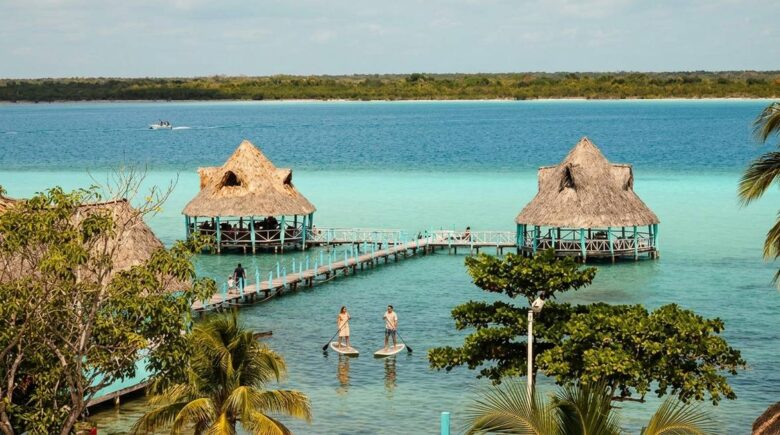
Two of the Mexican Caribbean’s most talked-about names sit less than two hours apart on the map, yet they feel like completely different countries once you arrive. Tulum stretches along the mainland with jungle behind it, cenotes underfoot, and cliffside Mayan ruins tumbling into the sea. Isla Mujeres floats just off the coast of Cancún as a walkable seven-kilometer island where turquoise water laps at powdery sand and golf carts outnumber cars.
Choosing between them is not about which is “better.” It is about which matches the trip you actually want. This guide breaks down beaches, activities, cost, seasonality, and logistics in real detail so you can pick with confidence, or plan a split stay that gives you the best of both.
At Casa Nalum, we live and host guests inside the Sian Ka’an Biosphere Reserve just south of Tulum, so we know the region intimately. Here is how the two destinations really compare in 2026.
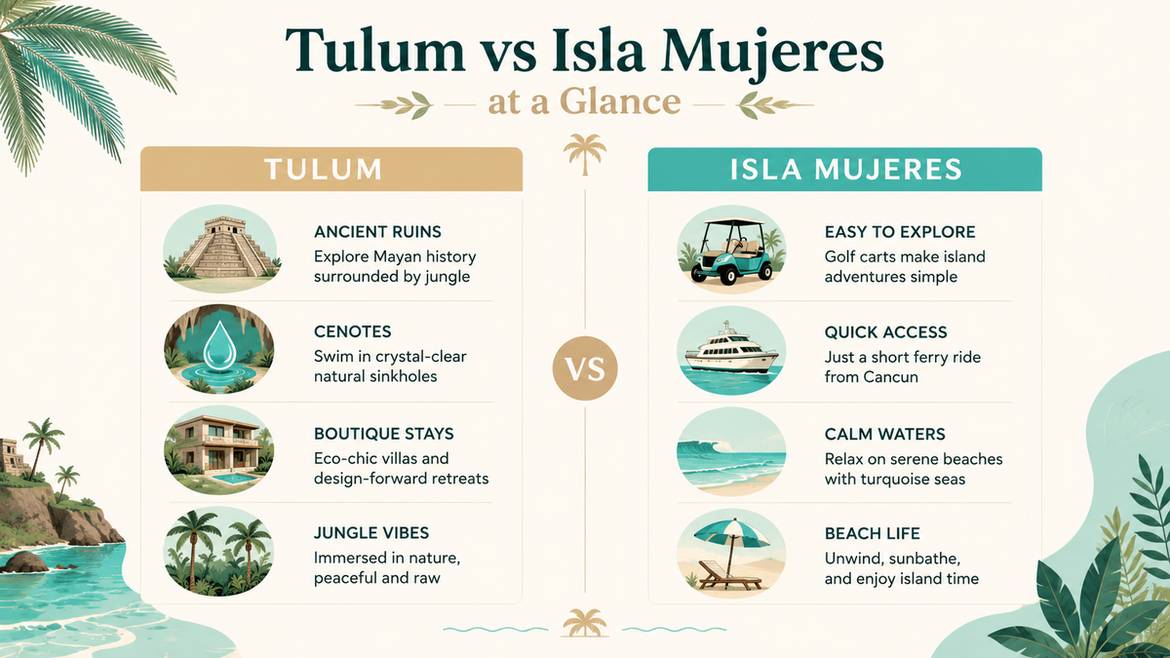
Snapshot: Tulum vs Isla Mujeres at a Glance
Before we dig in, here is the short version.
- Tulum is a mainland town in Quintana Roo, about 131 km (81 miles) south of Cancún Airport. It combines beach zone, jungle, cenotes, Mayan ruins, and a trendy dining and wellness scene. Best for travelers who want variety, adventure, and a stylish atmosphere.
- Isla Mujeres is a small island roughly 13 km off Cancún, reached by a short ferry. It is walkable, calm, and centered on Playa Norte, consistently ranked among the most beautiful beaches in the Caribbean. Best for a beach-first, low-logistics getaway.
If you have three to four days and want simplicity, Isla Mujeres wins. If you have five to seven days and want to fill them with cenotes, ruins, jungle adventures, and beach clubs, Tulum wins. If you have a week or more, do both.
Location and Getting There
Both destinations share the same gateway airport (Cancún International, CUN), but the transfer experience is very different.
Isla Mujeres is roughly 30 minutes north from the airport to the Puerto Juárez ferry terminal, then a 20-minute Ultramar ferry ride to the island. Ferries run about every 30 minutes from early morning to late evening. The whole door-to-hotel time is often under 90 minutes, and once you arrive you rarely need a car again.
Tulum is around 90 to 120 minutes south of Cancún Airport by highway 307. The 2023 opening of the new Tulum International Airport (TQO) shortened that dramatically for many travelers, with private transfers into the town or hotel zone taking as little as 20 to 40 minutes. The Maya Train also now connects Cancún, Playa del Carmen, and Tulum, adding a scenic land option.
Once in Tulum, you will move around by taxi, rental car, bike, or scooter. The town (pueblo) and beach zone are separated by about 4 km of jungle road, and cenotes and ruins are scattered across the wider Riviera Maya, so having wheels matters. On Isla Mujeres, most visitors get around on foot, by golf cart, or by bike.
Quick take: Isla Mujeres is easier to reach and easier to navigate. Tulum takes longer to get to but rewards you with far more territory to explore.
Beaches: Where the Sand and Water Really Differ
This is where the two destinations diverge most.
Isla Mujeres: Effortless, Calm, and Clear
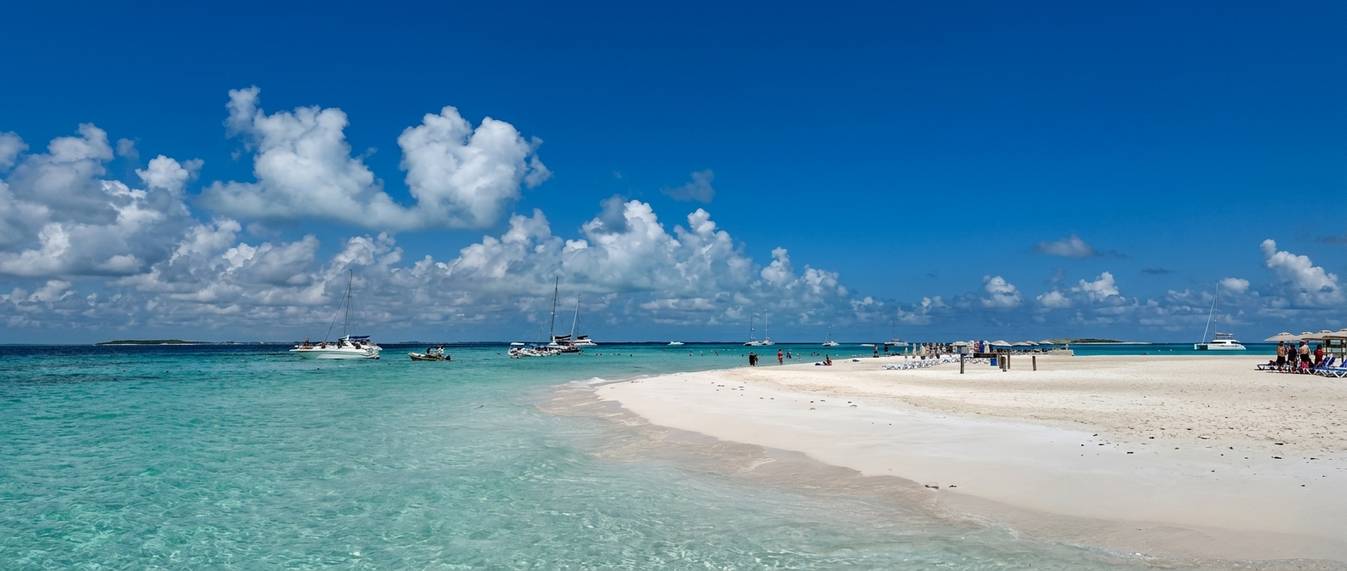
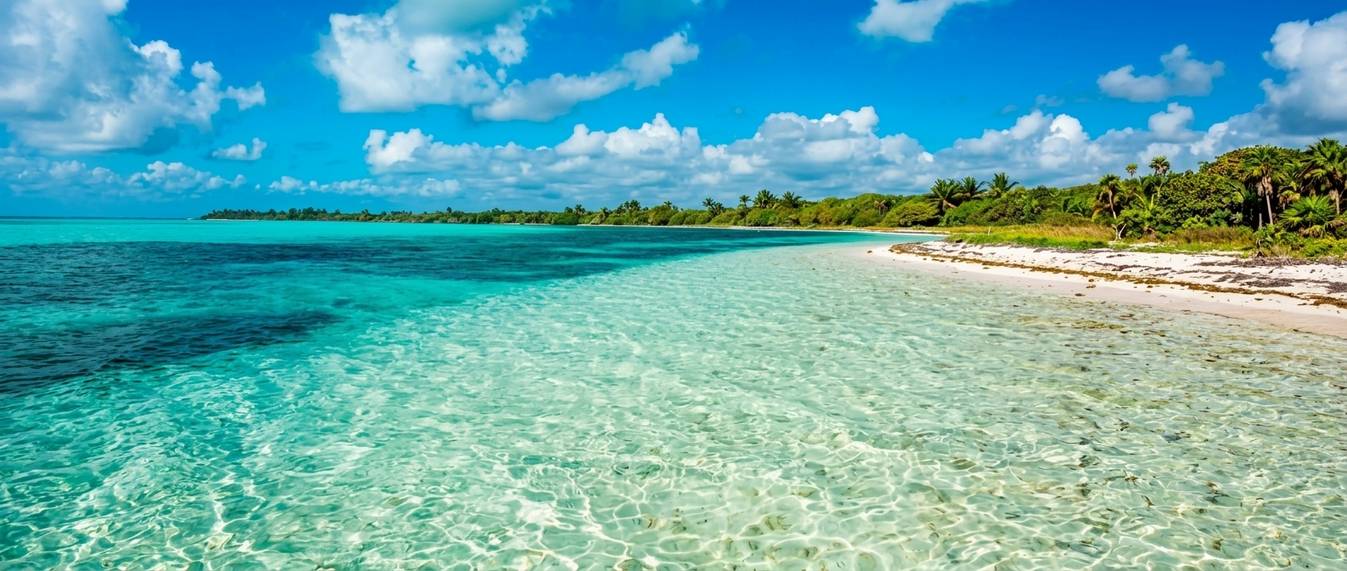
Isla Mujeres is defined by Playa Norte on the island’s north tip. The water is shallow, calm, and impossibly clear, the sand is powdery white, and public access is unrestricted. The beach is cleaned daily, and because of how the island sits, it is far less affected by sargassum (the seasonal seaweed that plagues mainland beaches) than most of the Riviera Maya.
Tulum: Long, Photogenic, and Sometimes Seaweedy
Tulum’s coastline stretches roughly 8 km, lined with boutique eco-hotels, beach clubs, and long empty sections in between. The sand is famously fine and the color of vanilla ice cream. The catch: from roughly April through October, sargassum can wash ashore in significant volume. Beachfront hotels rake it daily, and quieter stretches inside Sian Ka’an tend to fare better, but the exposure is real. Time your trip for November through March and Tulum’s beaches are genuinely world-class. Visit in July and you may battle seaweed.
Playa Norte
The gold standard on Isla Mujeres. Wade out fifty meters and the water is still only waist-deep. Beach clubs on the western end serve cocktails and ceviche; the eastern end is quieter and better for a sunset walk. Show up before 11 a.m. on a cruise-ship day if you want a peaceful stretch of sand.
- Rating: 4.8 stars (24,251 reviews)
- Address: Rueda Medina 130, SM 001, Centro, 77506 Isla Mujeres, Q.R.
- Best for: Families, couples, calm swimming, sunsets
- Cost: Free public access
- Guest tip: “Playa Norte is truly one of the most beautiful beaches I have ever seen. The clear turquoise water and powdery white sand make it absolutely stunning.” (Google review)
- View on Google Maps
Playa Paraíso
Tulum’s classic public beach, tucked just south of the ruins. Wide, flat, and blessed with the same white sand that made this coast famous. The neighboring beach club serves food and rents loungers, but you can lay out a towel and go for free.
- Rating: 4.5 stars (4,275 reviews)
- Address: Cam. a Zona Arqueologica Tulum, Zona Hotelera Tulum, 77780 Tulum, Q.R.
- Best for: Pairing with a ruins visit, photo-perfect swim breaks
- Cost: Free public access; loungers and food service extra
- Guest tip: “Magic place with the most beautiful beach. The beach club was also great, very friendly service and delicious food.” (Google review)
- View on Google Maps
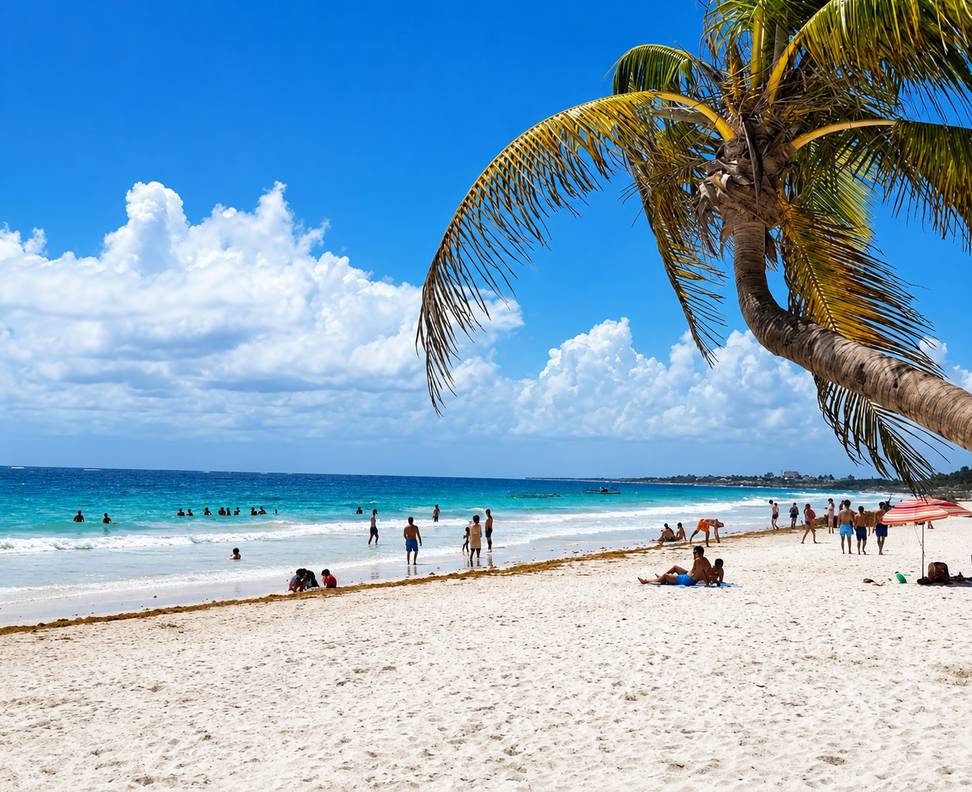
Beach verdict: Isla Mujeres delivers year-round beach perfection with almost no effort. Tulum delivers a longer, wilder, more photogenic coastline that shines outside sargassum months.
Things to Do: Ruins, Cenotes, Reefs, and Underwater Art
Tulum: Ruins, Cenotes, and Jungle
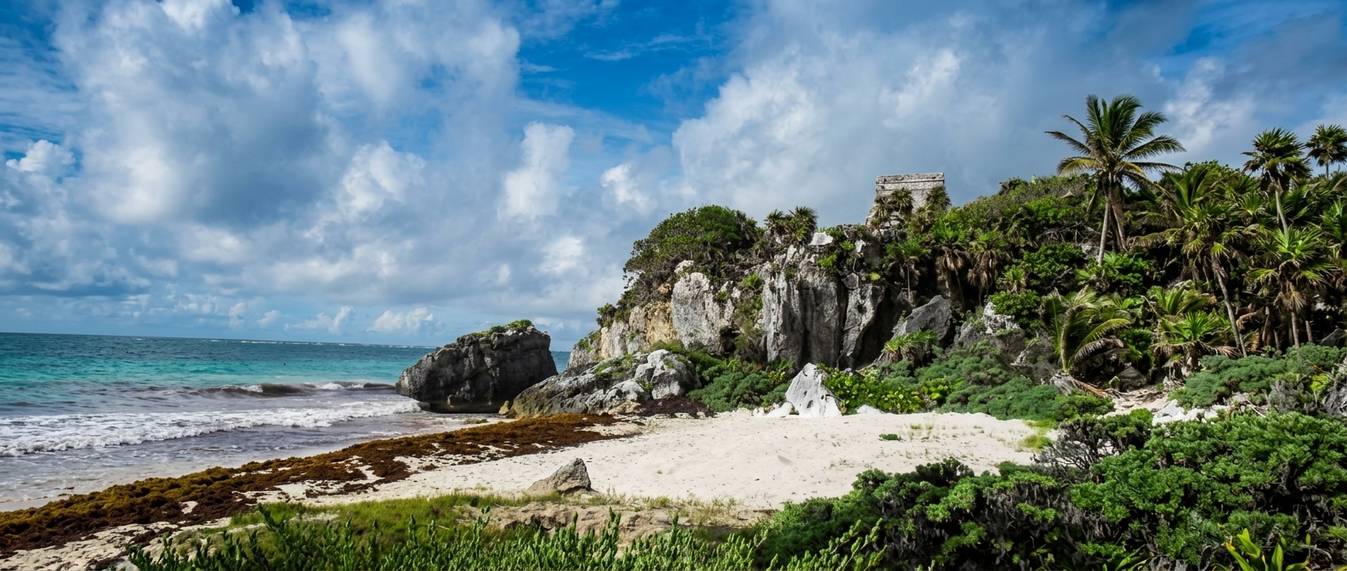
Tulum’s biggest draw beyond the beach is what surrounds it. Ancient Mayan cities perch on cliffs, hundreds of freshwater cenotes puncture the jungle, and one of the largest protected biosphere reserves in Mexico begins right at the edge of the hotel zone.
Tulum Archaeological Zone
The only major Mayan city built on the coast. The Castillo pyramid overlooks the Caribbean from a limestone cliff, and iguanas sunbathe on ancient walls. Go at opening (8 a.m.) to beat the tour-bus crowd and the midday heat.
- Rating: 4.7 stars (71,524 reviews)
- Address: Zona Hotelera Tulum, 77765 Tulum, Q.R.
- Best for: History lovers, first-time visitors, sunrise photographers
- Entry: Approximately 95 MXN (subject to change), plus a small parking fee
- Guest tip: “Visiting the ruins was informative and beautiful. We learned about construction of buildings and roads, the religious carvings, and the culture and society, all of which we enjoyed very much, particularly in such a beautiful place.” (Google review)
- View on Google Maps
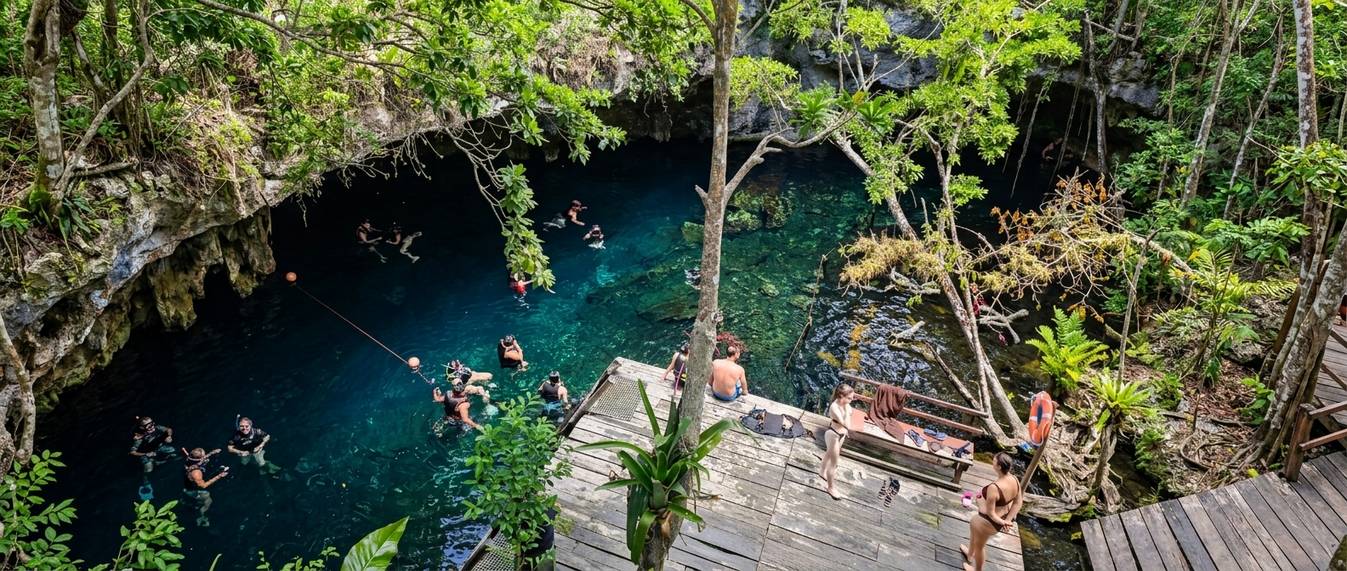
Gran Cenote
The classic postcard cenote. Half-open, half-cave, with turtles gliding under the platform and translucent water that turns snorkel masks into looking glasses. Bring your own gear if you have it (rentals are on site but pricey), and go before 10 a.m. to have the caverns nearly to yourself.
- Rating: 4.3 stars (8,252 reviews)
- Address: Highway 109 (Cobá road), 77796 Quintana Roo
- Best for: First-time cenote snorkelers, families with older kids
- Cost: Roughly 500 MXN entry (subject to change)
- Guest tip: “I would 100% recommend going here. This was my first snorkeling experience and I liked it a lot. The water was so clear and it was beautiful. There were caves where we could snorkel.” (Google review)
- View on Google Maps
Sian Ka’an Biosphere Reserve
A UNESCO World Heritage site covering 1.3 million acres of mangroves, lagoons, coral reef, and mostly empty beaches south of Tulum town. This is the wild, quiet, other side of the Riviera Maya. Guided boat tours through the mangroves let you float down a natural “lazy river” fed by cenote water, and spot dolphins, sea turtles, and roseate spoonbills along the way.
- Rating: 4.6 stars (4,053 reviews)
- Address: South of Tulum, Quintana Roo
- Best for: Nature lovers, birders, travelers who want to escape the crowds
- Cost: Guided boat tours from approximately 1,500 MXN per person
- Guest tip: “This was awesome. Grab a guide for the boat ride and floating river (coolest thing we did in Tulum). The floating river is a must, it is like a natural lazy river, cannot recommend it enough.” (Google review)
- View on Google Maps
Isla Mujeres: Snorkeling, Sculptures, and Sunset Cliffs
Isla Mujeres does not try to compete on ruins or cenotes. Its charm is smaller and more contained: reefs a short boat ride away, sunset cliffs at the island’s southern tip, and an underwater museum you can visit with a snorkel.
Punta Sur
The southernmost point of the island and the easternmost point of Mexico, this is where the sun rises first on the country each day. A limestone cliff walk leads past a small Mayan shrine to the goddess Ixchel and modern sculptures. The views over the Caribbean are the best on the island.
- Rating: 4.8 stars (13,661 reviews)
- Address: South tip, 77403 Isla Mujeres, Q.R.
- Best for: Sunrise, panoramic photography, easy walking
- Cost: Approximately 100 MXN entry
- Guest tip: “Absolutely beautiful. Took a cab for about 10 USD, and it is 5 to get in, but well worth it. I planned for my driver to come back in an hour, but I would suggest giving it 2 to 3 hours. Walk all the paths, and have a beer on the swings at the bar.” (Google review)
- View on Google Maps
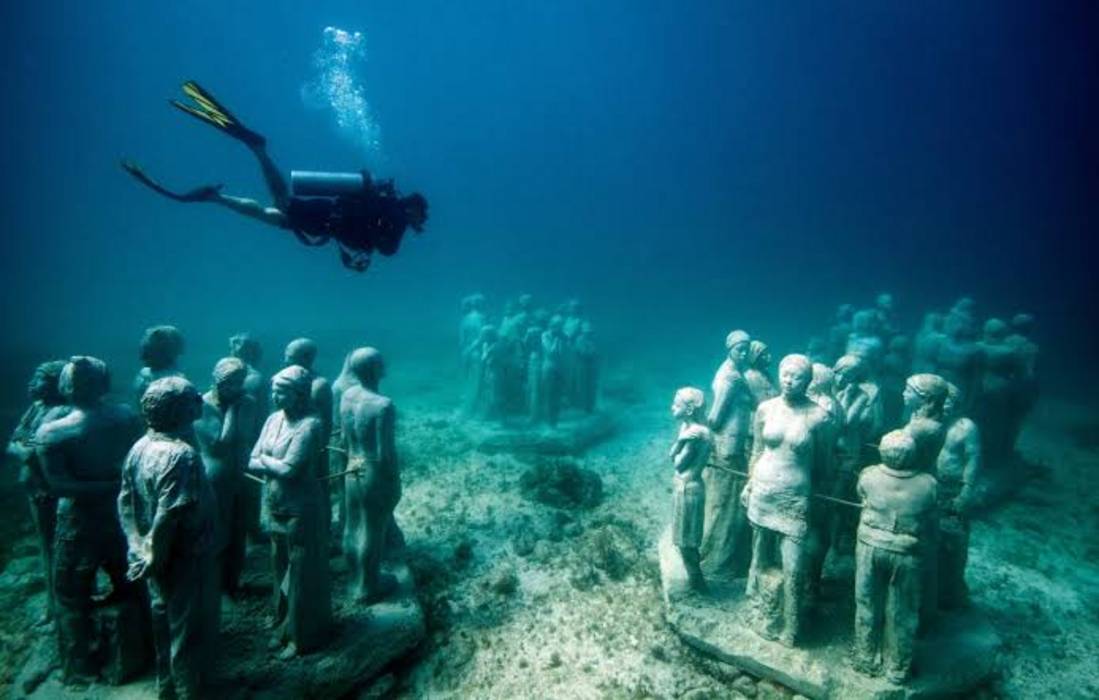
MUSA Underwater Museum
More than 500 life-size sculptures set on the sea floor between Cancún and Isla Mujeres, designed to grow into an artificial reef over time. Snorkelers see the shallower gallery; certified divers can reach the deeper installations. It is one of the most unusual experiences in the Caribbean.
- Rating: 4.4 stars (1,180 reviews)
- Address: Marine park waters between Cancún and Isla Mujeres, Q.R.
- Website: musamexico.org
- Best for: Snorkelers, divers, art lovers, adventurous couples
- Cost: Snorkel tours from approximately 60 USD; dives higher
- Guest tip: “Beautiful dive spot for all levels of divers. High visibility, really cool underwater sculptures, colorful fish and ocean life.” (Google review)
- View on Google Maps
Activities verdict: Tulum is unmatched for depth and variety, from Mayan history to jungle cenotes to biosphere ecotourism. Isla Mujeres is unmatched for effortless water fun and one-of-a-kind experiences like MUSA and Punta Sur.
Food, Vibe, and Nightlife
Tulum
Expect a genuinely world-class dining scene, from candlelit jungle restaurants like those on the beach road to farm-to-table concepts inland. The beach zone is where the “seen and be seen” energy lives: fashion-forward beach clubs, mezcal bars, and a wellness overlay of yoga studios, temazcal ceremonies, and sound baths. Nightlife peaks in the winter high season with beach parties and DJ sets that draw a global crowd.
Prices in the beach zone are on par with a major U.S. city. Tulum town (pueblo) is dramatically more affordable, with taquerías, panaderías, and family-run seafood spots that most visitors miss.
Isla Mujeres
The vibe is small-town Caribbean. Downtown Isla is walkable, colorful, and centered on Hidalgo Avenue, a pedestrian street lined with restaurants, ice cream shops, and boutiques. Dinner is often ceviche, whole fish, or shrimp tacos at a coctelería with your feet almost in the sand. Nightlife is mellow: sunset drinks, live music, and the occasional beach bonfire, rather than late-night club scenes.
Vibe verdict: Tulum for stylish, energetic, and social. Isla Mujeres for warm, local, and low-key.
Cost Comparison: What You Actually Spend
Both destinations can be done on almost any budget, but the shape of the spending is different.
- Isla Mujeres has fewer ultra-budget options and fewer ultra-luxe ones, so the middle of the market is well populated. Aggregated traveler data puts average daily costs around 162 USD per person.
- Tulum has both extremes. Beach-zone eco-hotels can top 1,000 USD per night, while in-town hostels and mid-range hotels can be under 60 USD. Average daily costs land around 131 USD per person, largely because of the affordable town side.
If you stay on the beach in Tulum and eat at beachfront restaurants, expect to spend more per day than a comparable Isla Mujeres trip. If you stay in town and take taxis to the beach, Tulum will be cheaper. If you want a fixed, predictable budget with beach access baked in, Isla Mujeres is easier to plan.
Ferry, taxi, and golf-cart rentals on Isla add up faster than they look. Budget roughly 40 to 50 USD per day for a golf cart in high season.
Best Time to Visit
Both destinations share the same climate calendar with subtle differences.
- December to March is the sweet spot: dry, warm days (26 to 30 °C / 79 to 86 °F), cool nights, minimal sargassum, and the best odds of postcard beach conditions. It is also high season, so prices peak and Playa Norte can feel crowded on cruise days.
- April to June starts to warm up. Sargassum can begin arriving in Tulum. Prices ease outside spring break weeks.
- July to October is hot and humid with the highest sargassum risk in Tulum. Hurricane season officially runs June through November, with September and October the highest-probability months. Isla Mujeres beaches tend to weather this better than mainland ones.
- November is a quiet, warm shoulder month that often flies under the radar and is one of our personal favorites.
If your trip lands in July or August and beach quality is non-negotiable, tilt toward Isla Mujeres. If you land in January or February, either destination will deliver.
Which Should You Choose? Match the Trip to the Traveler
Choose Tulum if you…
- Want a mix of beach, culture, and adventure over five or more days
- Care about cenotes, ruins, or biosphere ecotourism
- Are into wellness, boutique design hotels, or a stylish social scene
- Are traveling with older kids or teens who want variety
- Prefer to have your own space and are comfortable using taxis or renting a car
Our own beachfront luxury villa in Sian Ka’an is a good example of how Tulum can be both wildly natural and quietly luxurious at the same time. See our Sian Ka’an location guide for more on staying inside the biosphere.
Choose Isla Mujeres if you…
- Want a beach-first, low-logistics trip of two to four days
- Are traveling with small children and want calm, safe water
- Prefer to walk everywhere and skip the taxi juggling
- Care more about relaxing than sightseeing
- Want to fly in and be on the beach in under two hours
Do both if you…
- Have a week or more
- Want the postcard beach days AND the ruins-and-cenotes bucket list
- Are planning a honeymoon or a milestone celebration
- Like the idea of two very different halves to one trip
A common flow: two or three nights on Isla Mujeres for pure beach at the start, then transfer south for four or five nights in the Tulum area to explore cenotes, ruins, and Sian Ka’an. It is a natural rhythm, from cocktail hour on Playa Norte to a candlelit dinner in the jungle.
Sample 7-Day Combined Itinerary
Day 1 Arrive Cancún, ferry to Isla Mujeres. Sunset at Playa Norte.
Day 2 Golf cart around the island. Punta Sur in the morning, snorkel tour to MUSA in the afternoon.
Day 3 Slow beach day, ceviche lunch on Hidalgo Avenue, ferry back to the mainland and transfer to Tulum.
Day 4 Tulum Archaeological Zone at opening, Playa Paraíso in the afternoon.
Day 5 Cenote day. Gran Cenote in the morning, Cenote Dos Ojos in the afternoon.
Day 6 Sian Ka’an guided boat tour, biosphere lagoons and floating river.
Day 7 Slow morning at your villa, farm-to-table lunch, transfer to airport.
This route works whether you fly out of Cancún International or Tulum International.
The Bottom Line
If you have to pick one, ask yourself a simple question: are you here mostly for the water, or mostly for the world around it?
- Water first, minimal effort, three to four days: Isla Mujeres.
- Everything the Riviera Maya can offer, five to seven days, and you are willing to move around: Tulum.
- Both: treat Isla Mujeres as your beach opener and Tulum as your main adventure.
Whichever way you go, you are choosing between two of the most beautiful places in the Mexican Caribbean. When you are ready to plan the Tulum half of your trip, we would love to host you at Casa Nalum, tucked between the Caribbean and the Mayan lagoon of Campechen, inside the Sian Ka’an Biosphere Reserve. Get in touch here or check availability directly.
Frequently Asked Questions
Is Isla Mujeres better than Tulum?
Neither is objectively better. Isla Mujeres wins on beach quality, ease of access, and simplicity. Tulum wins on cultural depth, variety of activities, and dining scene. Your priorities decide.
Can I visit both Tulum and Isla Mujeres in one trip?
Yes, and many travelers do. Allow at least six to seven days total so that neither destination feels rushed. The transfer between them is roughly three hours by road plus ferry.
Which is safer, Tulum or Isla Mujeres?
Both are popular tourist destinations with strong local security presence. Isla Mujeres in particular is often praised for how safe and walkable it feels, thanks to a naval base near the ferry docks. In Tulum, standard travel precautions apply: use registered taxis, stick to well-lit areas at night, and avoid drug-related venues.
When is the worst time to visit for sargassum?
Sargassum tends to peak between May and August, with July often being the heaviest month for Tulum. Isla Mujeres is far less affected because of its position off Cancún’s coast, and its main beach is cleaned daily.
Is Tulum expensive?
The beach zone is expensive, on par with a major U.S. city. Tulum town is significantly cheaper. Average daily costs across the whole destination land around 131 USD per person, but you can spend far more or far less depending on where you stay and eat.
Is Isla Mujeres good for families with young children?
Very much so. Playa Norte has shallow, calm water that is ideal for small children, the island is walkable, and logistics are simpler than on the mainland. Many families report it is the easiest Caribbean trip they have taken.