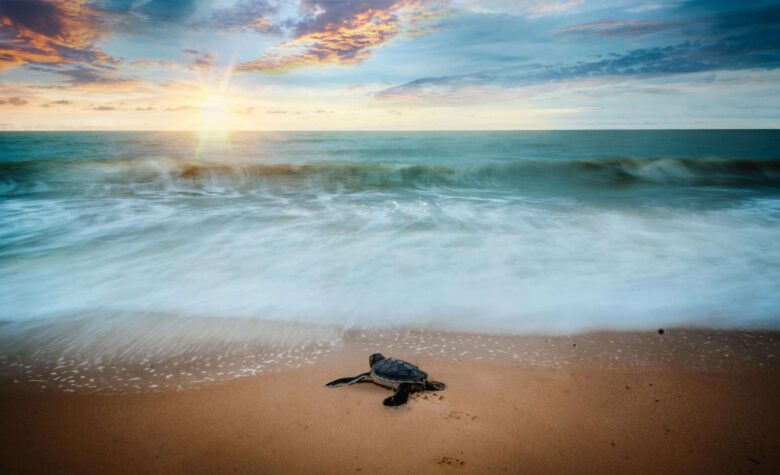
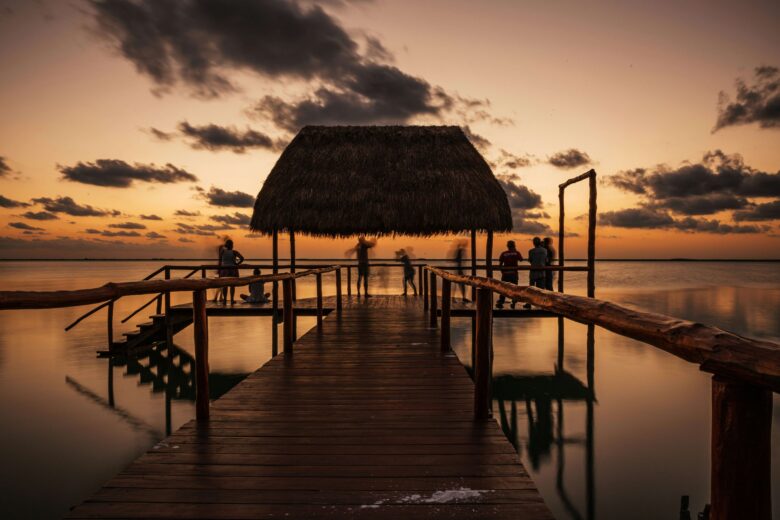
Two coastlines share the same turquoise water, the same barrier reef, and the same ancient Maya story. Yet planning a trip to either one asks a very different set of questions. Do you want a design-forward beach town with cenotes on the doorstep, or a wilder island-and-jungle mix reached by prop plane and water taxi? If you have been going back and forth between Tulum and Belize, this guide will help you land on the right answer for the trip you actually want.
At Casa Nalum we wrote this from inside the Sian Ka’an Biosphere Reserve, just south of Tulum, where the Mesoamerican Reef begins its long run down the Yucatán coast and continues into Belizean waters. That means we love both places. It also means we can be honest about where each one shines.
Getting There: Flight Times, Airports, and Ground Transfers
For most travelers coming from the United States, the first difference shows up on the flight tracker.
Cancún International (CUN) is one of the busiest airports in Latin America, with dozens of nonstop options from New York, Chicago, Miami, Houston, Dallas, Los Angeles, and beyond. A nonstop from Miami runs roughly one and a half to two hours. From there, it is a straightforward drive south to Tulum, typically 1.5 to 2 hours by shared shuttle or private car.
Belize City (BZE) is quieter. Nonstop routes exist from Miami, Houston, Dallas, Atlanta, and a handful of East Coast cities, but flight volume is lower and fares are usually higher. Miami to Belize is closer to 2 hours and 20 minutes nonstop. Once you land, most travelers still have a second leg ahead: a 15 to 20 minute domestic hop or a 1.5 hour water taxi to the islands, or a road transfer inland toward the Cayo District.
Bottom line: Tulum wins on flight frequency, price, and total travel time. Belize rewards travelers who do not mind an extra hop for a quieter arrival.
The Reef: Same Barrier, Different Experience
The Mesoamerican Barrier Reef is the second largest reef system on the planet, and it curves along both coasts. What changes is the access.
Sian Ka’an and the Tulum Side
Reef snorkeling from Tulum happens mostly through the Sian Ka’an Biosphere Reserve, the 1.3 million acre UNESCO protected area that begins just minutes south of town.
Reserva de la Biósfera Sian Ka’an
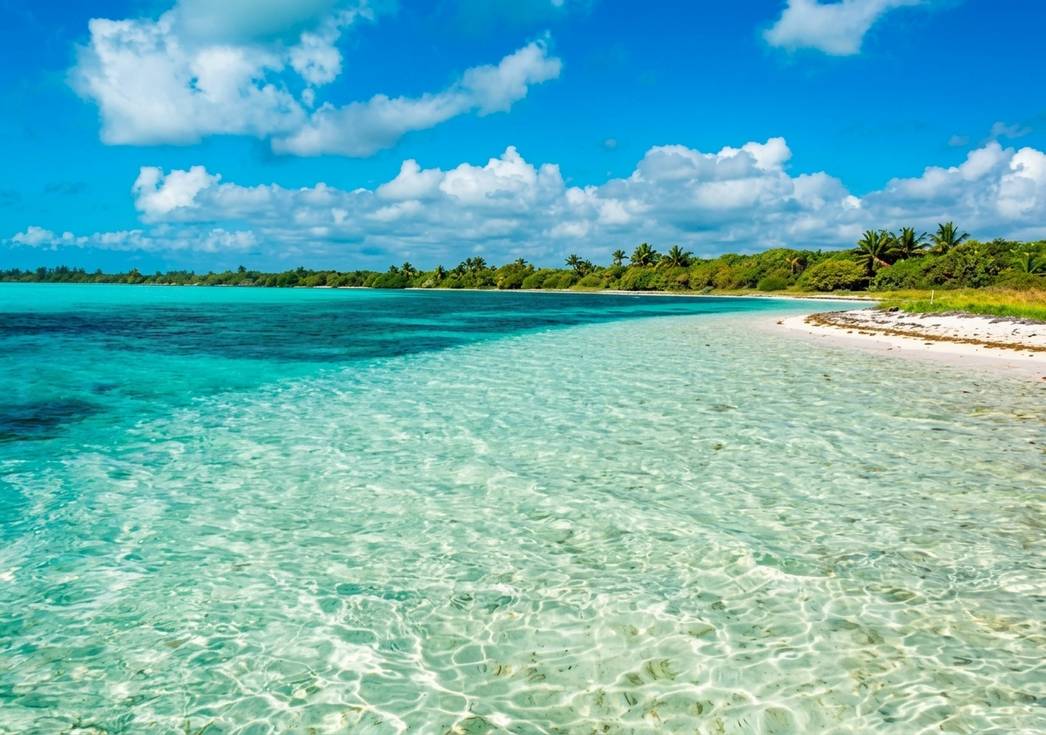
Sian Ka’an means “gift from the sky” in Maya, and the reserve lives up to the name. Turtles, dolphins, manatees, more than 300 bird species, and a stretch of the Mesoamerican Reef all sit inside its boundaries. Most travelers experience it through a boat safari that combines mangrove tunnels, lagoons, and a snorkel stop on the outer reef.
- Rating: 4.6 stars from 4,061 Google reviews
- Location: Quintana Roo, Mexico
- Category: National reserve and UNESCO Biosphere
- Best for: Barrier reef snorkeling, mangrove wildlife, remote beaches
- View on Google Maps
Punta Allen Marine Safari
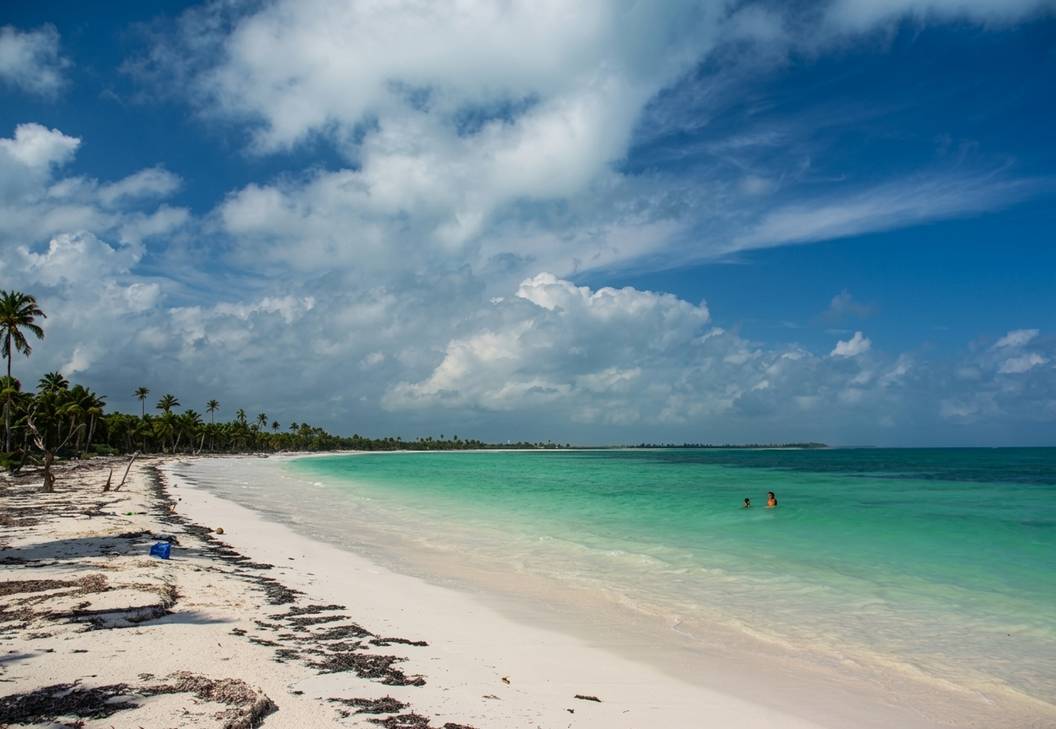
At the far end of the coco road inside Sian Ka’an sits Punta Allen, a lobster-fishing village of a few hundred people. Full-day marine safaris depart from Boca Paila, cross the lagoon, and reach the reef line for snorkeling with dolphins, sea turtles, and up to 500 species of fish. Lunch is usually fresh seafood at a village palapa. Expect a 10 to 12 hour day and roughly MXN 3,500 to 4,500 per person in a group tour.
- Address: 77768 Quintana Roo, Mexico
- Best for: A full jungle-to-reef day inside a UNESCO reserve
- Access: Rough coastal road, about 2 hours each way from Tulum
- View on Google Maps
The Belize Side
Belize offers a very different reef day. From Belize City, most snorkelers head to Ambergris Caye (the town of San Pedro) or its smaller neighbor Caye Caulker. Both islands sit right on the barrier reef, which means shorter boat rides and near-daily snorkel and dive trips to Hol Chan Marine Reserve, Shark Ray Alley, and further offshore atolls.
Caye Caulker
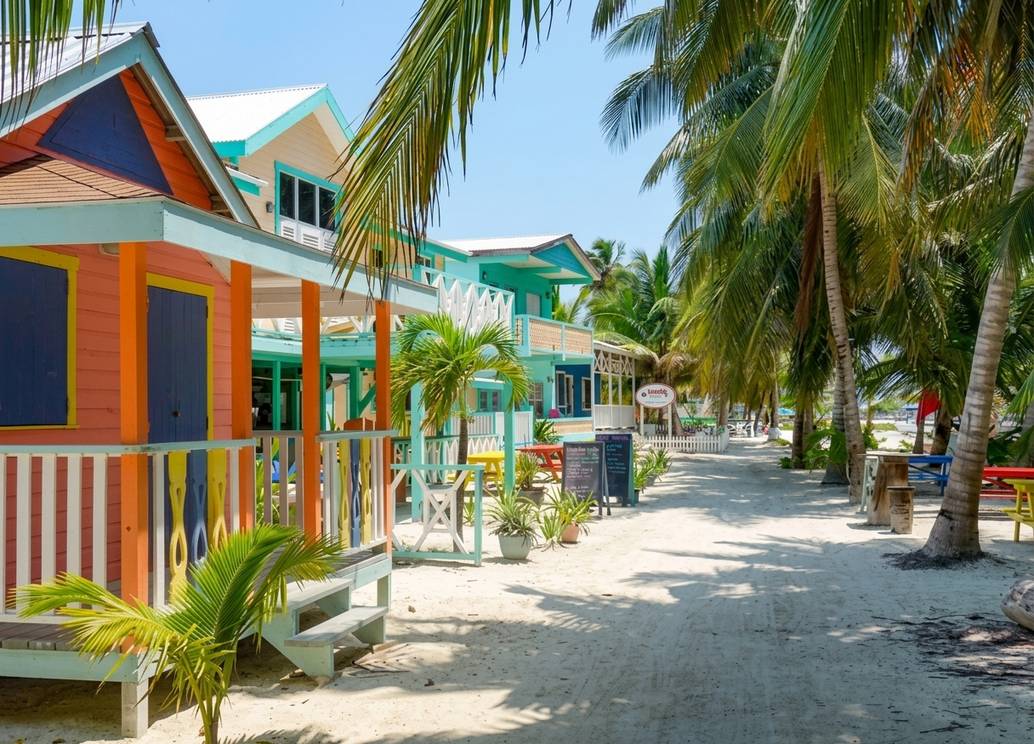
Caye Caulker is barefoot Belize distilled: golf carts, split-personality beach bars, and the famous “Go Slow” motto painted onto every other wall. It is the easiest reef-life base in the country if you want daily snorkel access without a resort price tag.
- Rating: 4.6 stars from 748 Google reviews
- Location: Belize
- Category: Island
- Best for: Barefoot island vibe, easy reef access, water taxi from Belize City
- View on Google Maps
Great Blue Hole
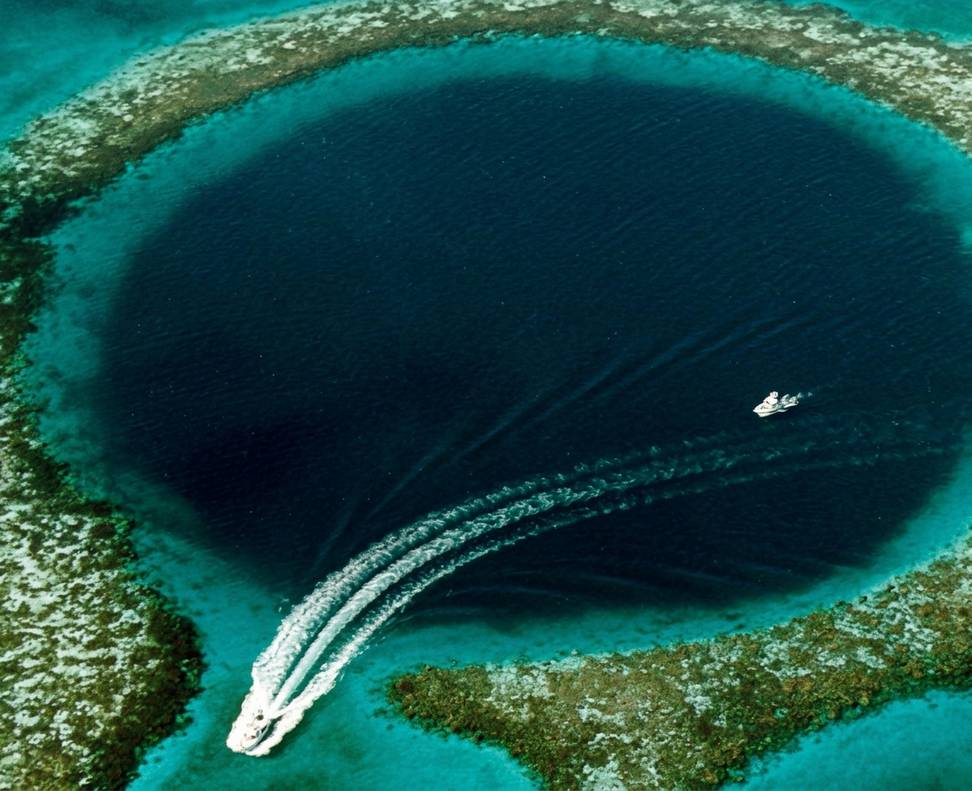
Belize’s headline reef attraction is the Great Blue Hole, a nearly perfect 1,000 foot wide sinkhole in the middle of Lighthouse Reef Atoll. Certified divers descend to the ancient stalactites at 130 feet, while everyone else can book a scenic flight for the postcard aerial view. Day trips run from San Pedro or Belize City and are weather dependent.
- Rating: 4.6 stars from 954 Google reviews
- Location: Lighthouse Reef Atoll, Belize
- Category: Tourist attraction and natural wonder
- Best for: Advanced divers, scenic flight photography
- View on Google Maps
Reef verdict: Belize wins for iconic dive sites and postcard atoll geography. Tulum wins for reef access inside a protected biosphere paired with lagoons, mangroves, and a same-day return to your villa.
The Jungle and the Ancient Maya
Both destinations sit inside the old Maya world, and both let you touch it. The difference is how deep into the jungle you have to go.
Tulum’s Ruins and Reserve
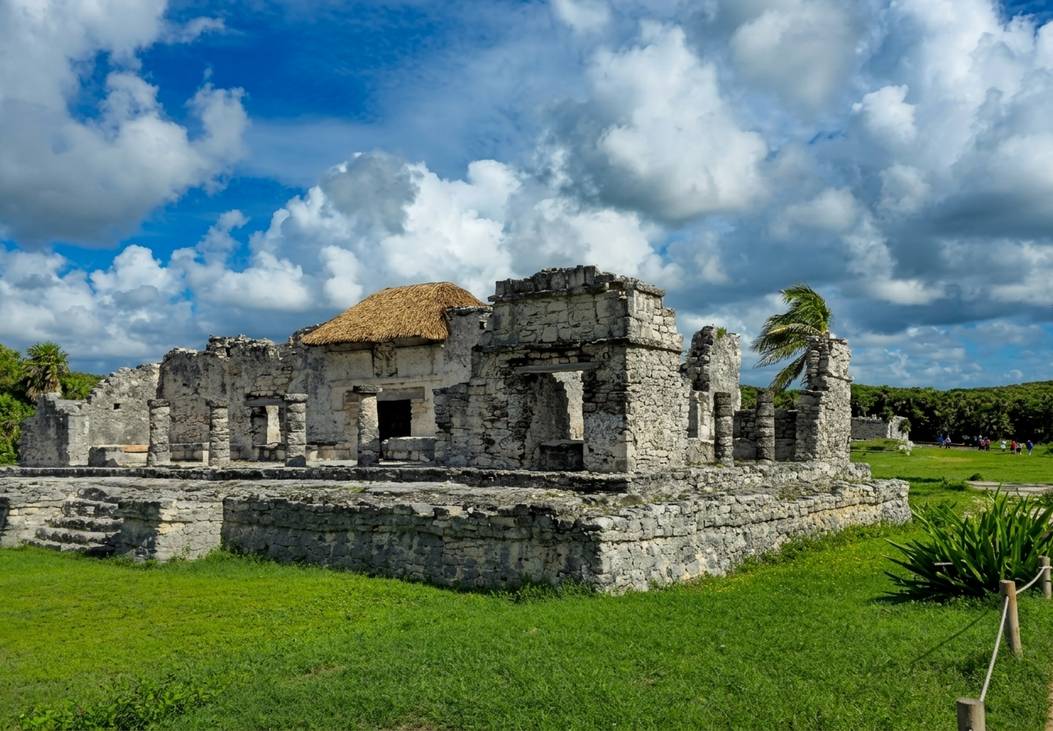
The Tulum Archaeological Zone is the only major Maya site built on a coastline, and the photo of El Castillo perched above the Caribbean is one of the most recognizable images in Mexican tourism. It is also busy, so early morning is the move.
Tulum Archaeological Zone
- Rating: 4.7 stars from 71,793 Google reviews
- Address: Zona Hotelera Tulum, 77765 Tulum, Quintana Roo, Mexico
- Category: Archaeological site
- Hours: Open daily
- Phone: 983 837 2411
- Best for: Clifftop Maya ruins with Caribbean views
- View on Google Maps
Muyil (Chunyaxché) and the Ancient Canal Float
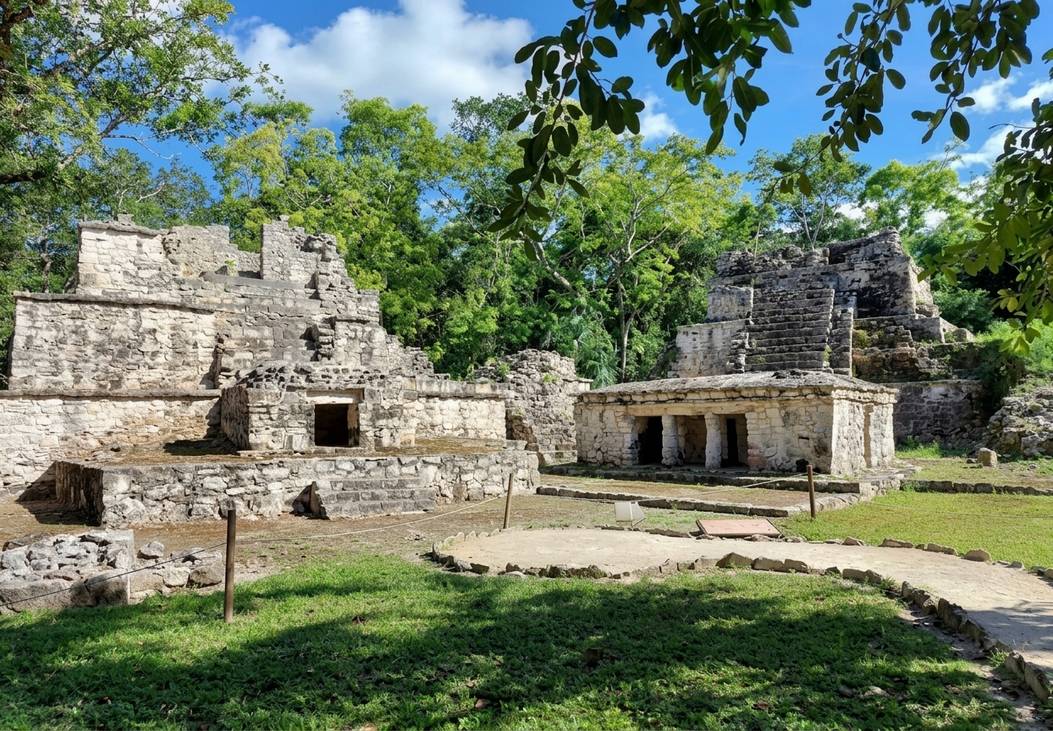
Further south, right on the northern edge of Sian Ka’an, sits Muyil, a smaller and much quieter site whose real draw is what happens after the ruins. You board a boat, cross two turquoise lagoons, then float down a narrow canal that Maya mariners hand-cut more than 1,200 years ago to connect inland trade routes to the Caribbean. It is a lazy river through mangroves with jungle sound overhead, and it is arguably the single best half-day experience in the region.
- Rating: 4.6 stars from 3,496 Google reviews
- Address: Reforma Agraria-Puerto Juárez km 25, 77710 Chunyaxché, Q.R., Mexico
- Category: Archaeological site
- Hours: 8 AM to 5 PM, daily
- Website: inah.gob.mx
- Best for: Half-day ruins plus mangrove canal float in Sian Ka’an
- View on Google Maps
Cobá
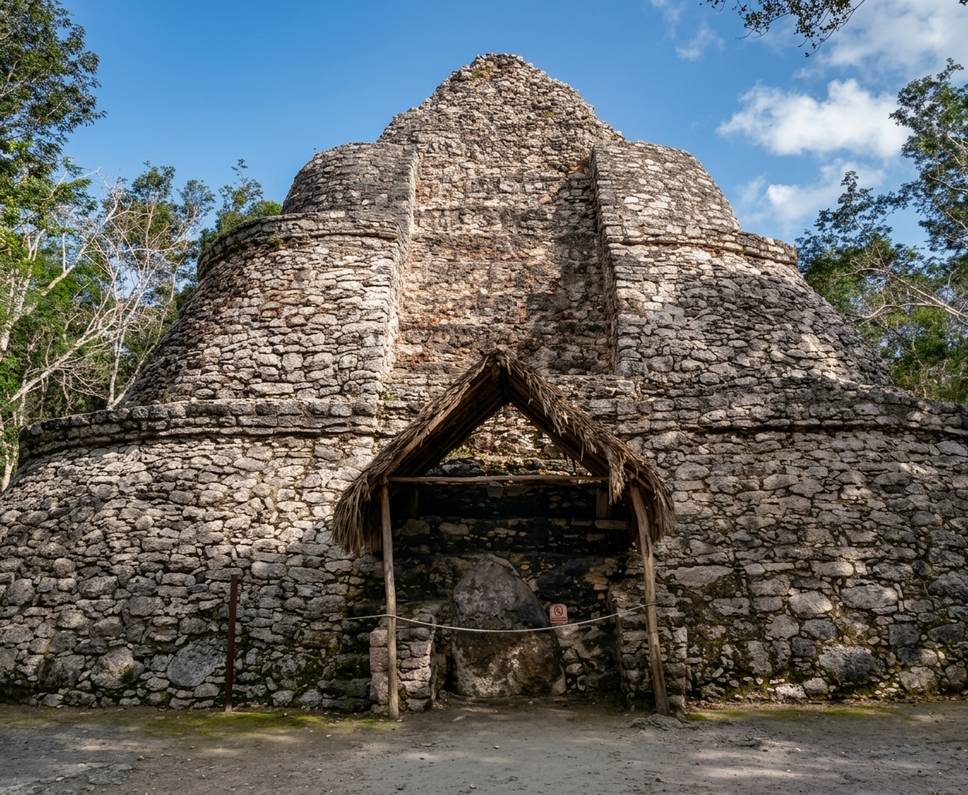
Inland from Tulum, Cobá covers a much larger footprint than the coastal ruins and still hides most of its structures in jungle. Rent a bike at the gate or hire a bici-taxi to cover the site’s shaded pathways at your own pace.
- Location: 77793 Quintana Roo, Mexico
- Category: Archaeological site
- Best for: Larger site with jungle setting and quieter crowds
- View on Google Maps
Belize’s Ruins and Cave Country
Belize’s Maya story lives mostly in the Cayo District, where limestone hills roll west toward the Guatemalan border. The two headline experiences here are unlike anything in Mexico.
Xunantunich
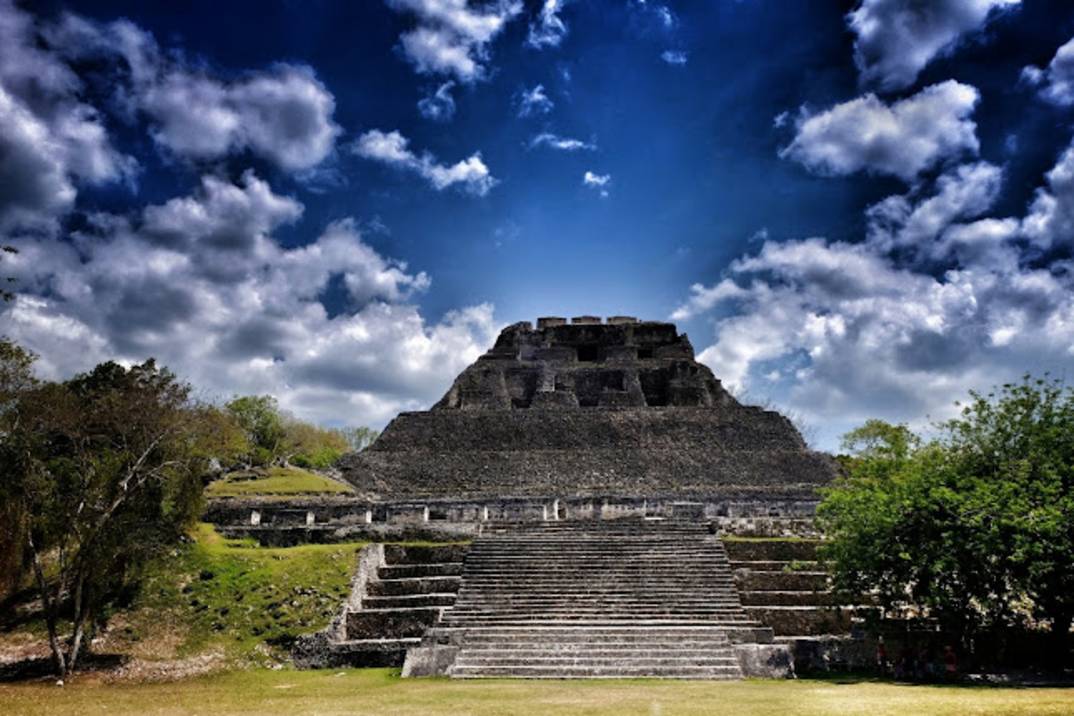
Perched above the Mopan River, Xunantunich (“Stone Woman”) is reached by a small hand-cranked ferry, which sets the tone before you even climb El Castillo for the panoramic view over the jungle canopy.
- Rating: 4.9 stars from 3,300 Google reviews
- Location: San Jose Succotz, Belize
- Category: Archaeological site
- Best for: Photogenic Maya ruins near the Guatemala border
- View on Google Maps
Actun Tunichil Muknal (ATM Cave)
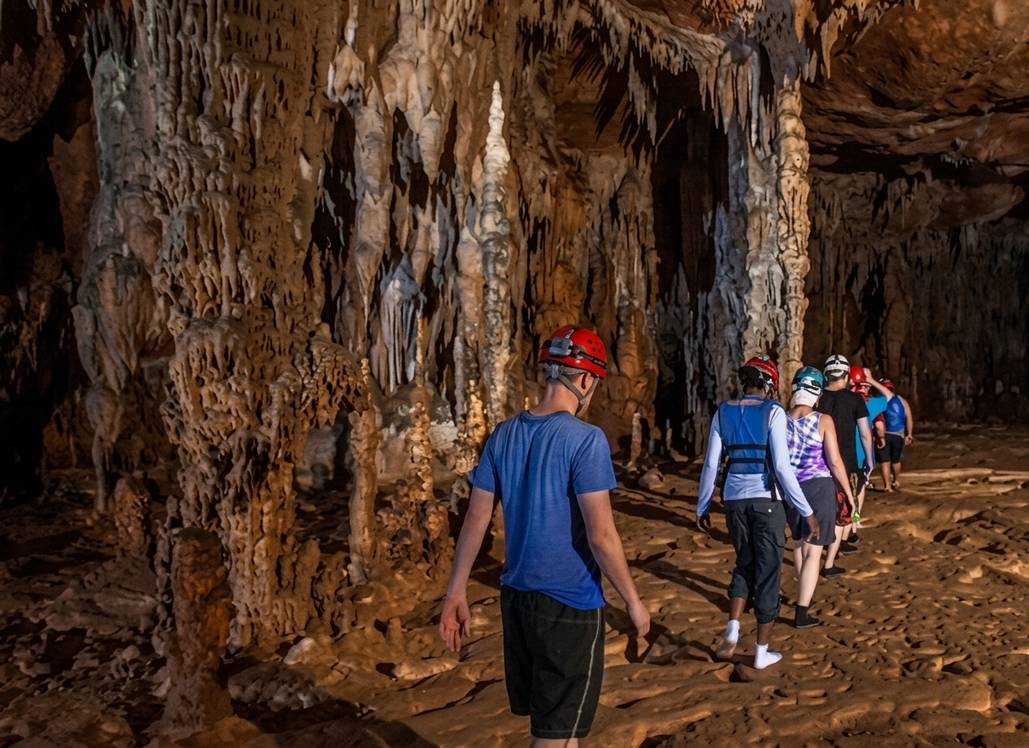
The ATM Cave is a full-day expedition, and it is the single Belize experience that regulars will insist you cannot skip. You swim into the mouth of a limestone cavern, wade upstream through crystalline chambers, and eventually reach a vaulted room where Maya ceremonial pottery and skeletal remains sit exactly where they were left over 1,000 years ago. Photography is prohibited to protect the site, which only makes it more memorable.
- Rating: 4.9 stars from 758 Google reviews
- Address: 44HX+9GM, Seven Miles El Progresso, Belize
- Phone: +501 822-2106
- Category: Historical place
- Best for: Adventure travelers, history lovers, once-in-a-lifetime cave day
- View on Google Maps
Jungle and ruins verdict: Tulum makes it effortless to combine a morning at a Maya site with an afternoon at the beach. Belize asks more of you logistically but delivers deeper wilderness and, in ATM Cave, an experience with no equivalent on the Mexican side.
Cenotes and Freshwater
Cenotes are the tiebreaker for a lot of travelers. Northern Yucatán sits on top of the largest underground river network on earth, and Tulum has the highest concentration of accessible cenotes anywhere in the region.
Two Eyes Cenote (Cenote Dos Ojos)
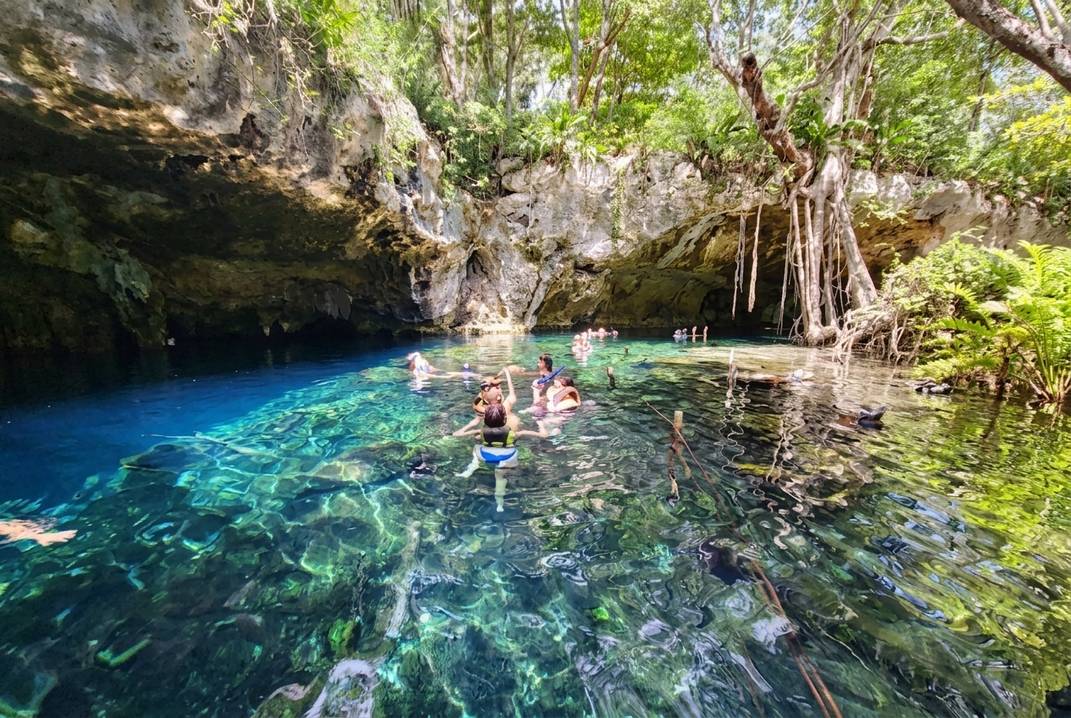
Dos Ojos is two connected sinkholes joined by a limestone passage, both open to the sky. The clarity underwater is astonishing, which is why it doubles as one of the most photographed cave-diving sites in the world. Snorkelers get to see almost as much as divers do here.
- Rating: 4.7 stars from 7,904 Google reviews
- Location: 77774 Quintana Roo, Mexico
- Phone: 998 980 0664
- Category: Tourist attraction
- Best for: Snorkeling and photography in crystal-clear freshwater
- View on Google Maps
Belize has caves and underground rivers, but the cenote culture, with open-sky pools, palapa entrances, and easy self-drive access, is uniquely a Yucatán thing. If you have young kids, a first-time snorkeler, or anyone who wants that “float in a jungle mirror” moment without booking an outfitter, Tulum wins this round clearly.
Cost, Currency, and the Food Scene
Money habits differ almost as much as the terrain.
Tulum runs on the Mexican peso, and typical midrange budgets land around USD 120 to 200 per person per day, higher inside the beach zone’s design hotels and chef-driven restaurants. Card acceptance is broad. Beach club lunches, mezcal bars, and international menus mean you can eat differently every night. Cenote entries range from about USD 5 to 20.
Belize runs on the Belize dollar, pegged at 2 BZD to 1 USD, which makes math painless and reduces currency risk. Midrange coastal and island budgets land closer to USD 90 to 160 per person per day, though remote jungle lodges and Blue Hole dive trips push higher. US dollars are widely accepted in tourist areas. Food skews Creole, Garifuna, and Maya, with rice and beans, stew chicken, fresh grilled fish, hudut, and lobster in season. It is hearty and affordable rather than curated.
Cost verdict: For beach-zone comfort at Tulum levels, Belize is often 20 to 30 percent cheaper day to day. For inland or eco-lodge stays that include meals, the two even out.
Which Escape Is Right for You?
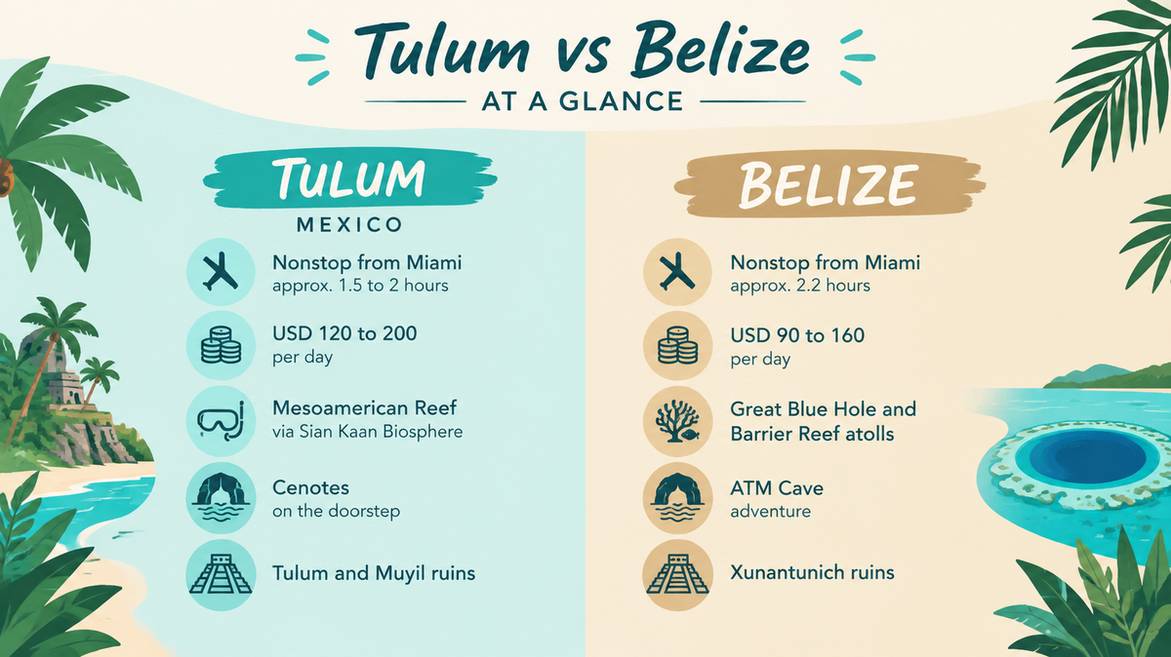
Choose Tulum if you want:
- Short, cheap flights with many nonstops
- Cenotes on the doorstep and easy road access to Maya ruins
- A design-forward beach and restaurant scene
- The ability to combine reef, jungle, lagoon, and ruins in a single day inside Sian Ka’an
- Spanish-language culture and modern Mexican cuisine
Choose Belize if you want:
- A quieter, more off-grid feel with fewer crowds
- The Great Blue Hole, Ambergris Caye diving, and remote atoll snorkeling
- Adventure days like ATM Cave that live in the “trip of a lifetime” bucket
- English as the working language, simple 2-to-1 currency math
- More authentic local food scenes over trendy restaurants
For a lot of travelers, the honest answer is “both, on different trips.” If it is your first time in the Riviera Maya, Tulum’s mix of reef, ruins, cenotes, and Sian Ka’an packs the widest variety into the shortest itinerary. If you are already a Yucatán regular and craving something wilder, Belize is a natural next step.
Where to Stay in Tulum: Inside the Reserve
If Tulum wins your decision, where you sleep changes the entire trip. The town of Tulum, the busy hotel zone, and the quieter stretch inside Sian Ka’an are three different experiences.
Casa Nalum
Casa Nalum sits on a strip of coast between the Mayan lagoon of Campechen and the Caribbean Sea, tucked inside the Sian Ka’an Biosphere Reserve about 5 kilometers past the reserve arch. It is a five-bedroom eco-villa built for families and small groups who want the Sian Ka’an experience as their front yard: private beach access, kayaks on the lagoon, and Muyil, Boca Paila, and Punta Allen all within reach.
- Rating: 4.8 stars from 51 Google reviews
- Address: Tulum-Boca Paila Km 5.3 after the arch of Sian Ka’an, 77780 Tulum, Q.R., Mexico
- Phone: +52 999 127 3329
- Category: Villa
- Best for: Multigenerational family reunions, honeymoons, wellness retreats
- View on Google Maps
Ready to Trade the Debate for a Villa on the Water?
If your version of the perfect escape has a Maya lagoon on one side, the Caribbean on the other, and a barrier reef minutes offshore, we know a spot. Casa Nalum sits inside Sian Ka’an with the Muyil canal float, cenote country, and Punta Allen all within a morning’s reach. When you are ready to stop comparing and start planning, get in touch with our team, and we will help you build the trip your group has been talking about.
Frequently Asked Questions
Is Tulum or Belize better for a first tropical trip?
For most first-time visitors coming from the US, Tulum is the easier trip. Nonstop flights are shorter and cheaper, ground transfers are simple, and you can combine reef, cenotes, ruins, and jungle inside the Sian Ka’an Biosphere Reserve without needing multiple bases. Belize is a great second or third trip once travelers want a quieter, more remote feel.
Is Belize cheaper than Tulum?
On a like-for-like midrange budget, Belize is generally 20 to 30 percent cheaper day to day, especially on food, drinks, and accommodations outside luxury dive resorts. Tulum’s beach zone is priced closer to a US resort market. Jungle lodges in Belize can flip that math because they often include meals and excursions.
Which has better snorkeling, Tulum or Belize?
Both sit on the Mesoamerican Barrier Reef. Belize wins on iconic dive sites like the Great Blue Hole and Hol Chan, and on the sheer number of shore-accessible reef days from Ambergris Caye and Caye Caulker. Tulum wins on the “one-day everything” experience: mangroves, lagoons, dolphins or turtles, and a barrier reef snorkel inside Sian Ka’an on the same trip.
Do you need a passport for both Tulum and Belize?
Yes. US citizens need a valid passport for either destination. Neither requires a tourist visa for stays under 30 days.
When is the best time to visit Tulum or Belize?
For both destinations, the sweet spot is roughly November through April, when rainfall is lower and reef visibility is best. In Tulum, sargassum seaweed is heaviest from May through October, which is worth planning around. Belize’s rainy season peaks June through September. Peak-season prices apply for Christmas, New Year, and Easter week.
Is it safe to travel to Tulum right now?
Tulum and Sian Ka’an remain a mainstream tourist destination, and most visits are uneventful. Standard precautions apply: use trusted transfers, keep valuables secured, and rely on licensed operators for excursions. Staying inside the reserve tends to feel especially calm compared to the busier hotel zone.