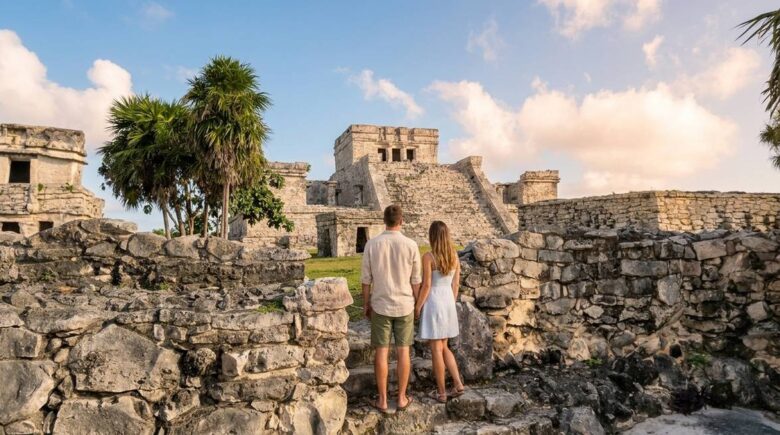
There is a stretch of days each year, from October 31 to November 2, when Tulum feels quieter, slower, and somehow more lit up all at once. Candles flicker on family altars in Tulum Pueblo. The smell of pib rises from earth ovens dug into backyards. Marigold petals mark paths from doorways to household shrines. This is Day of the Dead in Tulum, and here on the Yucatán side of Mexico, it carries a Maya name: Hanal Pixán, or “food of the souls.”
It is not a costume party, and it is not quite the Día de Muertos you may have seen in films set in Mexico City or Oaxaca. It is a family reunion that includes the ancestors, cooked slowly and shared generously. Understanding what is happening around you is the best way to experience it, so this guide focuses on the meaning behind the traditions: what the altars say, why the food matters so much, and how visitors can take part with care.
Food of the Souls
In Yucatec Maya, hanal means food and pixán means soul. The name tells you almost everything. The central belief of the holiday is that the souls of the dead are given permission to return home once a year, and that they arrive hungry. Families do not simply remember their loved ones during these days. They host them, setting out their favorite dishes, drinks, and small comforts as if preparing for honored guests who have traveled a long way.
The tradition is a blend of two worlds. Long before the Spanish arrived, the Maya held rituals to honor the dead, kept ancestors close (sometimes buried beneath the family home), and understood death as a passage into another realm rather than an ending. Catholic missionaries brought All Saints’ Day and All Souls’ Day on November 1 and 2, and over centuries the two calendars fused. The result is something uniquely Yucatecan: Catholic prayers and rosaries spoken in front of altars arranged according to Maya ideas about the cosmos.
Three Days, Three Kinds of Souls
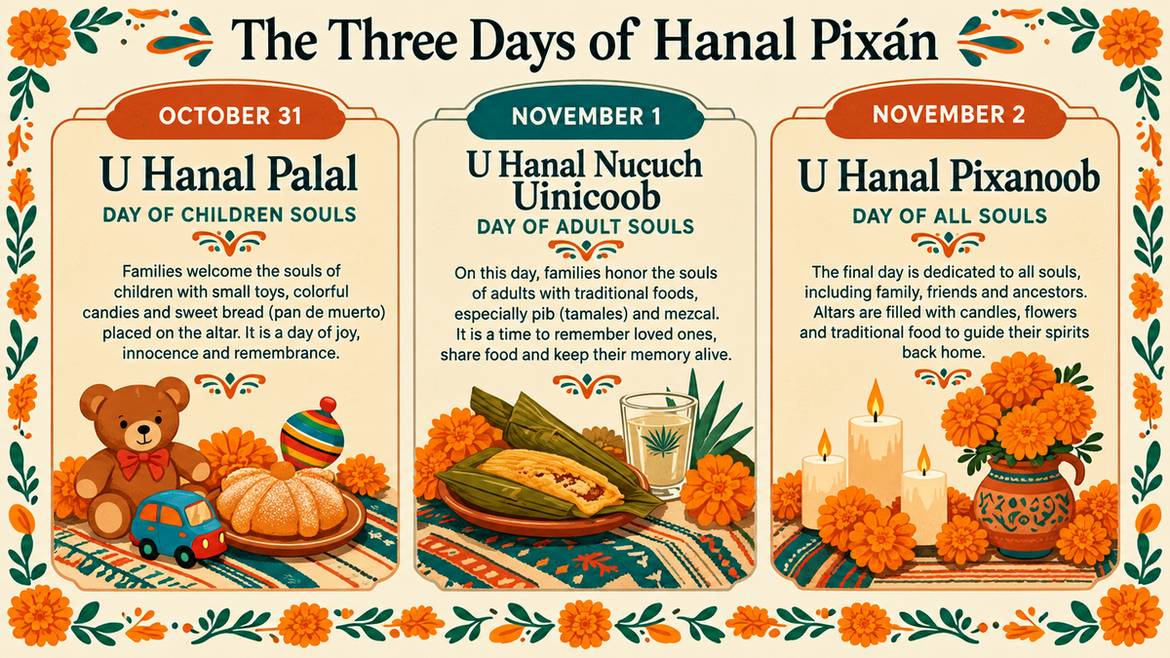
While much of Mexico observes two days, the Yucatán Peninsula stretches the celebration across three, each with its own guests.
October 31 is U Hanal Palal, dedicated to the souls of children. Altars are sweeter and smaller, with candies, fruit, chocolate, and toys, and the candles are often in bright colors. November 1 is U Hanal Nucuch Uinicoob, the day for adult souls, when the table fills with mucbipollo, atole, tobacco, and the drinks the deceased enjoyed in life. November 2 is U Hanal Pixanoob, dedicated to all souls, when families attend Mass and gather at the cemetery to clean and decorate graves, share food, and pray.
The observance does not fully end there. Many Maya families hold a final ritual a week later, known as the Bix or octava, offering one last meal to send the souls off before they return to the other world for another year.
Reading a Maya Altar
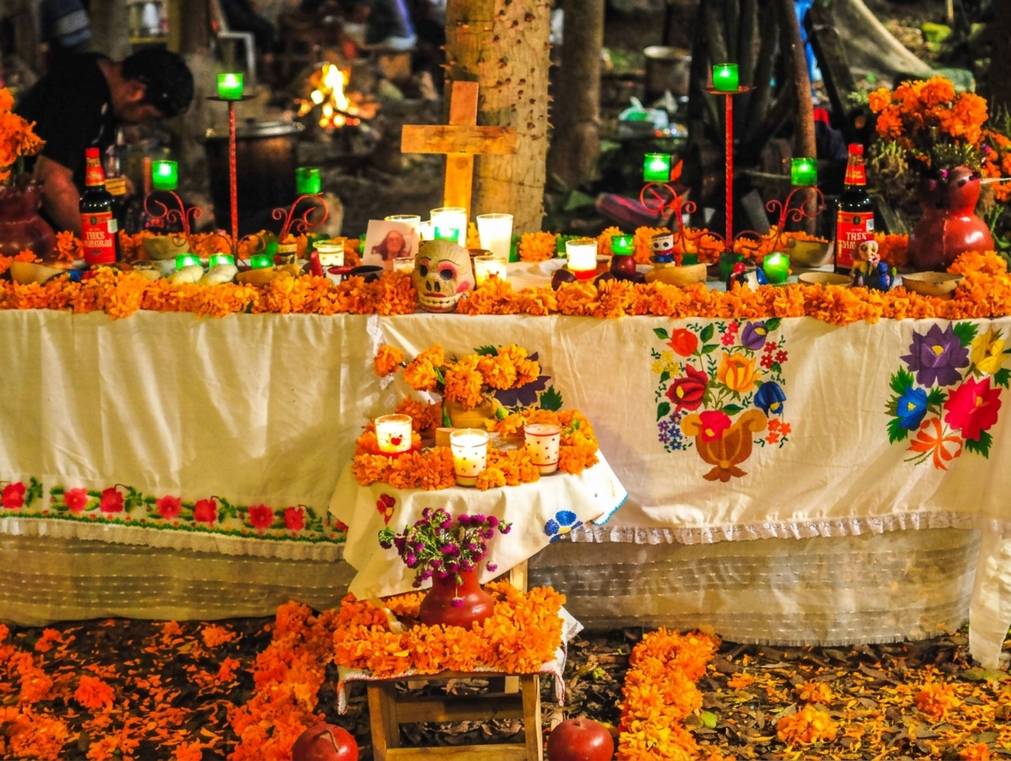
A Hanal Pixán altar is a map of the Maya universe. Many are built in three levels, a deliberate nod to Maya cosmology: the heavens above, the earthly world in the middle, and Xibalbá, the underworld, below. The table is usually covered in a white embroidered cloth, the same kind of hand-stitched textile worn in traditional huipiles.
Every object has a job. Candles light the way home for the souls, and families often place one for each person they are remembering. A glass of water quenches the thirst of travelers who have come a long distance, and a small dish of salt is said to purify and keep the soul from corrupting on its journey. Photographs and personal belongings, a hat, a favorite cup, a pack of cigarettes, help each spirit recognize its place. Cempasúchil marigolds and the local purple flower known as xpujuc add color and scent, and their petals are sometimes scattered in a path from the door to the altar. A Maya cross, often painted green to represent the sacred ceiba tree that connects the three worlds, frequently stands at the center.
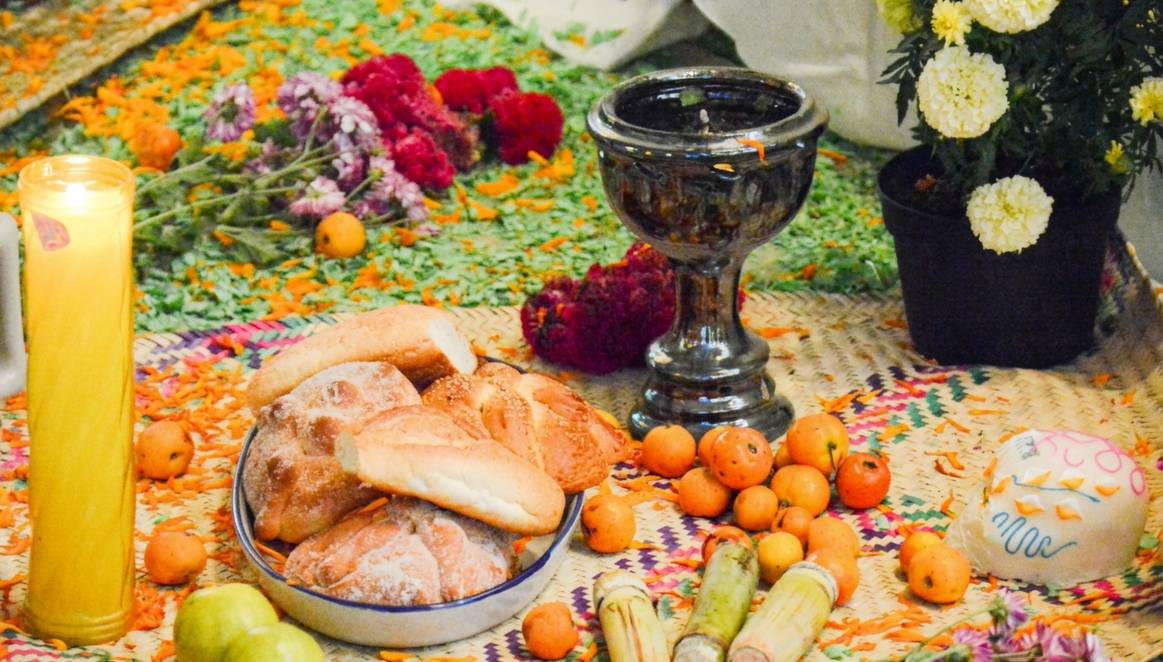
Food is always the heart of the altar, served in jícaras (gourd bowls) and clay dishes. The souls are believed to take in the essence and aroma of the offerings. Once the visit is over, the living share what remains, which is why the dishes are eaten together afterward rather than thrown away.
Mucbipollo and the Taste of the Season
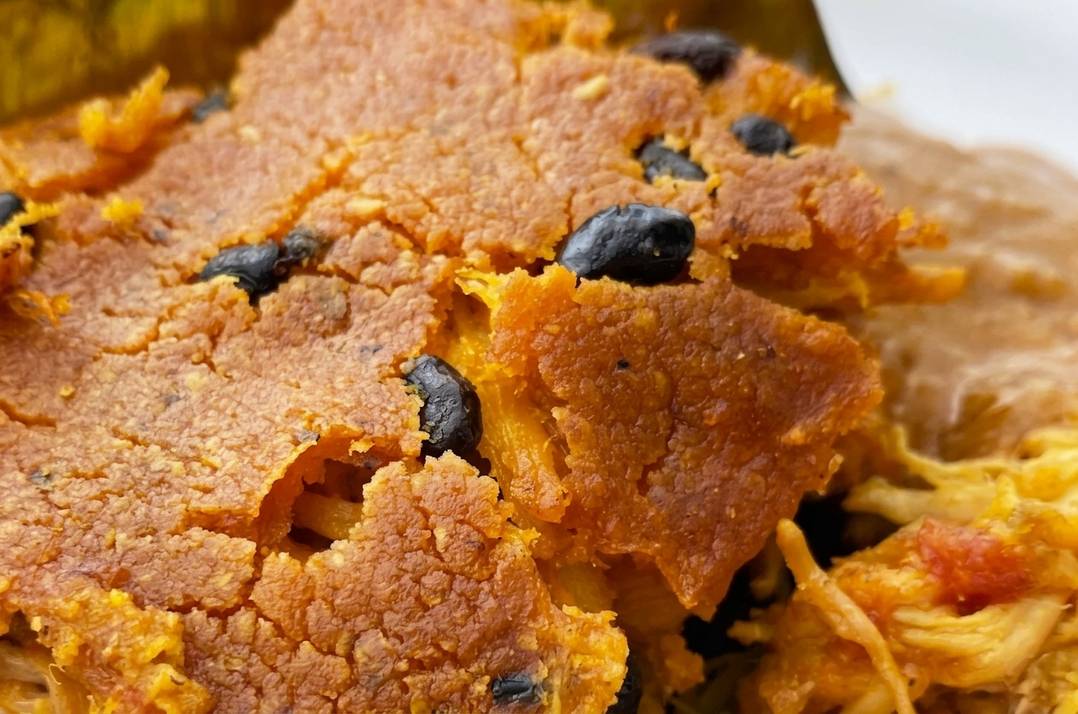
If one dish defines Hanal Pixán, it is mucbipollo, also called pib. The name mixes Maya and Spanish: muc means buried, bil or bi refers to something cooked, and pollo is chicken. It is a large, thick tamal made with corn masa and lard, filled with chicken or pork in a sauce colored with achiote and thickened with masa, then wrapped in banana leaves and buried in a pit oven lined with hot stones. Hours later it comes out smoky, dense, and fragrant.
Making pib is a family event in itself. Relatives gather the day before to prepare the masa and filling, and the moment the oven is opened is one of the most anticipated of the season. Many bakeries and market stalls in the Yucatán sell pib during these days, so even visitors without a backyard oven can taste it.
Around it you will find other seasonal flavors. Atole nuevo is a warm, thick drink made from fresh corn. Xec is a bright salad of jicama, orange, and chile. Tamales de x’pelón use a small local bean. Sweets include dulce de papaya, calabaza en tacha (squash candied in piloncillo), and coconut candies, while pan de muerto, the anise-scented bread topped with bone-shaped dough, has become part of the Yucatán table too. In more traditional communities you may also hear of balché, a ceremonial drink fermented with tree bark.
Hanal Pixán in Tulum Today
Tulum Pueblo keeps these traditions alive in public as well as at home. The municipality organizes a Janal Pixán festival, with community altars built by neighborhoods, schools, and cultural groups around the Museo de la Cultura Maya Park next to City Hall, along with music, theater, and traditional dance. Parque Dos Aguas and the open-air food park Palma Central also fill with altars and families during the holiday.
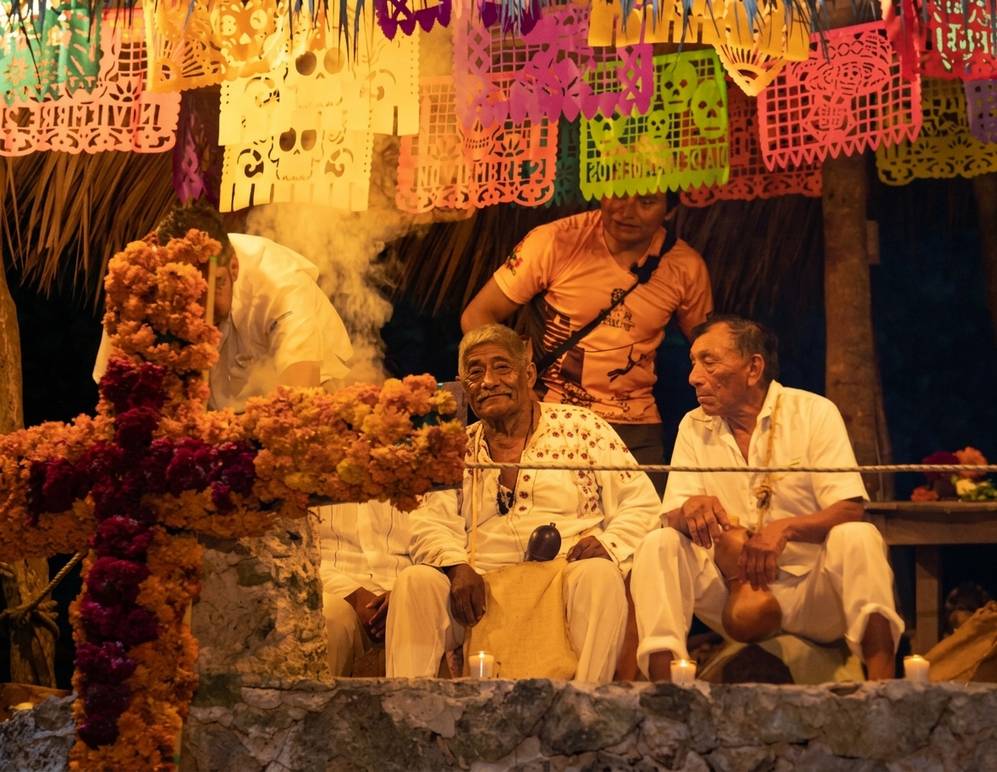
The most moving public moment is the Paseo de las Ánimas, a candlelit procession on the evening of October 31 in which families walk together carrying candles and framed photographs of loved ones. Many wear traditional Maya dress or Catrina makeup. It is contemplative rather than festive, closer to a pilgrimage than a parade.
Some hotels and venues in the area also host cultural evenings during the holiday, such as candlelit altar gatherings beside a cenote or guided Catrina processions along the beach road. These are polished, ticketed experiences that sit alongside the community celebrations rather than replacing them, and they tend to sell out early.
How to Take Part Respectfully
Hanal Pixán is a sacred family observance, and a few small habits make all the difference. Ask permission before photographing altars, mourning families, or graves. Never touch offerings, since the food, drinks, and objects on an altar belong to the returning souls. Dress modestly at the cemetery and during the Paseo de las Ánimas, and follow the pace of the procession rather than moving ahead for photos. If a family invites you to share pib or atole, accept graciously, because sharing food is the very point of the holiday. Whenever possible, support family-run food stands and community events.
A Quieter Season to Visit
Late October and early November are one of the loveliest windows of the year in this corner of the Riviera Maya. The rainy season is winding down, the humidity eases, and the crowds of the December holidays have not yet arrived. Because the celebrations happen mostly in the evenings, mornings are free for the Tulum ruins at first light, a swim in a quiet cenote, or a boat ride through the lagoons of Sian Ka’an.
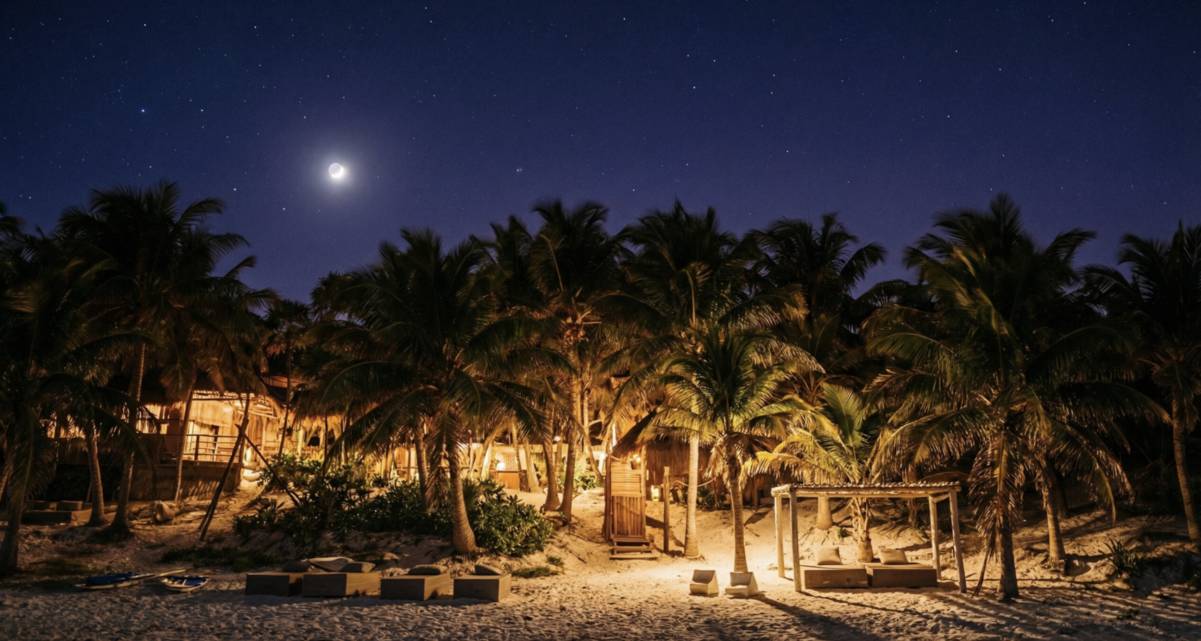
That rhythm, nature by day and culture by candlelight, is exactly what makes Casa Nalum such a natural base for the season. Our five-bedroom eco-villa sits on its own stretch of beach inside the Sian Ka’an Biosphere Reserve, about 30 minutes south of Tulum Pueblo. Days unfold slowly between the private pool, the sand, and the mangrove channels, and evenings bring you north for the altars, the processions, and a plate of pib. For families and small groups who want to experience Hanal Pixán in depth and come home each night to complete privacy, our beachfront luxury villa in Sian Ka’an offers both. To shape the rest of your trip, our guides to things to do around Tulum, Tulum vs Cancun, and Akumal vs Tulum are a good place to start.
Come Slowly, Come Hungry
Day of the Dead in Tulum is not something to watch from the sidelines. It is a few days in which a whole community sets the table for the people it has lost, and visitors who understand that will find it one of the most moving experiences in Mexico. Come slowly, come respectfully, and come hungry. When you are ready to plan your stay, reach out to Casa Nalum and let us help you shape a Hanal Pixán week between the biosphere and the pueblo.
Frequently Asked Questions
When is Day of the Dead in Tulum in 2026?
Hanal Pixán in Tulum runs from October 31 to November 2, 2026. The municipal Janal Pixán festival typically begins a day or two earlier, the Paseo de las Ánimas is held on the evening of October 31, and many families observe the Bix a week later.
What does Hanal Pixán mean?
Hanal Pixán means “food of the souls” in Yucatec Maya. The name reflects the core belief of the holiday: the souls of the dead return home once a year, and families welcome them with their favorite foods.
What is the difference between Día de Muertos and Hanal Pixán?
Día de Muertos is the Day of the Dead as celebrated across central and southern Mexico. Hanal Pixán is the Maya version practiced in Yucatán, Campeche, and Quintana Roo. It spans three days instead of two, uses altars arranged around Maya cosmology, and centers on regional dishes like mucbipollo, along with customs such as the protective wrist thread for children and the Bix a week later.
Is Day of the Dead the same as Halloween in Tulum?
No. Halloween is a separate holiday that some bars and hotels in the hotel zone celebrate. Hanal Pixán is an indigenous Maya observance rooted in family, food, and ancestors. The two overlap on the calendar but carry very different meanings.
Can tourists join Day of the Dead celebrations in Tulum?
Yes. Visitors are welcome at public events like the Paseo de las Ánimas and the community altars in Tulum Pueblo’s parks. Be a respectful guest: dress modestly, ask before photographing, and remember that home altars and cemetery visits are intimate family moments.
What is mucbipollo?
Mucbipollo, or pib, is a large tamal filled with chicken or pork in an achiote sauce, wrapped in banana leaves, and cooked for hours in an underground oven. It is the signature dish of Hanal Pixán and is offered on altars before being shared by the family.