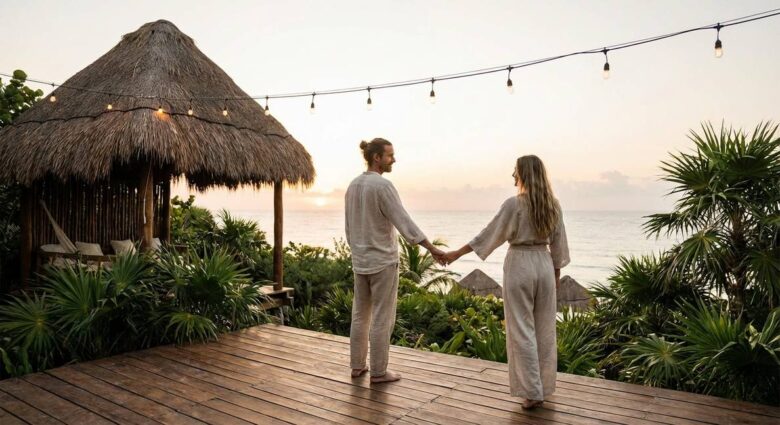
Two names keep surfacing when travelers start dreaming about a Mexican Caribbean vacation: Tulum and Cozumel. Both sit along the same jewel-toned coastline, both promise warm water and white sand, and both trade heavily on that particular Yucatán mix of jungle, ruins, and reef. Yet they feel like different countries the moment you arrive.
Tulum is a mainland coastal town wrapped in mangrove and jungle, famous for cliffside Mayan ruins, freshwater cenotes, and a boho beach-club scene that has become shorthand for a certain kind of stylish escape. Cozumel is an island a short ferry ride from Playa del Carmen, best known for one of the top reef systems in the western hemisphere and a slower, more small-town rhythm.
At Casa Nalum we sit right on the Tulum side of that decision, tucked between the Sian Ka’an Biosphere Reserve and the Caribbean Sea, so we hear this question constantly from guests planning their first trip. This guide is our honest, side-by-side answer, built from what the destinations actually deliver in 2026 so you can pick the one that matches your travel style.
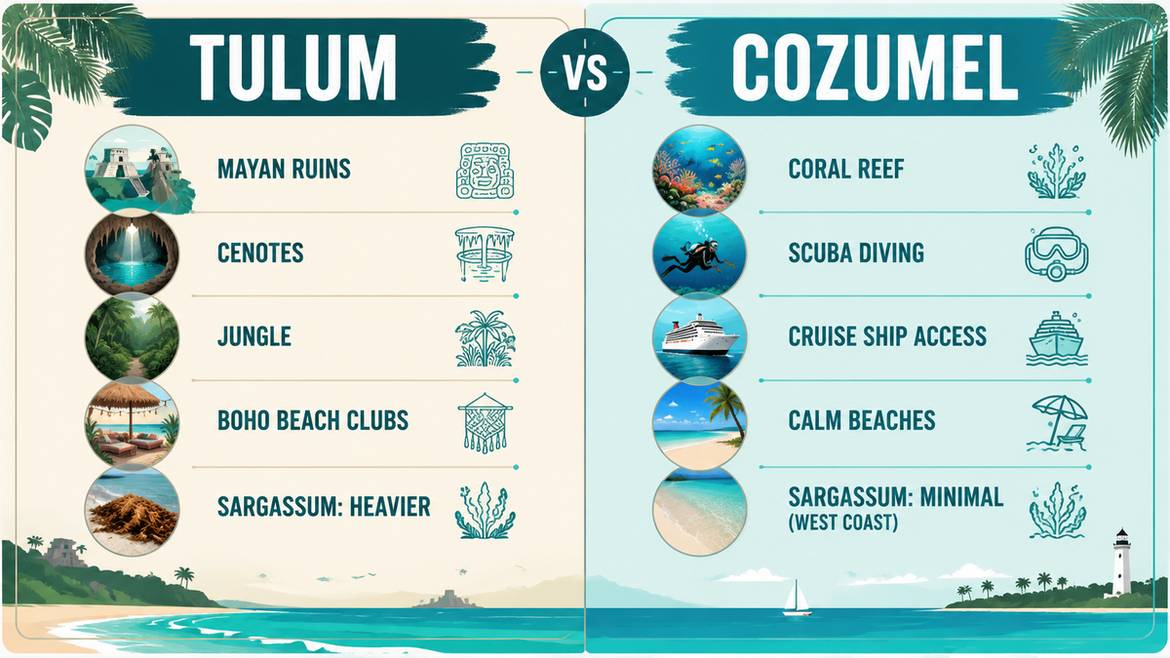
Tulum vs Cozumel at a Glance
Before we dig into the specific spots, here is the shortest possible version of the comparison. Tulum leans jungle, cenotes, ruins, wellness, and beach-club nightlife. Cozumel leans reefs, diving, calm island days, and family beach clubs. Tulum typically costs more, especially in the Beach Zone. Cozumel is easier and cheaper to reach if you are already in Playa del Carmen, thanks to a 30 to 45 minute ferry that runs frequently through the day.
Sargassum, the seaweed that has affected the region since the mid-2010s, hits both destinations but differently. Tulum’s long open Caribbean coast can see heavier influxes between April and September, with more than 2,000 tons removed from Quintana Roo beaches in the first half of 2025 alone. Cozumel’s west coast, which faces Playa del Carmen and holds most of the island’s beach clubs, tends to stay much cleaner because it sits in the lee of the island.
The Case for Tulum: Ruins, Cenotes, and Jungle-Meets-Sea
Tulum is the destination if you want variety on land as much as in the water. In a single week you can climb a Mayan pyramid, swim through a cave lit by shafts of sun, spend a morning on a paddleboard in a mangrove lagoon, and finish with a fire-lit dinner in the jungle. It is also the base most guests choose when they want a private villa surrounded by nature rather than a hotel corridor.
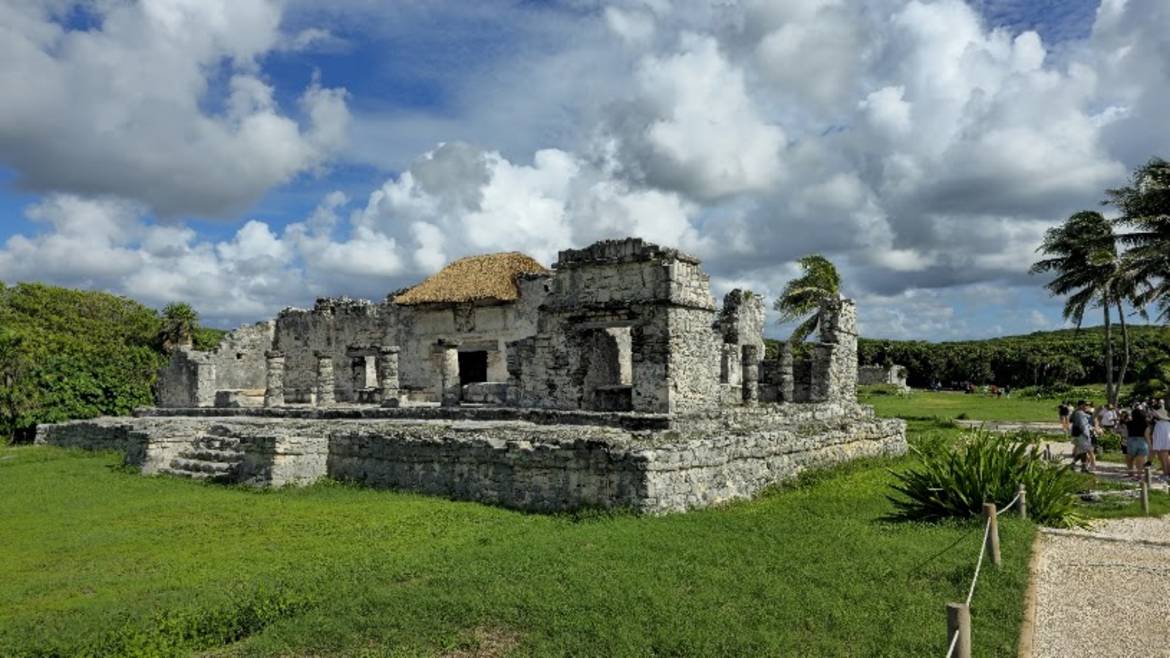
Tulum Archaeological Zone
Perched on a limestone cliff above the Caribbean, the Tulum ruins are the only major Mayan site in Mexico built on the sea. The site is compact enough to see in two hours, which makes it perfect as a first-morning outing before the heat and cruise-day crowds arrive.
- Rating: 4.7 stars (71,512 reviews)
- Address: Zona Hotelera Tulum, 77765 Tulum, Quintana Roo
- Hours: Open daily, roughly 8 AM to 5 PM (last entry mid-afternoon)
- Tip: Arrive at opening for cooler light and quieter photos of El Castillo above the turquoise cove
- Website: inah.gob.mx
- View on Google Maps
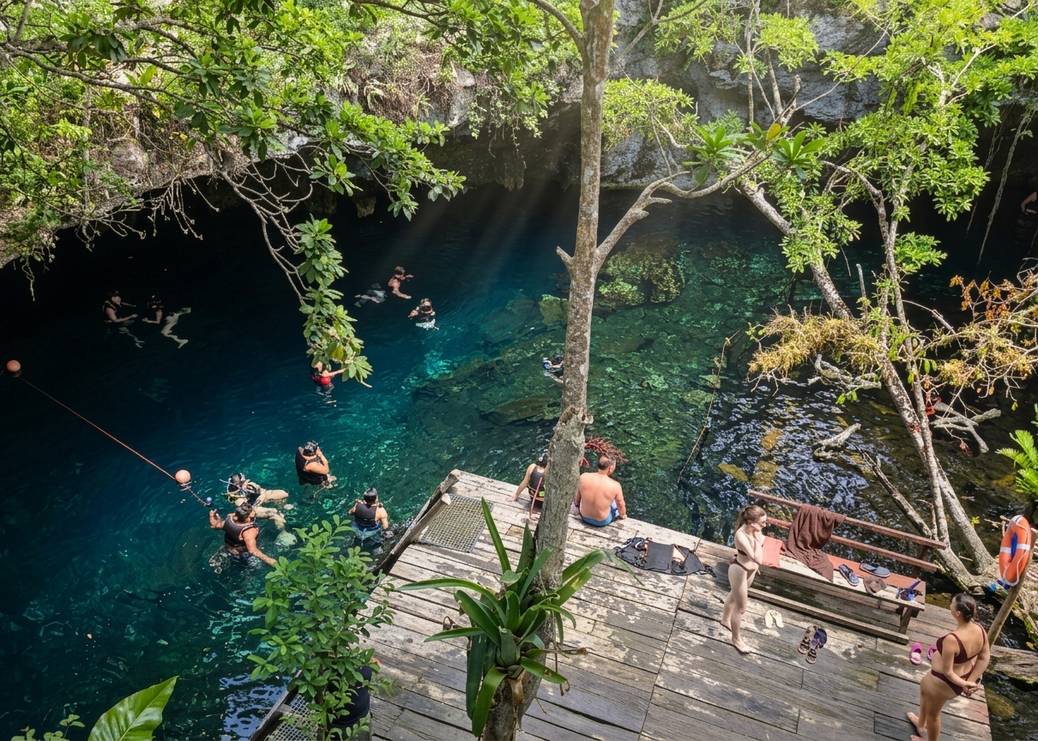
Gran Cenote
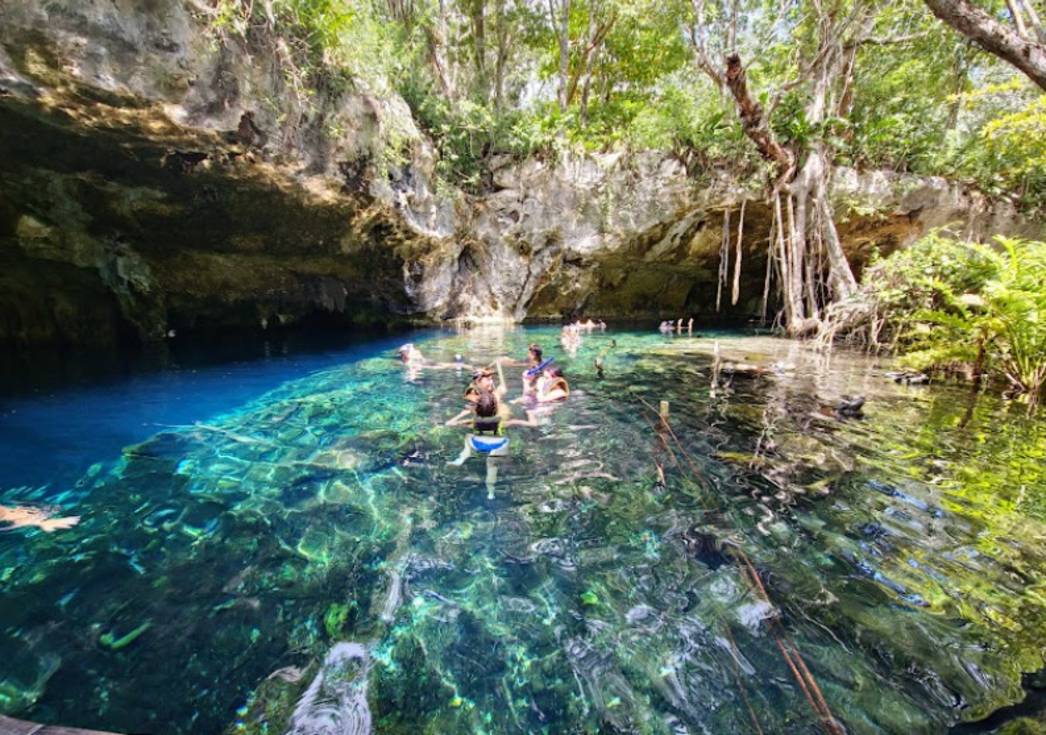
If you can only visit one cenote on your trip, most first-timers pick Gran Cenote. It combines an open-air swimming area with a short cavern swim between two sinkholes, and the water is so clear that turtles, small fish, and sunbeams read like a nature documentary. Snorkel gear is included with entry.
- Rating: 4.3 stars (8,254 reviews)
- Address: Carretera Tulum, 77796 Tulum, Quintana Roo
- What to bring: Reef-safe sunscreen only (regular sunscreen must be rinsed off before entering)
- View on Google Maps
Cenote Dos Ojos
Two large sinkholes connected by an underwater passage give Dos Ojos its name. The “Two Eyes” are part of the Sac Actun cave system, one of the longest underwater cave networks on the planet. Snorkelers get plenty of magic in the first cenote; certified cave divers can go much deeper with a local guide.
- Rating: 4.7 stars (7,880 reviews)
- Address: 77774 Quintana Roo, Mexico
- Hours: Daily 8 AM to 5 PM
- One guest wrote: “A truly magical and breathtaking experience. The Dos Ojos cenotes are absolutely unique, timeless, powerful, and incredibly beautiful.”
- View on Google Maps
Sian Ka’an Biosphere Reserve
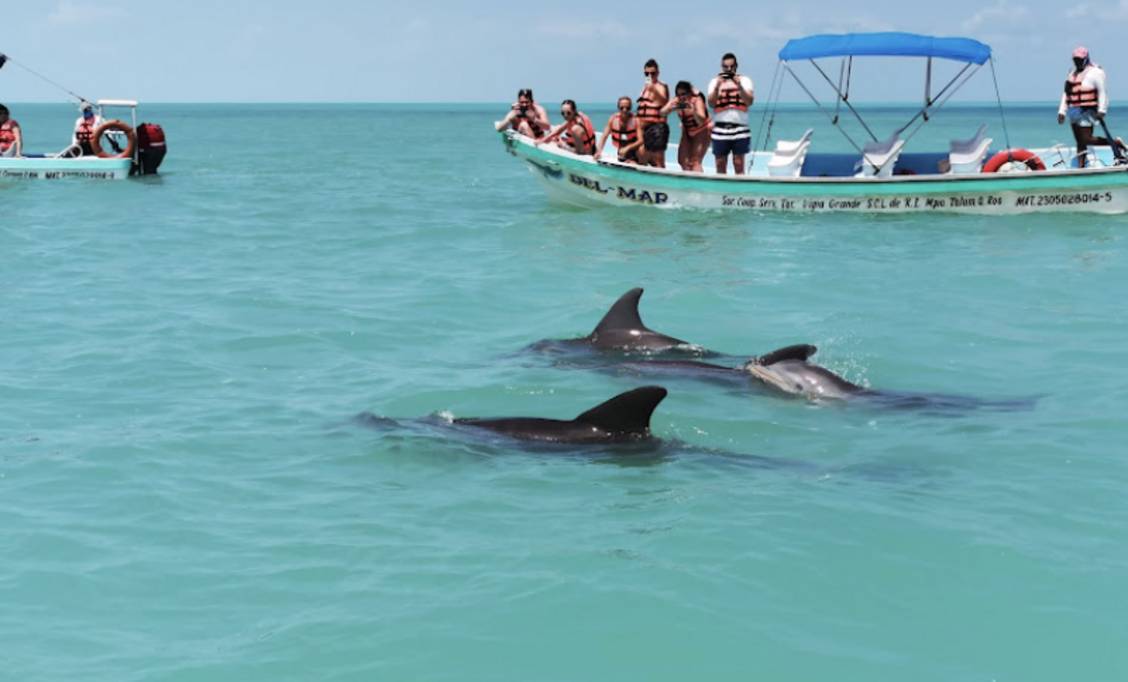
This UNESCO-listed reserve stretches for more than 2,000 square miles of coastal wetland, mangrove, jungle, and reef. It is where you go in Tulum to feel completely off the grid, spotting dolphins, sea turtles, and hundreds of bird species. Guided lagoon tours out of Muyil float you through ancient Mayan canals cut by traders a thousand years ago.
- Rating: 4.6 stars (4,053 reviews)
- Address: Sian Ka’an, Quintana Roo, Mexico
- Best experience: Half-day boat and float tour through Muyil lagoons
- View on Google Maps
Playa Paraíso
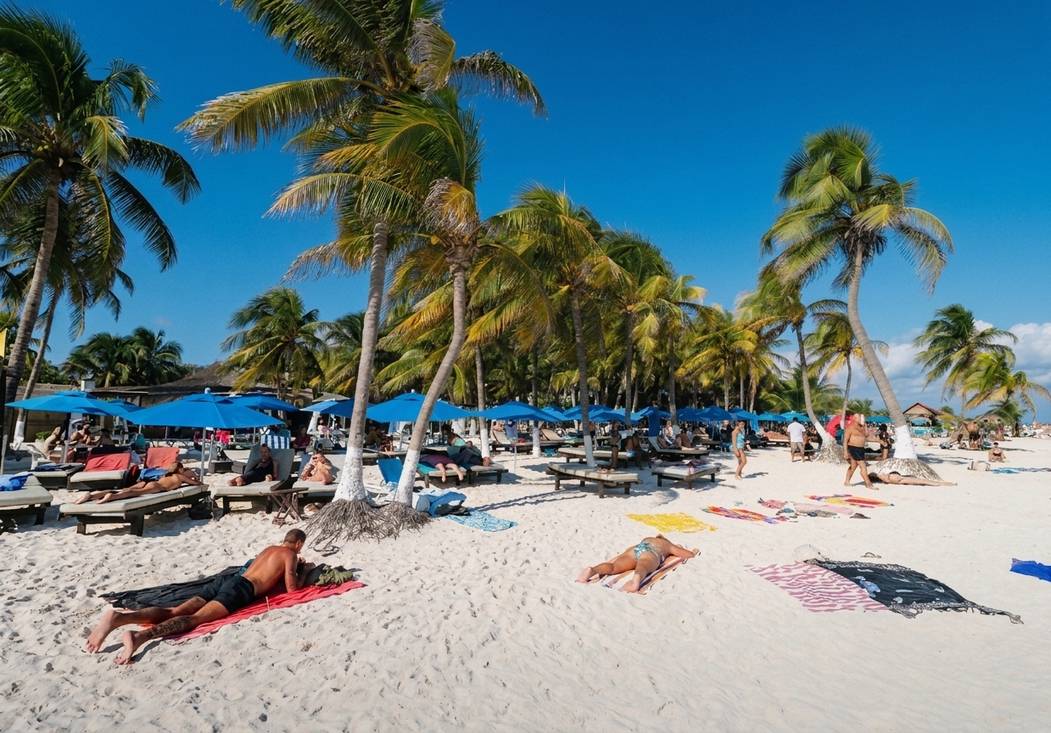
The name means “Paradise Beach” and it earns it. Sitting just south of the Tulum ruins, Playa Paraíso is the kind of soft-sand, palm-lined stretch that ends up on most postcards of the Mexican Caribbean. The beach club here is casual and affordable compared to the boutique clubs further down the Beach Zone.
- Rating: 4.5 stars (4,275 reviews)
- Address: Zona Hotelera Tulum
- Good for: Day-tripping after a ruins visit, families with kids, budget-conscious beach days
- View on Google Maps
The Case for Cozumel: Reefs, Island Calm, and Easier Beach Days
Cozumel makes a very different pitch. This is a Caribbean island that got put on the world map by Jacques Cousteau in the 1960s when he called its reef system one of the finest scuba destinations on the planet. That reputation still holds. Cozumel is also where cruise ships dock, so the west-coast beach clubs are polished, and the roads are easy to navigate on a rented Jeep or scooter.
Palancar Reef and Playa Palancar
Palancar Reef is the reason many divers make a special trip to Mexico. Coral canyons, swim-throughs, and drift dives along a wall that drops into deep blue are the defining images. Non-divers can snorkel from the reef’s namesake beach club and see plenty of parrotfish, angelfish, and the occasional ray without ever putting on a tank.
- Rating: 4.3 stars (4,682 reviews at the reef); 3.9 stars (674 reviews at the beach)
- Address: South-west coast of Cozumel
- What to bring: Certification card for divers, reef-safe sunscreen for everyone
- View on Google Maps
Punta Sur Eco Beach Park
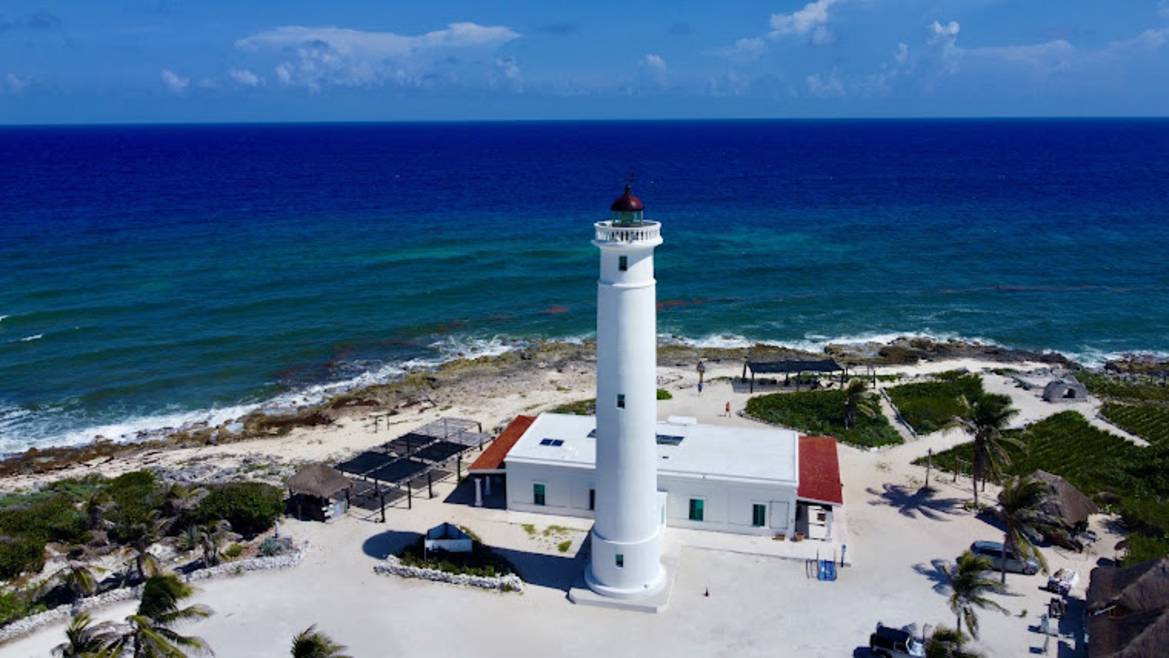
At the southern tip of the island, Punta Sur combines lighthouse views, a lagoon full of crocodiles and flamingos, and the wildest beach on Cozumel. Nesting sea turtles use this coast in summer. Come for a half-day of exploring by rented Jeep and lunch at the on-site restaurant.
- Rating: 4.6 stars (2,848 reviews)
- Address: South tip of Cozumel island
- Tip: Bring binoculars for the lagoon boardwalk
- View on Google Maps
Mr Sancho’s Beach Club
If your Cozumel plan is simply “one glorious beach day with all the snacks,” Mr Sancho’s is the answer most first-timers land on. An all-inclusive day pass covers food, drinks, chairs, and non-motorized water activities on a wide clean stretch of west-coast sand.
- Rating: 4.7 stars (9,287 reviews)
- Address: Km 15 Carretera Costera Sur, Cozumel
- Good for: Cruise days, honeymooners, groups who want zero planning
- View on Google Maps
San Gervasio Mayan Ruins
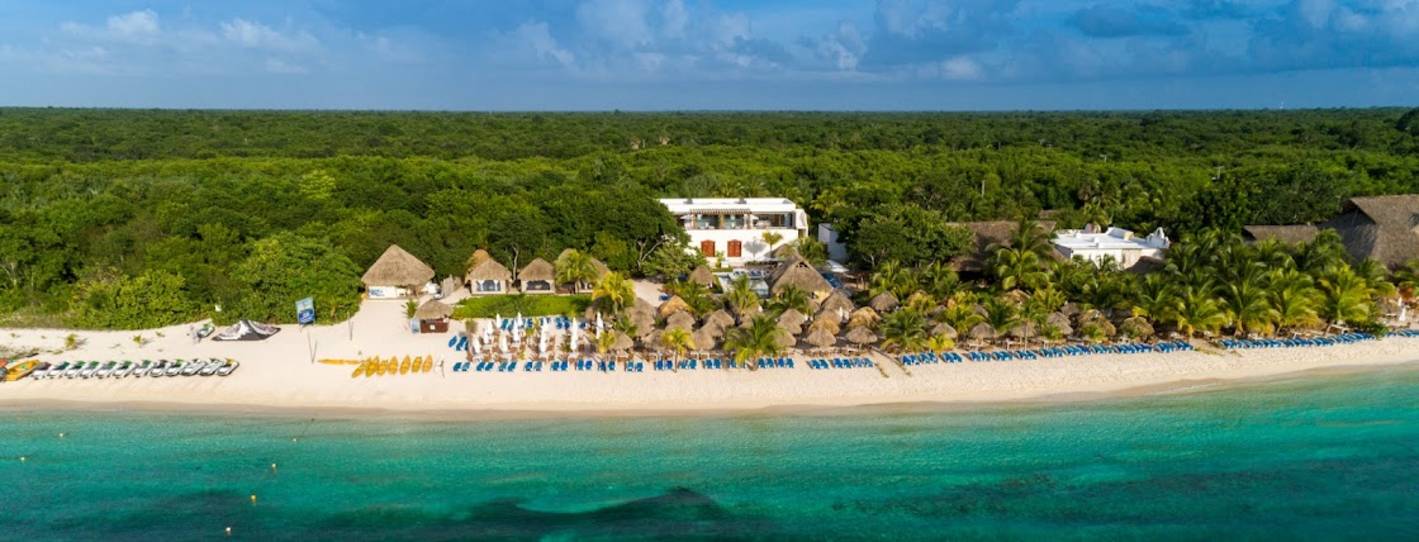
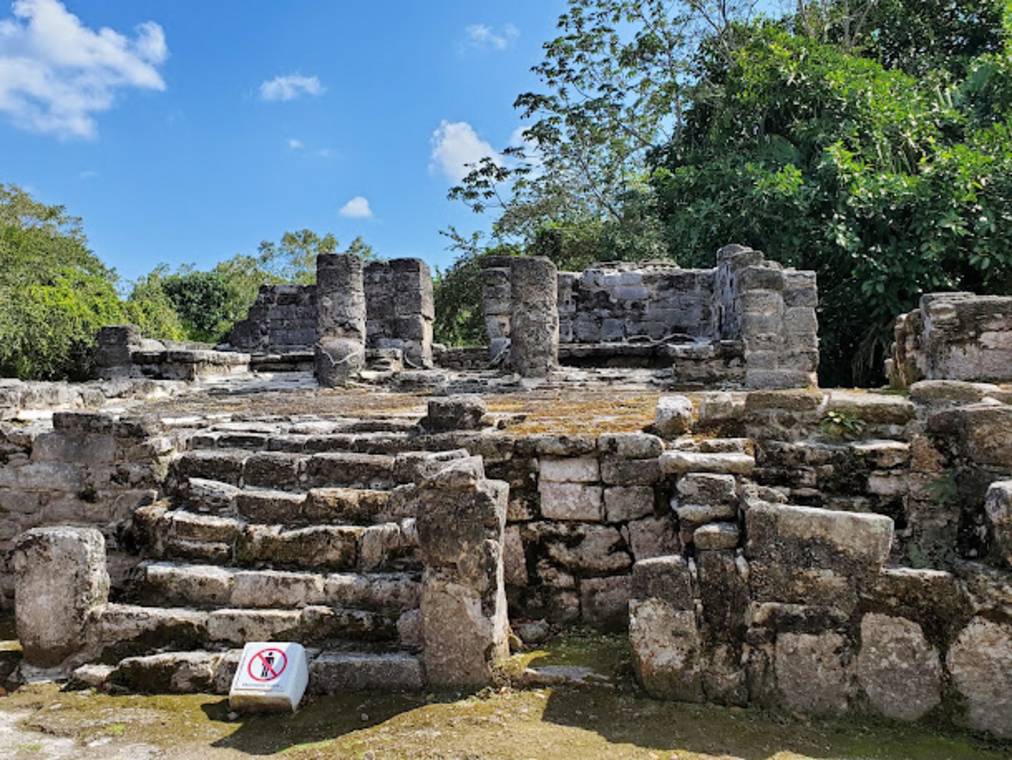
Cozumel does have Mayan ruins, though they play a much smaller role than in Tulum. San Gervasio was a pilgrimage site dedicated to Ixchel, the Mayan goddess of fertility and the moon. The setting is jungle rather than sea, and the crowds are minimal even in peak season.
- Rating: 4.5 stars (3,741 reviews)
- Address: Central Cozumel, off the transversal road
- Tip: Combine with a Jeep loop of the island
- View on Google Maps
Head to Head: Which Destination Wins for Your Trip Style?
The right pick depends less on which destination is objectively better and more on what you want your days to feel like.
- Best for divers and snorkelers: Cozumel. The reef quality, water clarity, and infrastructure for dive shops are unmatched in the region.
- Best for cenotes, ruins, and jungle: Tulum. Cozumel has no cenotes and only minor ruins.
- Best for families with young kids: Cozumel edges ahead thanks to calm west-coast beaches, one-stop parks like Chankanaab, and shorter transit.
- Best for couples on a romantic escape: Tulum, if you want boho-luxury and private villas near a UNESCO reserve. Casa Nalum is our own take on that brief.
- Best for a first-time trip to Mexico’s Caribbean: Tulum, because it packs the widest variety of postcards into a single stay.
- Best for a cruise-day port or a short island break: Cozumel wins on ferry access and easy day-trip logistics.
- Best for a lower daily budget: Cozumel, generally. Tulum’s Beach Zone is one of the priciest strips in Mexico.
- Best for digital nomads: Tulum has more coworking spaces, cafes, and long-stay rentals in La Veleta and Aldea Zama.
Can You Do Both in One Trip?
Yes, and many travelers do. The most common way is to base yourself in Tulum for the ruins, cenotes, and Sian Ka’an days, then drive or shuttle 90 minutes north to Playa del Carmen and catch the Cozumel ferry for a two or three night island add-on. Ferries run roughly every one to two hours between about 6 AM and 10 PM, take 30 to 45 minutes, and cost around 300 to 400 pesos each way.
If you have seven nights, a five-and-two split works well: five in Tulum for the land experiences and cenote days, then two on Cozumel for a diving or beach-club finish. If you have ten nights or more, flip that to seven and three, which lets you slow down on the island side instead of racing between activities.
Final Verdict
If you want variety, jungle, ruins, cenotes, and a mix of wild nature with design-forward beach days, Tulum is the escape to pick, and staying somewhere calm and private like Casa Nalum lets you enjoy the town without living inside its noise. If you want reef diving, easy island calm, and a lower daily spend, Cozumel is the winner. If you can, do both. The two destinations are closer than most trip planners realize, and combining them gives you the fullest picture of what makes this stretch of the Mexican Caribbean feel like nowhere else.
Ready to plan the Tulum half of your trip? Check availability at Casa Nalum and start dreaming about mornings between the lagoon and the sea.

Frequently Asked Questions
Is Tulum or Cozumel better for a first trip to Mexico?
Tulum tends to be the stronger first-trip pick because you can bundle Mayan ruins, cenote swims, jungle experiences, and beach days into one stay. Cozumel is a great addition for two or three nights, especially if reef snorkeling or diving is on the list.
Is Cozumel cheaper than Tulum?
Generally, yes. Tulum’s Beach Zone is one of the most expensive strips in Mexico, and even mid-range budgets typically run US$300 to $640 per person per day. Cozumel’s lodging, food, and transport tend to sit noticeably below that range, especially outside the cruise-port center.
How bad is sargassum in Tulum vs Cozumel?
Both destinations see sargassum, mainly between April and September. Tulum’s exposed Caribbean coast catches heavier influxes. Cozumel’s west coast, where most beach clubs sit, is usually much cleaner because it faces Playa del Carmen. If pristine beach days matter most, plan your trip for November through April.
How do you get from Tulum to Cozumel?
Drive or shuttle from Tulum to Playa del Carmen (about 60 to 75 minutes on Highway 307), then take the passenger ferry from the Playa del Carmen pier to Cozumel. The ferry ride is 30 to 45 minutes and runs frequently through the day.
Is Tulum safe to visit in 2026?
Independent 2025 data shows a Crime Index around 41 for Tulum and homicide numbers down about 62 percent from 2024. Travelers who stick to well-trafficked areas, use reputable transport, and avoid remote late-night detours typically report an easy, safe trip.
Can you snorkel in Tulum, or do you have to go to Cozumel?
You can absolutely snorkel in Tulum. The best experiences are in the cenotes and inside the Sian Ka’an lagoons, plus small coastal reef trips. For big open-water reef snorkeling with strong visibility and marine life, Cozumel is the stronger call.