Most first-time visitors think of Tulum as one place. It is not. There are two Tulums, and they sit only a few kilometers apart, but they feel like two different worlds. One is a thin strip of beach hotels and palm trees on the Caribbean. The other is a busy little town inland, full of taquerias, bike lanes, and locals going about their day.
If you do not understand the difference before you arrive, you can end up spending a lot of money on taxis, missing the best food, or staying somewhere that does not match the trip you actually wanted. At Casa Nalum, we welcome guests from all over the world to our eco-villa inside the Sian Ka’an Biosphere Reserve, and we get this question almost every week: what is the difference between La Zona Hotelera and Tulum Pueblo, and where should we spend our time?
This guide is our answer. We will walk you through how the two areas feel, what each one is best for, how much things cost, and how to plan a smooth visit between them.
Why Tulum Is Really Two Places
Tulum used to be a quiet fishing village. Today it is one of the most talked-about destinations in Mexico, and the growth has split the town into two clear zones.
La Zona Hotelera (the Hotel Zone) is a narrow road that runs right along the Caribbean coast. Boutique hotels, beach clubs, jungle restaurants, and yoga studios sit shoulder to shoulder, sometimes hidden behind palms. The vibe is curated, design-forward, and built around the beach.
Tulum Pueblo (the Town or Centro) is about 5 kilometers inland, along Highway 307. This is where locals live, where the supermarkets and pharmacies are, where you find street tacos, smaller hotels, and a more relaxed, walkable feel. You do not see the ocean from here, but you do see the real Tulum.
The two are connected by Avenida Cobá, which has a dedicated bike path. By bike the ride takes about 20 to 25 minutes. By car or taxi it is about 10 to 15 minutes when traffic is moving. That short stretch of road is the single most important thing to understand about Tulum, because it changes everything: prices, atmosphere, food, sleep, and how you get around.
Quick insight: If your priority is being barefoot in the sand from the moment you wake up, La Zona Hotelera is built for you. If your priority is eating well, stretching your budget, and feeling the real rhythm of Tulum, Pueblo wins.
What La Zona Hotelera Feels Like
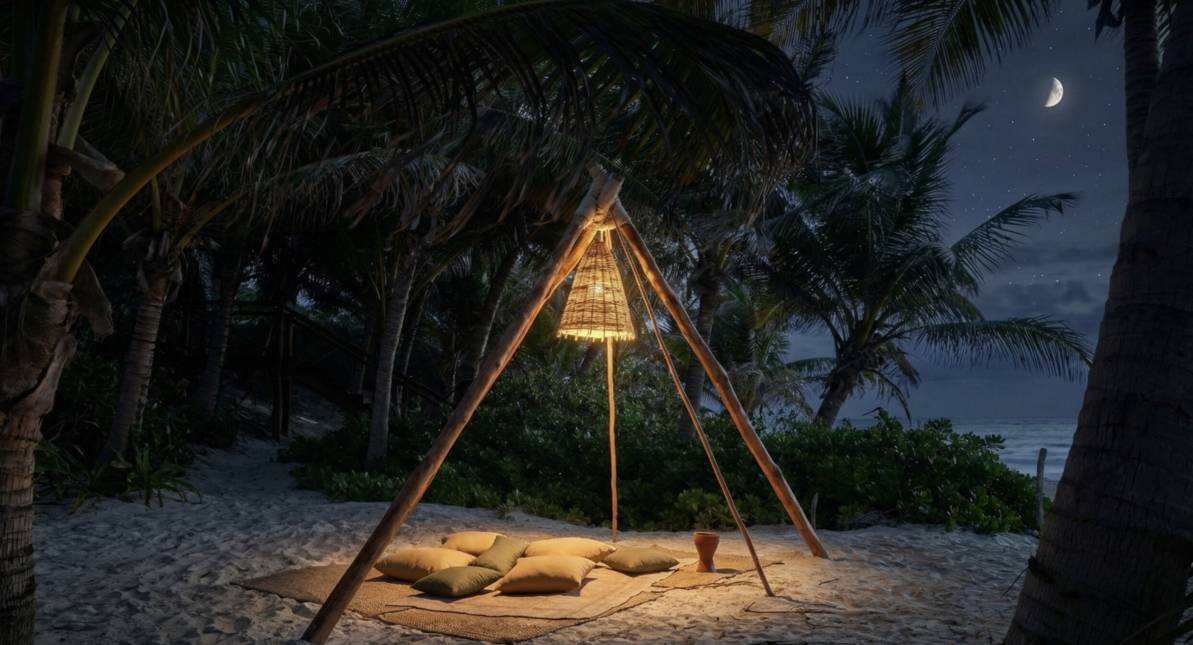
The Hotel Zone is the Tulum you have seen on Instagram. Wooden swings hanging over turquoise water. Candles in the sand. Boho cabanas with palapa roofs. Macramé chandeliers. Sound baths at sunset.
It is beautiful, and it is also expensive. Average nightly rates on the beach in high season often start at 200 to 350 US dollars and climb past 1,000 US dollars at the top properties. Cocktails at beach clubs commonly run 12 to 20 US dollars. A casual lunch at a beach restaurant can be 30 to 50 US dollars per person before tip.
You also pay for the lifestyle. Many smaller hotels run on generators, which means air conditioning may only work part of the day, Wi-Fi can be slow, and power flickers are normal. The single beach road gets congested, so traffic is slow, especially in December and January.
That said, when it works, it really works. There is nothing like waking up, stepping out of your room, and walking straight onto the Caribbean. That is what people are paying for, and for many travelers it is worth every peso.
What Tulum Pueblo Feels Like
Pueblo is the working heart of Tulum. The streets are a simple grid. Buses pull in and out of the ADO terminal on Avenida Tulum. There are banks, fruit stands, laundromats, hardware stores, and the smell of cooking grease drifting out of taquerias all day.
Hotels here are smaller and more practical. They feel like normal city hotels: reliable air conditioning, stable Wi-Fi, working power, and prices that are roughly one-tenth of what you would pay for similar comfort on the beach. Budget options start around 15 to 45 US dollars, and a nice mid-range stay is often 50 to 125 US dollars per night.
The food is where Pueblo really shines. A taco from a local spot can be 1 to 2 US dollars. A whole meal at a sit-down restaurant might run 7 to 18 US dollars. A fresh-pressed mojito at a popular bar costs about 5 US dollars, compared to 15 to 20 US dollars at most beach clubs.
The trade-off is obvious: no beach in walking distance. You will need a bike, a scooter, a colectivo, or a taxi every time you want to swim in the sea.
Side by Side: How the Two Tulums Compare
Here is the quick version, the way we explain it to our guests over a welcome drink at Casa Nalum.
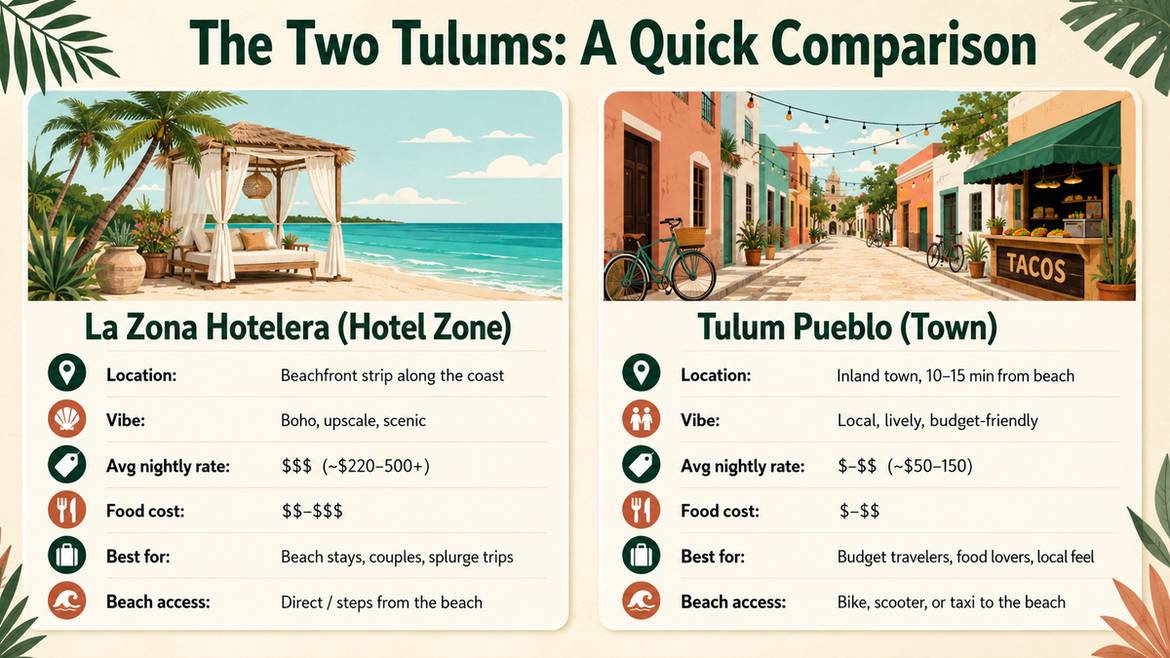
There is no wrong answer here. There is only the right answer for the trip you want.
Where to Eat and Drink in La Zona Hotelera
The Hotel Zone restaurants are some of the most talked-about in Mexico. They cost more, but the settings are unforgettable. Here are the spots we recommend most often to our guests.
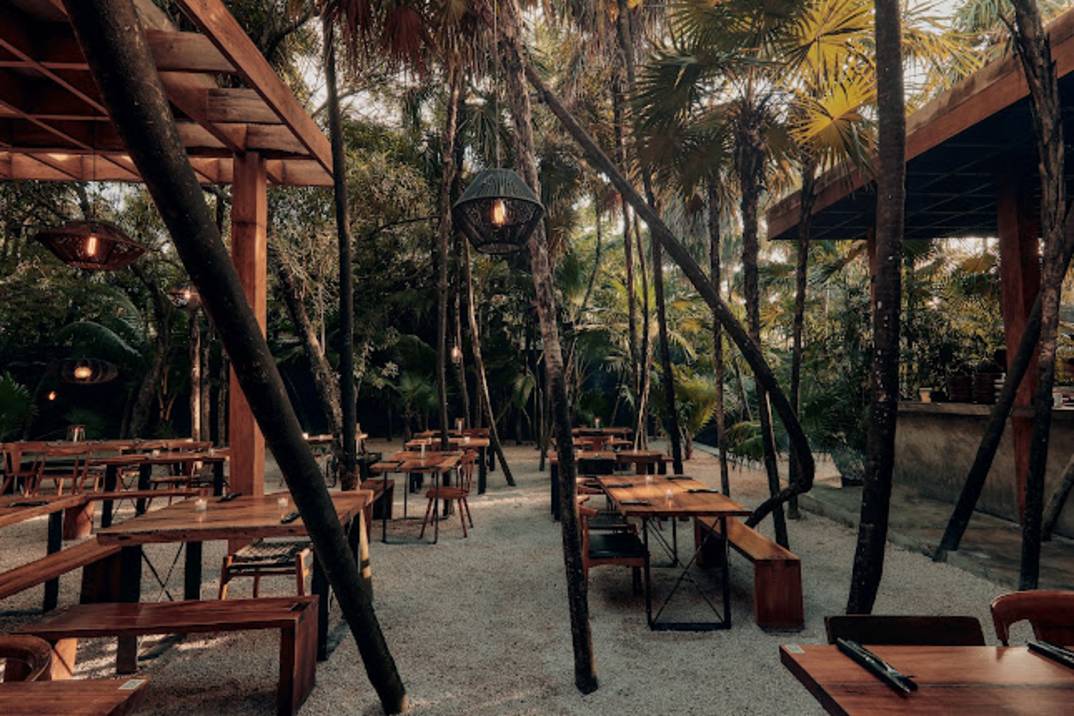
ARCA
ARCA sits along the jungle side of the beach road and is one of the most ambitious kitchens in Tulum. The cooking is open-fire and seasonal, with small plates that change often. Think octopus al pastor, smoked fish, charred vegetables, mezcal-driven cocktails.
The space itself feels like a candlelit dream: wood, sand, and lanterns hanging in the trees. It is a special-occasion dinner, not a casual stop.
- Rating: 4.3 (1,813 reviews)
- Address: Carretera Tulum-Boca Paila km 7.6, Tulum Beach
- Vibe: Fine dining, jungle setting, reservations essential
Mezzanine
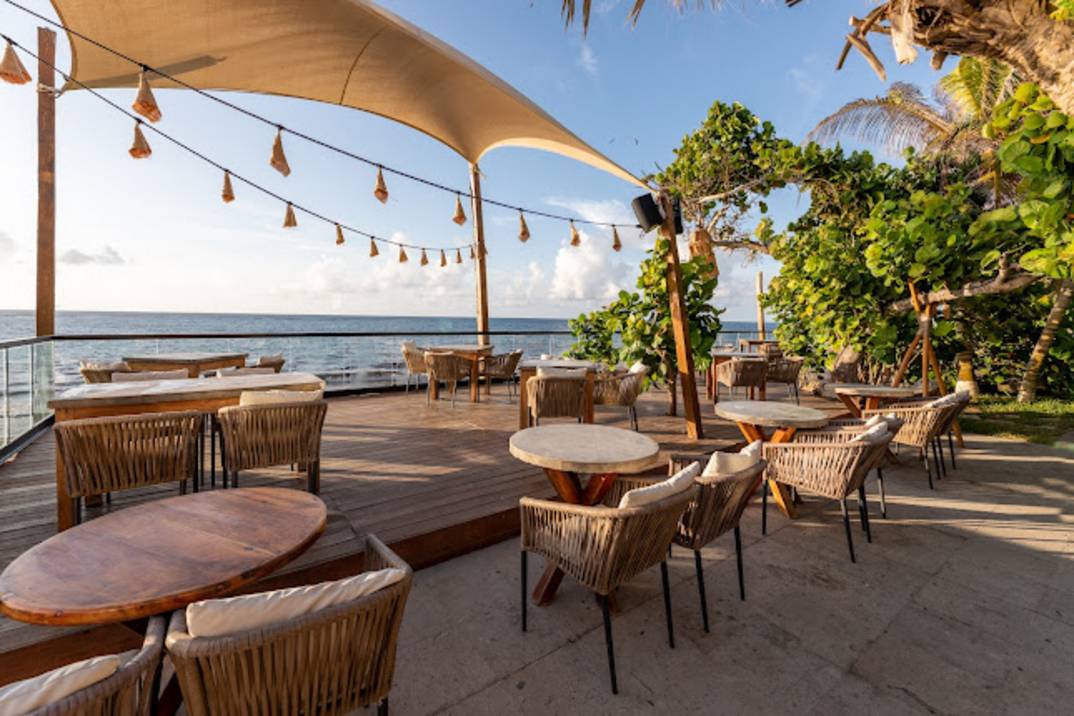
Mezzanine sits high on a small bluff at the north end of the beach road, with sweeping views over the Caribbean. The kitchen is Thai, which sounds strange in Tulum until you taste it. Curries, lemongrass-grilled fish, and crisp papaya salads pair beautifully with the breeze coming off the water.
We often send guests here for sunset cocktails before dinner. It is one of the rare Hotel Zone spots where the food and the view are equally strong.
- Rating: 4.5 (908 reviews)
- Address: Carretera Tulum-Boca Paila km 4.4, Zona Hotelera
- Best for: Sunset drinks and dinner with a view
Local tip: Many beach clubs and restaurants on the Hotel Zone road require a minimum food and drink spend if you want to use their loungers. Ask before you sit down so you do not end up with a surprise on your bill. Our full breakdown of the best Tulum beach clubs goes into the most popular ones in detail.
Where to Eat and Drink in Tulum Pueblo
Pueblo is where the food gets honest. Lower prices, fuller flavors, and the kind of places locals actually go on a Tuesday night.
Batey Mojito and Guarapo Bar
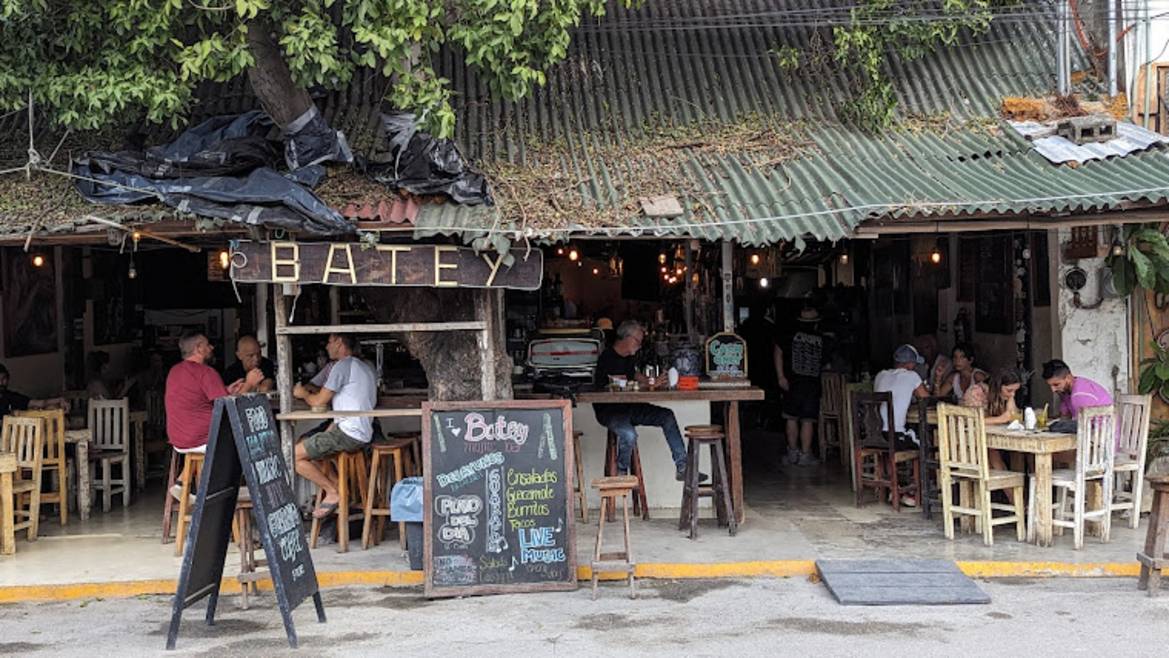
Batey is famous for one reason: a vintage Volkswagen Beetle parked inside the bar that has been turned into a sugarcane press. They feed cane through it all night to make some of the freshest mojitos on the peninsula. Live Cuban music starts in the early evening, and the energy is hard to beat.
A mojito here runs about 5 USD, compared to 15 to 20 USD on the beach. That is the Pueblo math.
- Rating: 4.7 (2,608 reviews)
- Address: Calle Centauro Sur, Tulum Centro
- Best for: Live music, fresh mojitos, walking-distance fun
El Camello Jr.
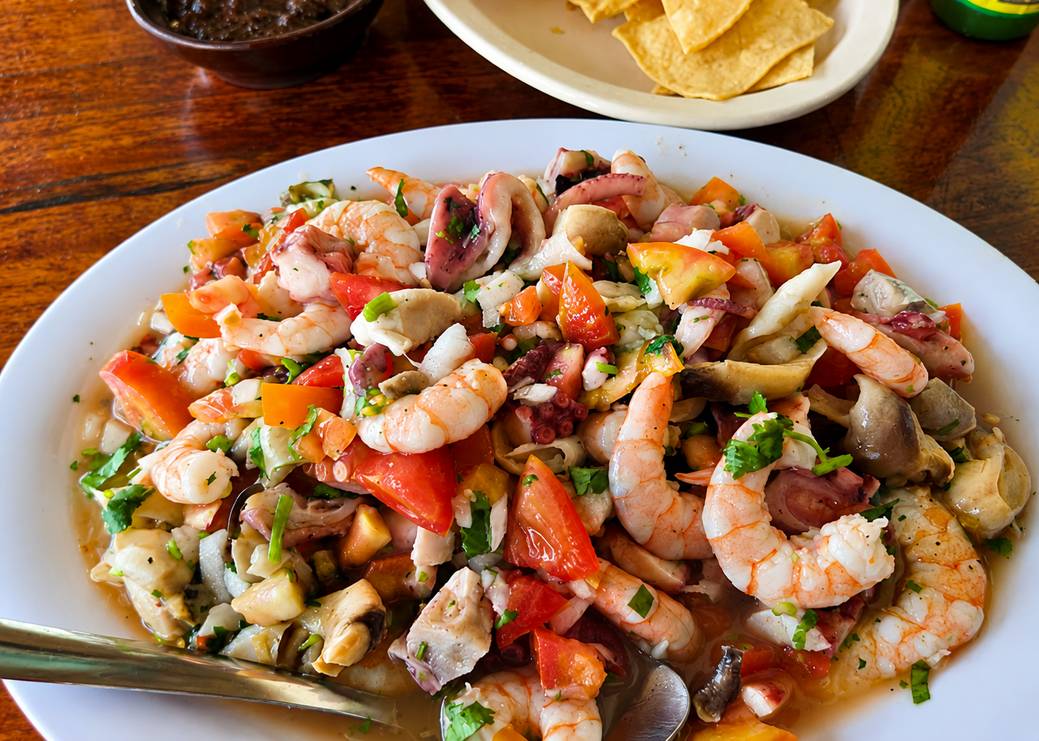
If you only eat one meal in Pueblo, make it here. El Camello Jr. is a casual, family-run seafood spot on the main highway that locals love and tourists discover. The fish ceviche, shrimp cocktails, and grilled whole fish are simple and fresh, often pulled in that morning.
The space is open-air, the service is warm, and the prices stay grounded. You can eat very well for under 20 USD per person.
- Rating: 4.4 (7,979 reviews)
- Address: Carretera Chetumal-Cancun, Centro Tulum
- Best for: Seafood, casual lunch, local crowd
Find El Camello Jr. on Google Maps
Mateos Mexican Grill
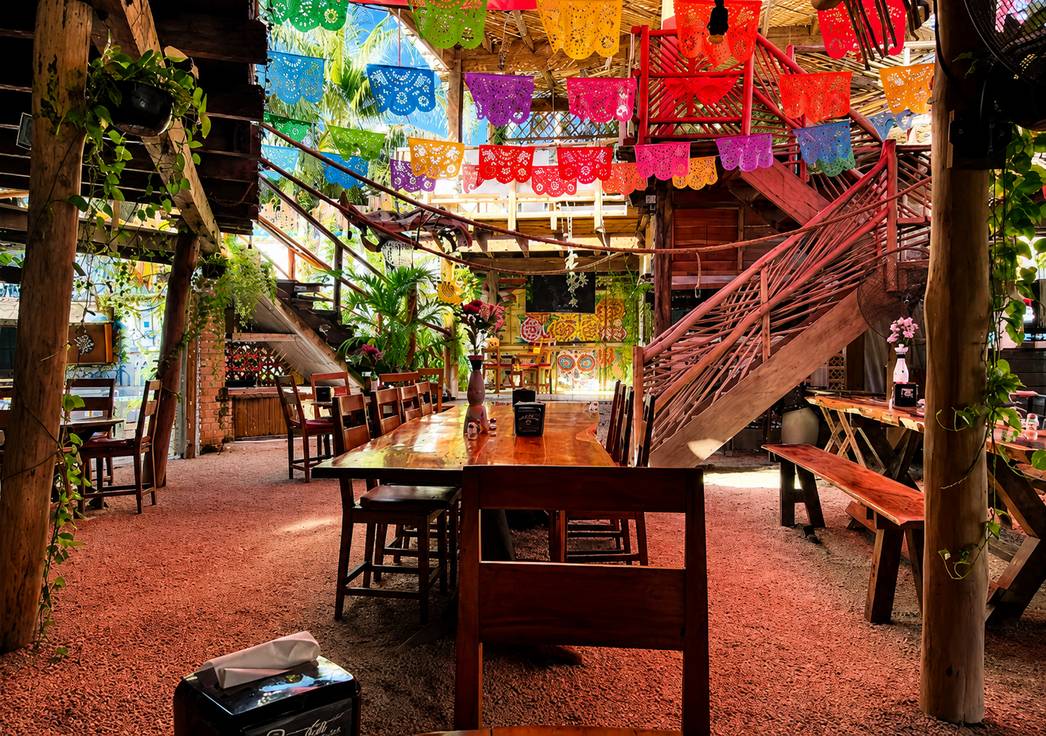
Mateos is a Tulum classic for guests who want a relaxed dinner with strong margaritas, generous portions, and that easy, festive Mexican-grill mood. It sits between the Pueblo and the beach road, so it is an easy stop on the way back from the sea.
Guests tell us it is one of the spots that consistently matches the experience to the price.
- Rating: 4.4 (1,539 reviews)
- Address: Carretera Boca Paila km 5, Tulum
- Best for: Casual dinner, margaritas, sharing plates
Good to know: Our local roundup of the best restaurants in Tulum Pueblo covers many more of our favorite hole-in-the-wall finds if you want to go deeper.
Beaches, Beach Clubs, and the Most Photographed Spot in Tulum
Most people come to Tulum for the water. Here is how to actually get to it.
Playa Paraíso
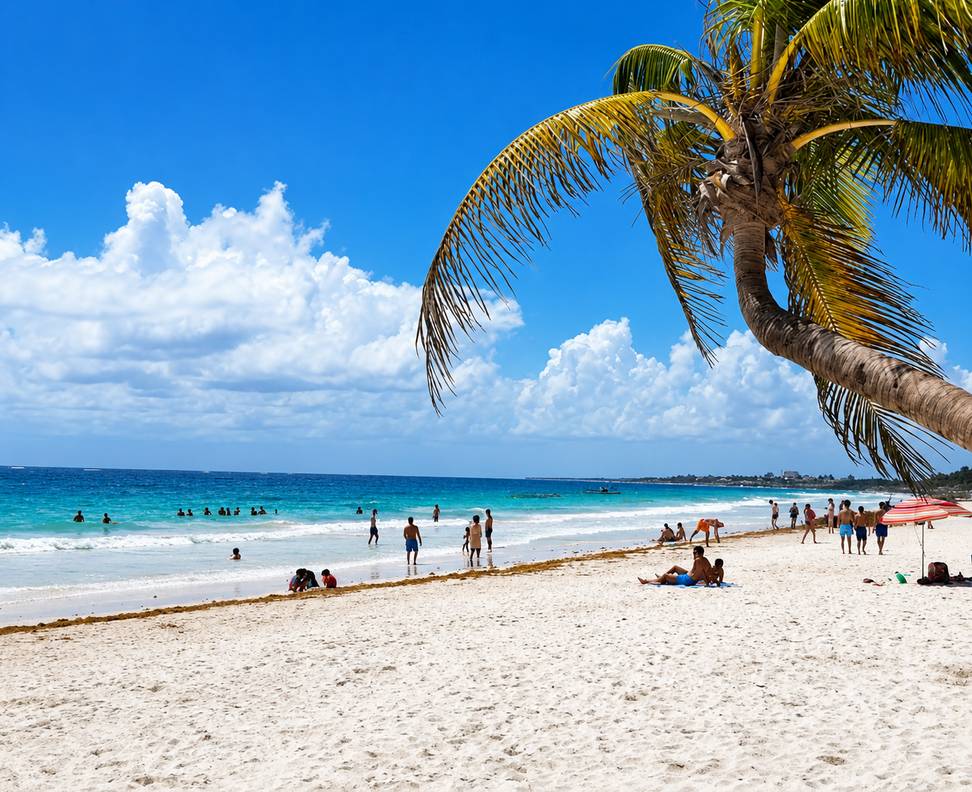
Playa Paraíso is the public beach right next to the Tulum ruins, and it is the easiest free beach to access without booking a hotel or buying minimums at a club. Wide soft sand, calm turquoise water, and shaded palapas. It is the most family-friendly beach we recommend in the main Tulum area.
There is a small beach club here with loungers if you want them, plus food and drinks at reasonable prices for the area.
- Rating: 4.5 (4,269 reviews)
- Best for: Easy beach day, families, swimming
- Tip: Arrive early, parking and good spots fill up by mid-morning
Find Playa Paraíso on Google Maps
Ruins, Cenotes, and the Wild South
Beyond the two Tulums, there is a third experience that ties them together: the natural and Mayan world that surrounds them. These are the day trips and excursions we recommend most often.
Tulum Archaeological Zone
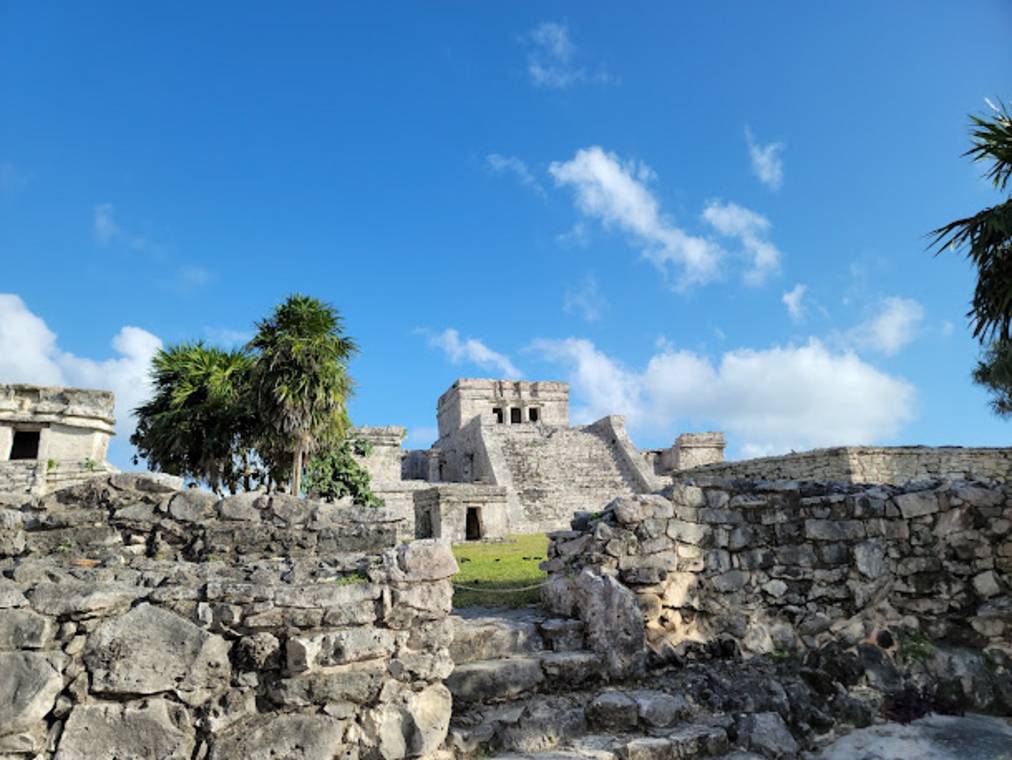
The Tulum ruins sit right at the northern edge of the Hotel Zone, on a cliff overlooking the Caribbean. It is one of the only Mayan sites built directly on the coast, and the view of the temple above the turquoise water is one of the great images of Mexico.
The site is well-organized, with eco-friendly shuttles to the entrance, shaded paths, and a small beach (Playa Ruinas) below the cliffs. Plan two to three hours, go early, and bring water.
- Rating: 4.7 (71,316 reviews)
- Hours: 8 AM to 5 PM daily
- Tip: Enter right at opening (8 AM) to beat heat and tour buses
Find Tulum Archaeological Zone on Google Maps
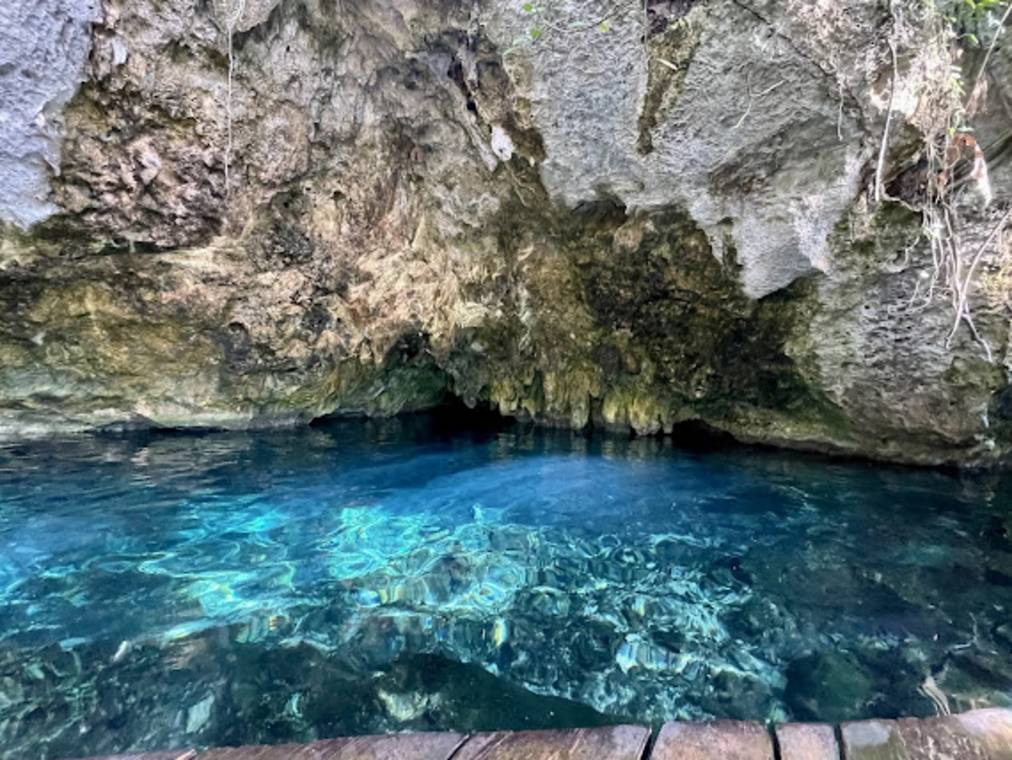
Gran Cenote
Gran Cenote is the most accessible cenote near Tulum, just a few minutes outside town on the road to Coba. The pools are clear, shallow in places, and connected by short walkways and small caves. Snorkeling here you can see turtles, tiny fish, and stalactites overhead.
It is a quick, easy half-day activity that works for almost anyone, including families with younger kids.
- Rating: 4.3 (8,246 reviews)
- Best for: First cenote experience, families, snorkeling
- Tip: Bring biodegradable sunscreen only (regular is not allowed)
Find Gran Cenote on Google Maps
Sian Ka’an Biosphere Reserve
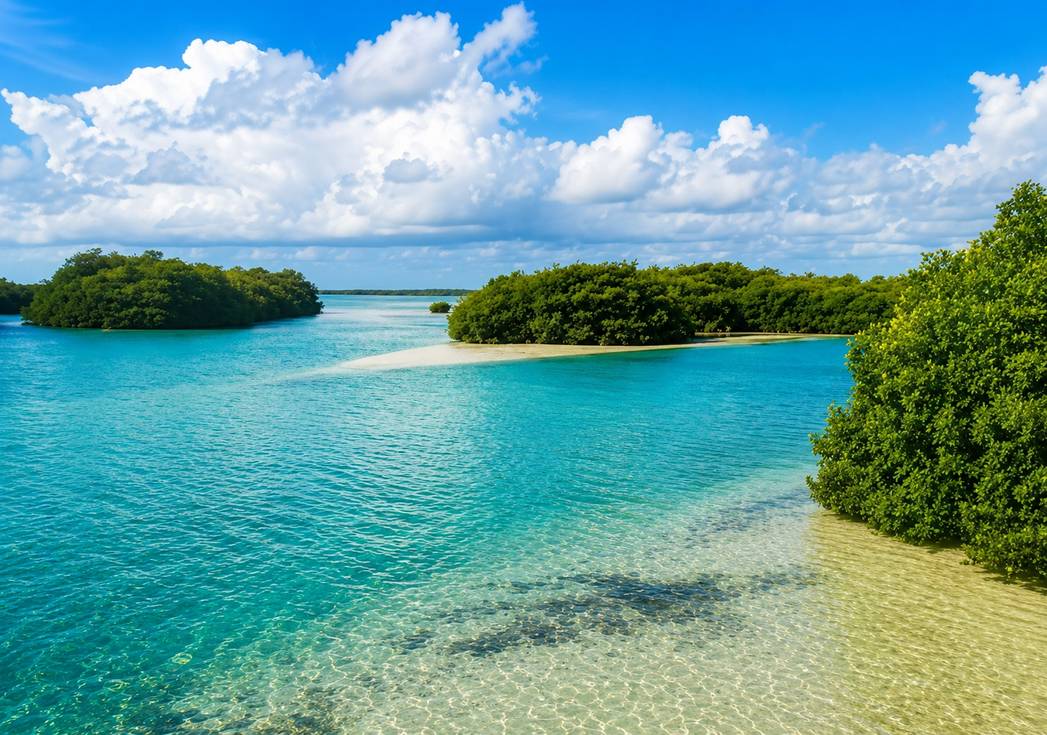
South of the Hotel Zone, the paved road ends and Sian Ka’an begins: more than 2,000 square miles of mangroves, lagoons, sea grass, reefs, and silence. This UNESCO World Heritage reserve is where Casa Nalum sits, between the Mayan lagoon of Campechen and the Caribbean Sea.
Boat tours float you through the freshwater “Mayan canals” left behind by ancient trade routes. Bird life is incredible. You will see fewer people in a full day here than in one hour on the Hotel Zone road. This is the Tulum that existed before there was a Tulum.
- Rating: 4.6 (4,051 reviews)
- Best for: Nature, snorkeling, fly fishing, true escape
- Tip: Go with a licensed local guide; the reserve is fragile
Find Sian Ka’an on Google Maps
Muyil Archaeological Site
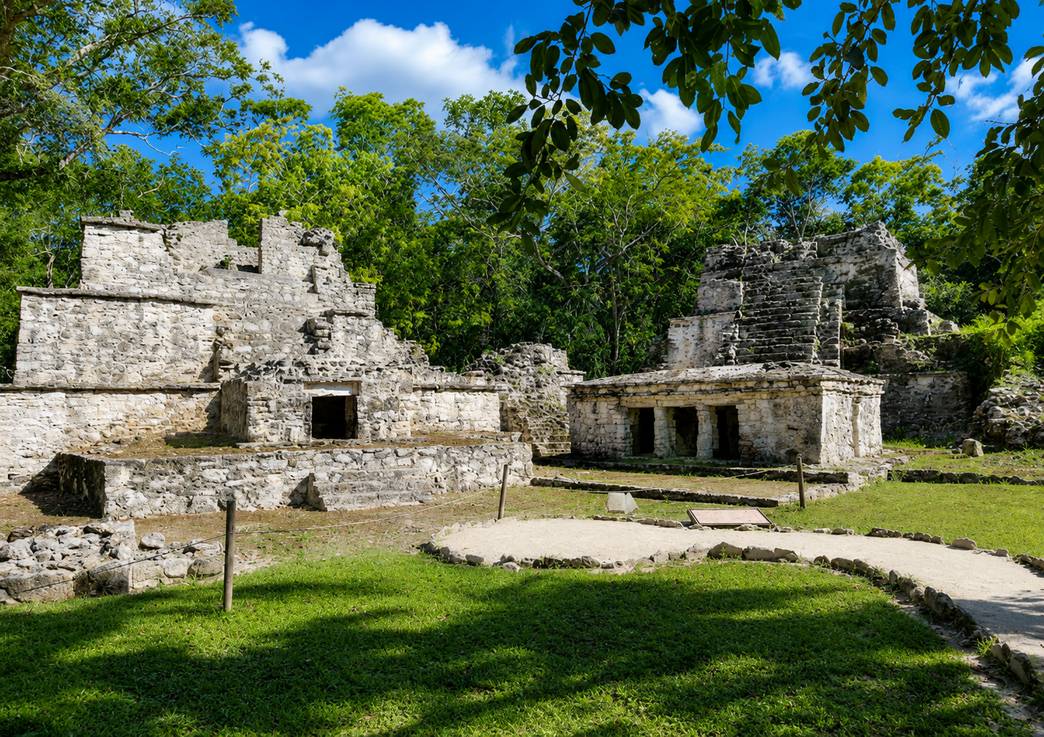
Inside Sian Ka’an, Muyil is the quieter, older sister of the Tulum ruins. Smaller, less crowded, surrounded by jungle, with a wooden boardwalk that leads to a lagoon where you can float downstream through the natural canals carved by the ancient Maya.
We send guests here when they want history, water, and almost no other people in the same morning.
- Rating: 4.6 (3,441 reviews)
- Best for: Quiet ruins + lagoon float, combined
- Plan: Morning visit, paired with lunch back in town
Did you know? Most of the cenotes around Tulum are connected to the same massive underground river system. The Yucatan Peninsula has the longest known network of underwater caves in the world, and you can swim in pieces of it less than 30 minutes from either Tulum.
How to Move Between the Two Tulums
If your trip includes both areas, here is the practical part. The road between Pueblo and the Hotel Zone is short, but how you cover it makes a real difference in cost and comfort.
- Bicycle. The most enjoyable option for most travelers. There is a dedicated bike path along Avenida Cobá. Rentals run about 8 USD per day, sometimes less by the week. Use lights at night, the beach road has dark stretches.
- Colectivo. Shared local vans, around 15 to 20 pesos (about 1 USD). Easy to flag along Avenida Tulum in town. Less common on the way back from the beach.
- Taxi. Easiest and most expensive. Town to beach typically runs 15 to 25 USD one way, more at night. Always agree on the price before getting in; meters are not standard.
- Scooter or car rental. Useful if you plan day trips to cenotes, Coba, or Valladolid. Beach parking is limited and the beach road gets congested in high season.
- Walking. Fine inside the Pueblo and along sections of the beach road, but the full Pueblo-to-beach walk is about 45 to 60 minutes in tropical heat. Not recommended midday.
Avoid the rush. Traffic between town and the beach gets thick from 7 to 9 AM and 5 to 7 PM. If you have a dinner reservation in the Hotel Zone, leave early.
Which Tulum Should You Stay In?
This is the question we hear most often, and our honest answer is: it depends on what you came for.
- Stay on the beach (Hotel Zone) if you want to step out of your room onto the sand, you have a short trip (3 to 5 nights), you are celebrating a honeymoon or special occasion, and you are comfortable with premium prices and occasional power and Wi-Fi quirks.
- Stay in Tulum Pueblo if you are on a tighter budget, you care more about food and atmosphere than beach views, you are staying longer than a week, you work remotely, or you just want the most local version of Tulum.
- Stay in Sian Ka’an if you want the version that almost nobody sees: a private villa surrounded by lagoon, mangrove, jungle, and the Caribbean, with no traffic, no nightlife, and no neighbors. This is what we offer at Casa Nalum, our beachfront eco-villa inside the Sian Ka’an Biosphere Reserve. Our guests usually mix our quiet south with day trips into both Tulums, and that combination is what most of them remember.
If you are still weighing the trade-offs, we wrote a longer companion piece on whether to spend your days at a beach club versus a jungle retreat that may help.
Plan Your Tulum Trip With Us
The two Tulums are not in competition. They are two halves of the same place. The Hotel Zone gives you the postcards. Pueblo gives you the rhythm. And the wild south, where we live, gives you the part of Tulum that feels like a secret.
At Casa Nalum, we help guests build trips that pull from all three. A beach club afternoon. A taco crawl through Pueblo. A morning swim in a cenote. A sunset back at the villa with no other lights on the horizon.
If you are ready to plan your stay, book Casa Nalum or reach out to us and we will help you put together a Tulum trip that fits the version of the trip you actually want.
Frequently Asked Questions
What is La Zona Hotelera in Tulum?
La Zona Hotelera, also called the Hotel Zone or Tulum Beach, is the strip of boutique hotels, beach clubs, restaurants, and yoga studios that runs along the coast on the Tulum-Boca Paila road. It sits directly on the Caribbean and is separated from the town of Tulum by about 5 kilometers of jungle.
How far is Tulum Pueblo from the Hotel Zone?
The distance is roughly 5 kilometers, or about 3 miles. By bike it takes 20 to 25 minutes along the Avenida Cobá bike path. By car or taxi it is usually 10 to 15 minutes, depending on traffic.
Is it cheaper to stay in Tulum Pueblo than on the beach?
Yes, significantly. Comparable comfort in Pueblo often costs about one-tenth of what it costs in the Hotel Zone. Food, drinks, and everyday expenses are also much lower in town. The trade-off is that you will not be in walking distance of the beach.
Is Tulum Pueblo safe at night?
Tulum Pueblo is generally considered safe for travelers, especially in the central blocks where most restaurants and bars are. Use the same common sense you would in any tourist town: stay on well-lit streets, watch your belongings, and use a registered taxi or rideshare late at night.
Where do most tourists stay in Tulum?
Most short-stay tourists pick the Hotel Zone for the beach experience. Longer-stay travelers, digital nomads, and budget travelers tend to choose Tulum Pueblo or the nearby neighborhoods of Aldea Zama and La Veleta. Guests who want a true nature escape stay south in Sian Ka’an.
Can I visit both the Hotel Zone and Tulum Pueblo in one day?
Easily. Many of our guests bike or scooter between the two in the same day, often spending the morning at the ruins or a beach club and the evening eating in Pueblo. With a bike, the two zones feel close.