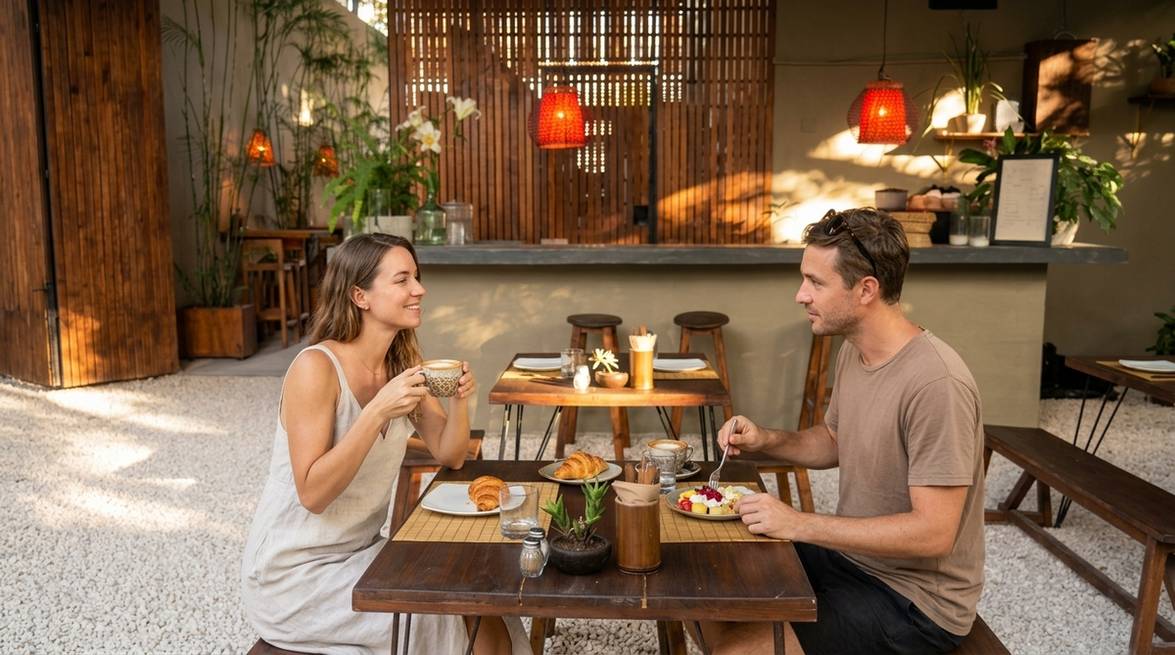
The Mexican Caribbean is not one place. It is three very different ones, sitting along the same stretch of Quintana Roo, each with its own pace, water, and personality.
At Casa Nalum, our eco-villa lives inside the Sian Ka’an Biosphere Reserve, just south of Tulum, between a Mayan lagoon and the sea. We host guests who arrive asking the same question almost every week: should we split our days between Tulum, Bacalar, and Holbox, or pick just one?
This guide is our honest answer. We compare Tulum vs. Bacalar vs. Holbox the way we would over coffee on the terrace, with a clear sense of what each destination is really like, what to do there, and which traveler each one is actually for.
A Quick Snapshot Before We Dive In
Here is the short version, so you can already feel which way you lean.
- Tulum is the coastal, design-forward, cenote-and-ruins hub. Most developed, most international, most options for restaurants and nightlife.
- Bacalar is a sleepy lagoon town built around a freshwater lake of seven blues. No ocean, no club scene, lots of stillness.
- Holbox is a barefoot, car-free island of shallow turquoise water, sandbars, whale sharks in season, and golf cart streets.
All three sit in the same Mexican state, but they ask different things of you and reward you in different ways. Below, we break each one down, then we share who we think it is really for.
Tulum: The Boho Coast With Ruins and Cenotes
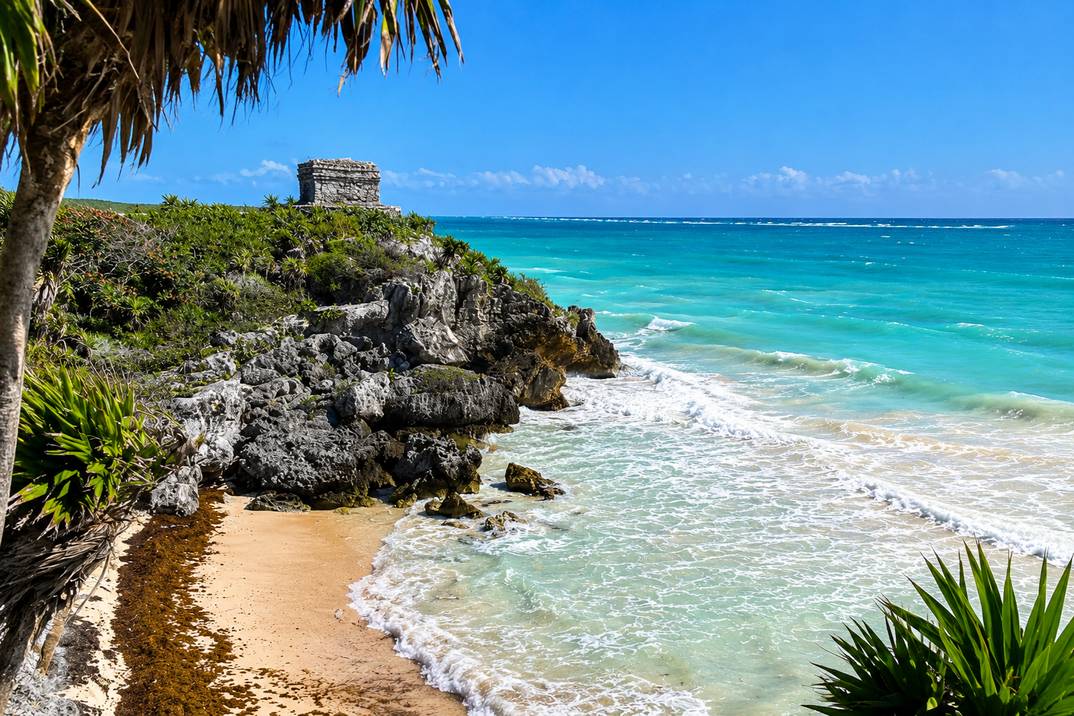
Tulum is the most famous of the three, and the most layered. You get a long Caribbean beach, world-class cenotes, a clifftop Mayan ruin site, jungle restaurants, wellness studios, and a busy nightlife scene, all within a short drive.
It is also the most developed and the most expensive. Prices have climbed quickly over the last few years, so we tell guests to come for the variety and the access, not for a bargain. The reward is convenience. From our part of Sian Ka’an, the cenotes, ruins, and beach clubs of Tulum are all within reach without ever needing a ferry.
💡 Local tip: Tulum’s high season is December through March. If you want cooler weather, lower humidity, and the cleanest beaches, aim for January or February.
Bacalar: The Lagoon of Seven Colors
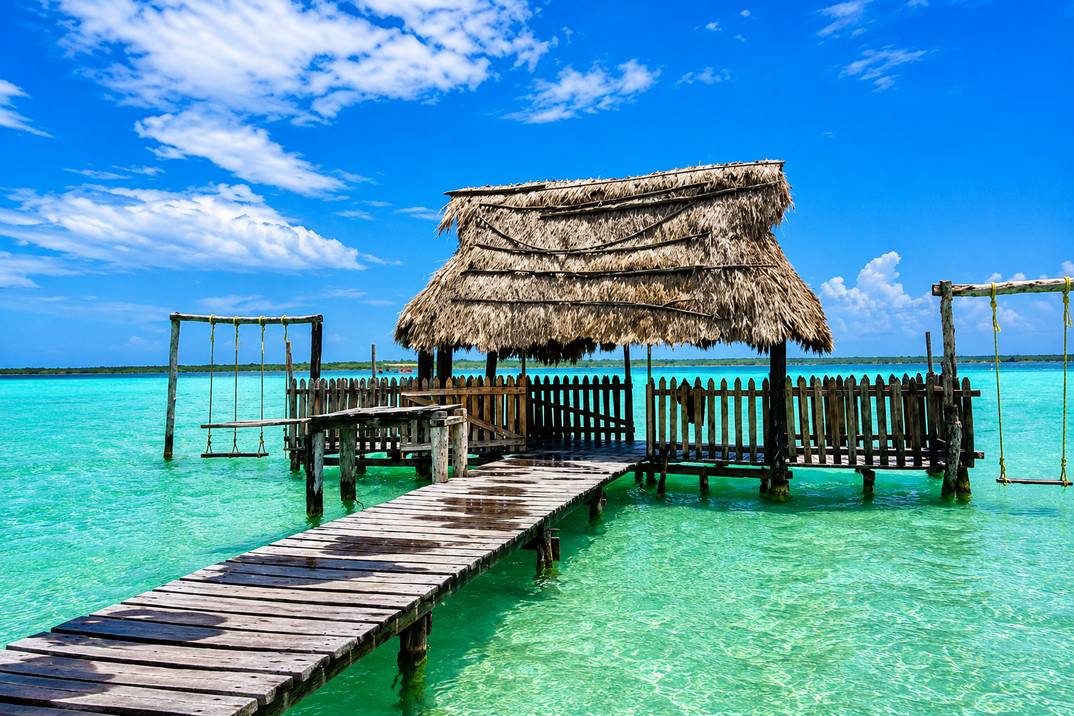
Bacalar is what people picture when they imagine a slow Caribbean. The town sits along a 26-mile freshwater lagoon that locals call the Laguna de los Siete Colores, the Lagoon of Seven Colors, because of the way the white sandy bottom and the changing depths turn the water into bands of blue, turquoise, mint, and indigo.
It is not an ocean destination. There is no surf, no big beach club scene, no all-night party street. What you get instead is calm freshwater you can swim and paddle in for hours, a small fort overlooking the water, and a relaxed pace that gently slows you down.
We send guests here when they want stillness more than amenities. Bacalar is about four to five hours from our part of Tulum by car, so it works best as a two or three night side trip rather than a day visit.
Holbox: The Car-Free Island
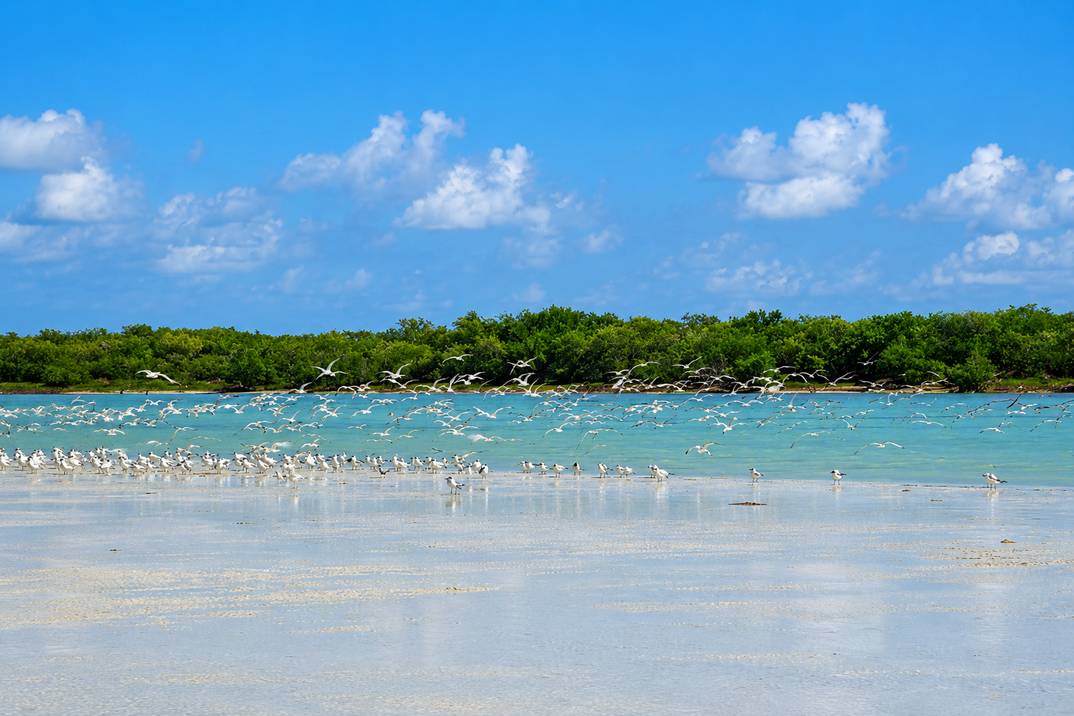
Holbox sits off the northern tip of the Yucatán Peninsula, where the Gulf of Mexico meets the Caribbean. It is a tiny island, less than 26 miles long, with sandy streets, golf cart traffic, and shallow water that often stays waist-deep hundreds of yards from shore.
There are no cars. There are no big resorts. There is a single small town with murals on every wall, a long beach with hammocks set out in the water, and a strong wildlife-tour culture built around whale sharks in season and bioluminescence at night.
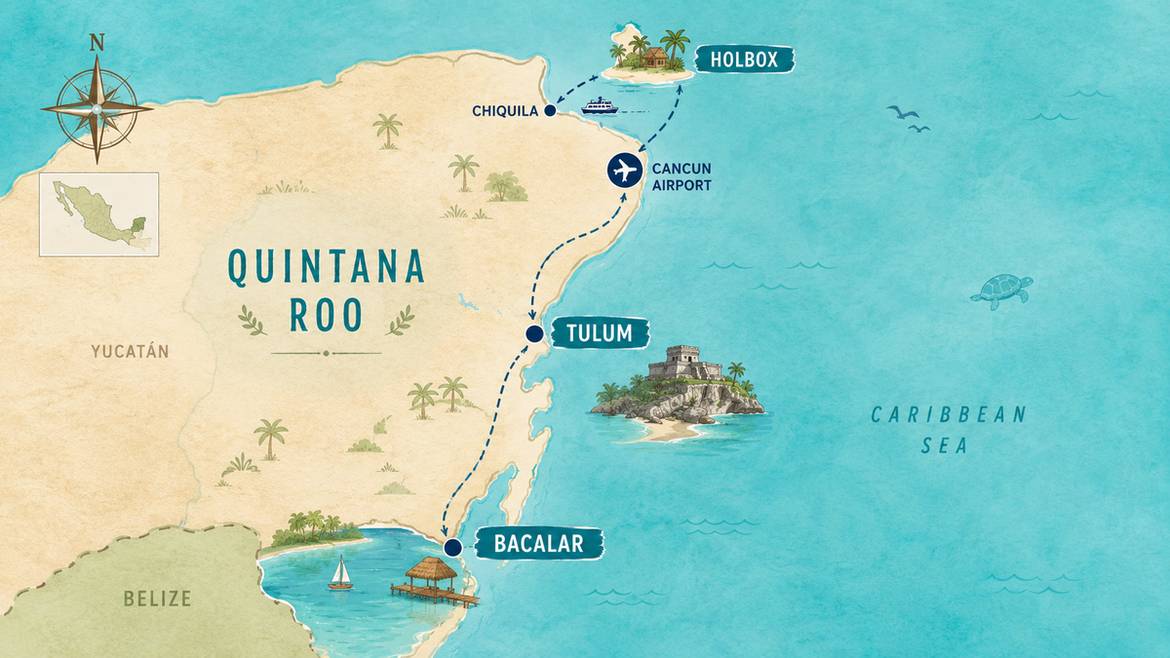
Getting there is part of the experience. From Tulum, you drive to the small port town of Chiquilá (about three hours), then take a 25-minute ferry across to the island.
💡 Local tip: Holbox is less affected by sargassum than Tulum or Cancún because of its geography. If your trip lands in the May-to-October seaweed season, Holbox is often the cleaner beach choice.
Tulum vs. Bacalar vs. Holbox: Side by Side
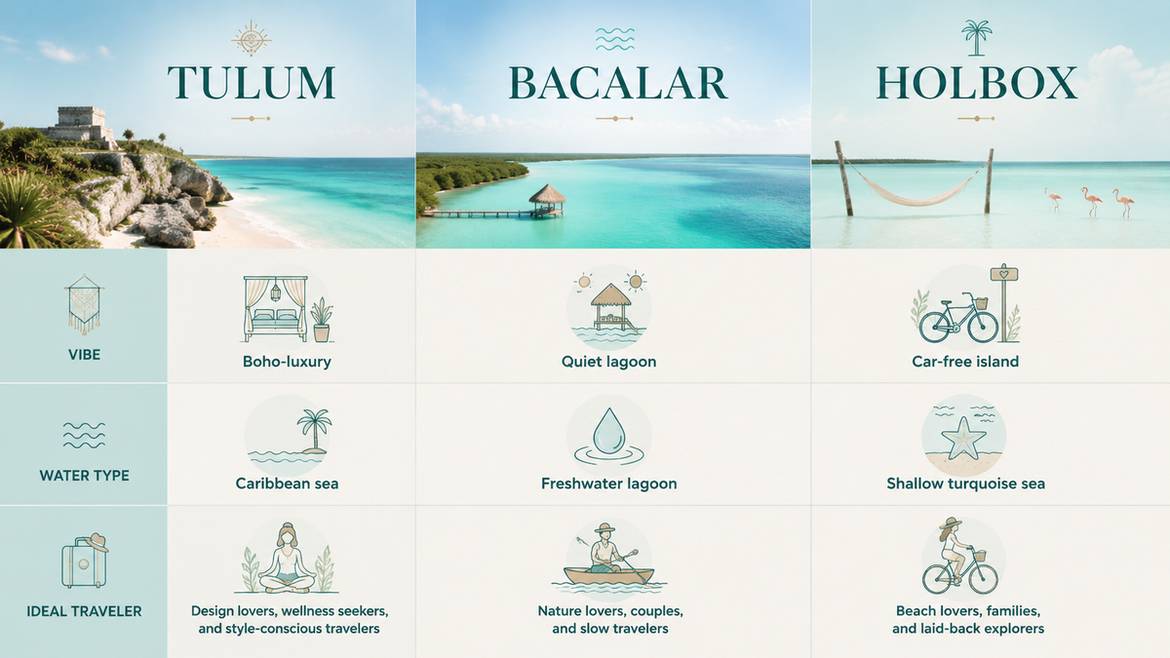
Which Traveler Each One Is Actually For
This is where most “vs.” articles stop short. After hosting hundreds of guests over the years, here is who we think each destination really suits.
Tulum is for you if…
- You want one base that delivers beaches, ruins, cenotes, wellness, and great food, all in a 30 minute radius.
- You like a design-forward setting and you do not mind paying more for it.
- You are comfortable with a mix of busy and quiet, and you want easy day trips.
- You only have 4 to 7 days and you want to feel like you “did” the Mexican Caribbean.
For a more curated stay, take a look at our luxury Tulum villa, where you get Tulum’s access without the crowd noise.
Bacalar is for you if…
- You travel for the water itself, not the scene.
- You want to paddle, swim, read, eat, sleep, and repeat.
- You have time for the longer drive, ideally as part of a two-week trip combining Tulum and Bacalar.
- You are traveling as a couple, with young kids, or solo and you want peace.
Holbox is for you if…
- You are willing to trade infrastructure for atmosphere.
- You love wildlife, especially whale sharks (June through August is peak), birds, and bioluminescence.
- You want a barefoot, car-free, hammock-in-the-water kind of trip.
- You do not mind sand on everything for a week.
How We Would Combine Them
If you have 5 to 7 days, pick one. Tulum is the easiest first trip; Bacalar is best if you want quiet; Holbox is best if you want wildlife and island life.
If you have 8 to 12 days, combine two:
- Tulum + Bacalar: the most popular combo. Three to four days of cenotes, ruins, and beach in Tulum, then a slow drive south to two or three nights on the lagoon.
- Tulum + Holbox: great for first-time visitors who want variety. Three to four days in Tulum, then bus or drive to Chiquilá and ferry across for three nights on the island.
If you have 14 days, you can do all three. Start in Tulum, drive south to Bacalar for three nights, then loop back north to Chiquilá for the Holbox ferry and finish on the island.
When you base in our part of Tulum, you also unlock easier access to the Sian Ka’an Biosphere Reserve, which we think is the most under-rated part of the whole region.
A Note on Timing for 2026
The best window across all three is mid-January through late February, or late November through mid-December if you want to skip the Christmas spike. You get dry weather, clean beaches, low sargassum risk, and more reasonable prices than the holiday peak.
If you have to travel in May through October, lean toward Bacalar (a freshwater lagoon, unaffected by sargassum) and Holbox (lighter sargassum impact than the main Tulum-Cancún coast). Plan more cenote and ruin days in Tulum on weeks where the seaweed is heavy. Our local guide to seaweed in Tulum breaks down what to expect and where to swim when the beach is patchy.
Where to Stay When You Visit Tulum
Most guests use Tulum as their main base because it is the most central and the most connected. We are a little south of town, inside Sian Ka’an, which means you wake up to the sound of the reef instead of traffic.
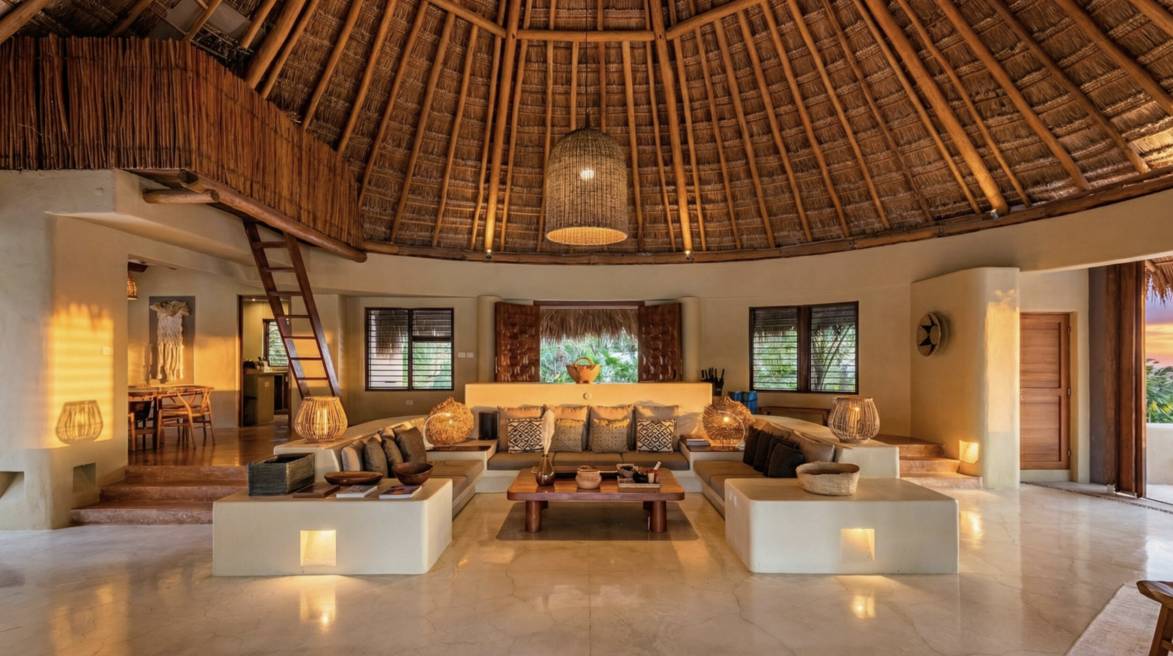
Casa Nalum is a private, eight-bedroom eco-villa between the Mayan lagoon of Campechen and the Caribbean Sea. We host families, friend groups, and small weddings who want full-villa privacy, a private chef, and direct access to the beach, the lagoon, and the biosphere.
If you would like help planning a trip that combines Tulum with a side visit to Bacalar or Holbox, our team can sketch out an itinerary based on your dates and your pace.
Final Thoughts
There is no winner in Tulum vs. Bacalar vs. Holbox. There is only the right fit for the kind of trip you actually want.
At Casa Nalum, we built our home in Sian Ka’an because we love how Tulum gives us access to all of it: the ruins, the cenotes, the lagoon, and the easy drive to either Bacalar or the Chiquilá ferry. We get to live in the most connected corner of the Mexican Caribbean, and our guests do too.
If you are still deciding where to base your trip, reach out to our team and we will help you build an itinerary that matches your pace, your group, and the version of the Caribbean you came looking for.
Frequently Asked Questions
Which is better, Tulum or Holbox?
Tulum is better for variety, with ruins, cenotes, a long beach, and lots of restaurants and nightlife in one place. Holbox is better if the goal is a slow, car-free island with shallow water and wildlife like whale sharks. Most first-time visitors prefer Tulum; repeat visitors often fall in love with Holbox.
Which is better, Tulum or Bacalar?
Tulum has the ocean, the ruins, and the cenotes. Bacalar has a calm freshwater lagoon and a much slower pace. If you want beach plus activities, choose Tulum. If you want to swim, paddle, and unplug, choose Bacalar.
How far is Tulum from Bacalar?
About 121 miles (195 km), or roughly 3 hours by car. ADO buses run direct from Tulum to Bacalar several times a day and take about 2 hours 50 minutes.
How do you get from Tulum to Holbox?
Drive or take a bus from Tulum to Chiquilá (about 3 hours), then take the 25-minute passenger ferry across to Holbox. Operators like Holbox Express run boats roughly every 30 minutes during daylight.
When is the best time to visit Tulum, Bacalar, and Holbox?
The best overall window is mid-January through late February or late November through mid-December, when the weather is dry, sargassum is low, and prices are below the Christmas peak. Avoid late May through October for Caribbean beach time, and watch hurricane season from June through November.
Is Bacalar worth visiting if you have already been to Tulum?
Yes, especially if you want a slower trip. Bacalar feels nothing like Tulum, and the freshwater lagoon is a genuinely different experience from the ocean. Two or three nights is enough to see why people fall for it.