Planning a 2026 escape to the Mexican Caribbean and stuck between Tulum vs Holbox? You are not alone. These two spots sit in the same state of Quintana Roo, yet they feel like two very different countries.
At Casa Nalum, our home is a private, eco-friendly beachfront villa tucked inside the Sian Ka’an Biosphere just south of Tulum. We host guests all year and we spend a lot of time comparing notes with them about their favorite corners of the region. Isla Holbox is one of the trips they ask about most.
In this guide, we will share what each place actually feels like, what to do, what to eat, how long it takes to get there, and the best time to go. By the end, you will know exactly which one fits your 2026 trip, or how to blend both.
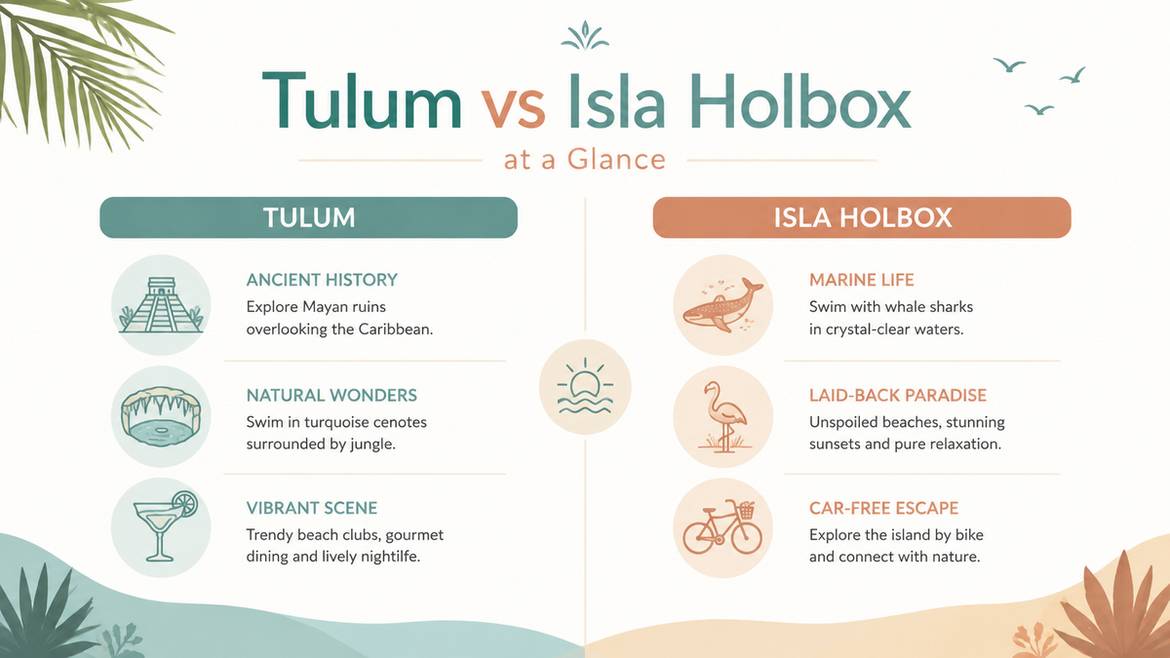
Tulum vs Holbox at a Glance
Here is the quick answer before we go deeper. Tulum is your cliff-top Mayan ruins, jungle cenotes, boho beach clubs, and a big international food scene. Holbox is a car-free island of sand streets, shallow turquoise water, flamingos, and whale sharks in summer.
If you want variety, culture, and nightlife, lean Tulum. If you want a slow, barefoot island where the loudest sound is your beach cruiser tires on sand, lean Holbox.
Both are worth your time. Choosing between them just comes down to the kind of trip you actually want.
The Vibe: What Each Place Feels Like
Tulum feels like a stylish jungle that opens onto the sea. The 10 kilometer beach road is lined with palapa roofs, candlelit dinners, wellness studios, and boutique shops. Days end with music, cocktails, and long dinners under fairy lights. Tulum Pueblo, the town side, is more local, cheaper, and full of taquerías and coffee shops.
Holbox feels like a Caribbean village that time forgot. There are no cars. Golf carts and bikes rule the sandy streets. Days start slow with strong coffee, drift into hammock naps, and end with a beer on the sand watching the sunset. The scale is small, the pace is soft, and the biggest decision most days is which taco stand to try.
If you are curious how Tulum stacks up against other popular spots, our takes on Tulum vs Cancun and Tulum vs Isla Mujeres give you the full picture.
💡 Local tip: Many of our guests describe Holbox as “how Tulum felt fifteen years ago.” That is a fair way to think about it, as long as you go in expecting sandy streets, occasional power blips, and simple charm rather than polish.
Best Beaches in Tulum vs Holbox
Both destinations sit on the Caribbean, but the beach experience is very different. Tulum is a long, straight, palm-lined coast with reef just offshore. Holbox is the meeting point of the Gulf of Mexico and the Caribbean, which creates shallow, glass-clear water and long sandbars you can walk out on for what feels like forever.
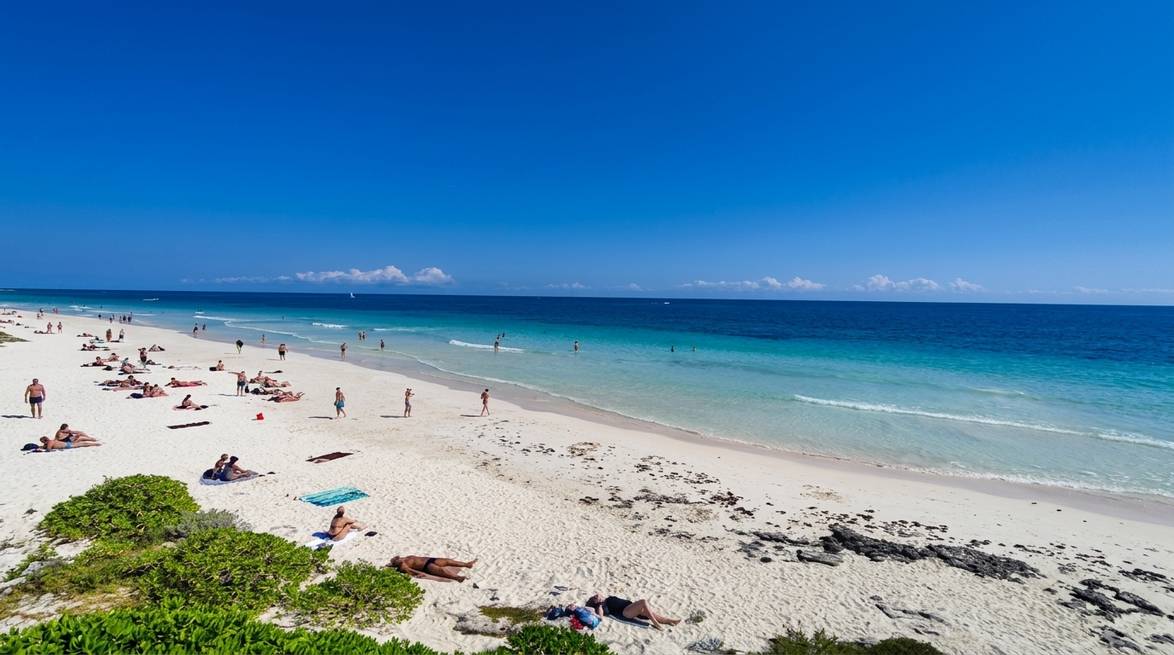
Playa Paraíso
Playa Paraíso is Tulum’s most famous stretch of sand and it earns the name. Fine white sand, turquoise water, and views of the Mayan ruins on the cliff to the north.
We send guests here for a classic Tulum beach morning, ideally before 10 a.m. to beat the crowds and the midday sun. Bring reef-safe sunscreen and a towel, or grab a lounger through the beach club.
- Rating: 4.5 stars from over 4,200 reviews
- Location: Zona Hotelera Tulum
- Best for: First-time Tulum visitors, photos, easy access from the ruins
Learn more about Playa Paraíso
Papaya Playa Project
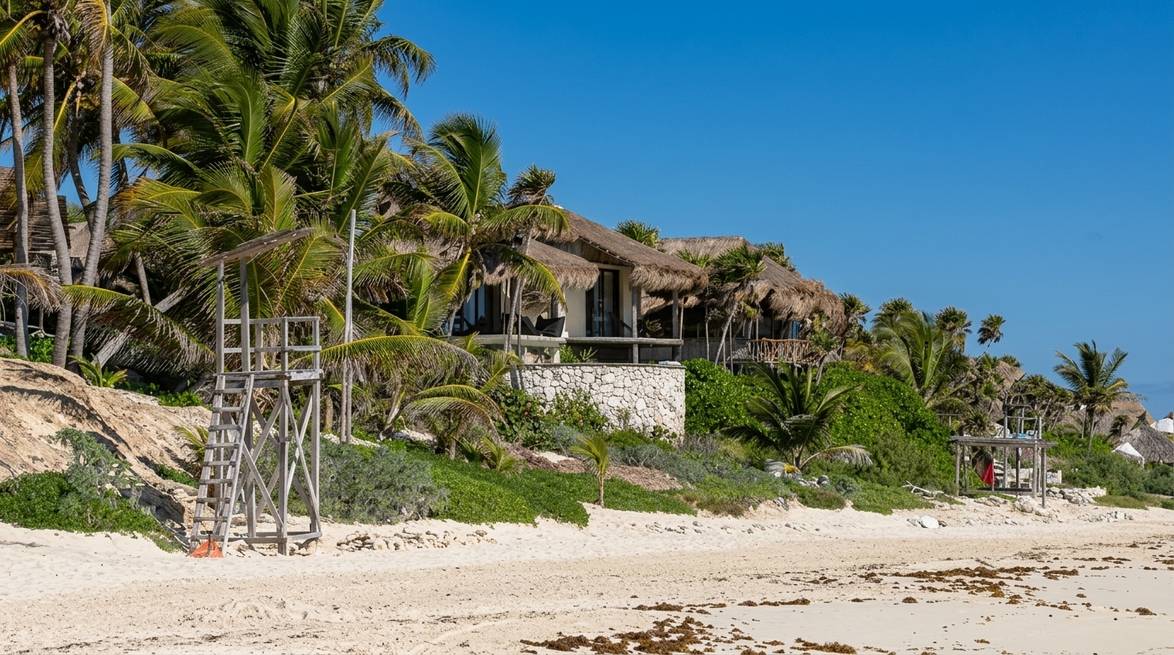
Papaya Playa Project is one of the anchors of Tulum’s beach club scene. Wooden decks, hanging chairs, a beach bar, and DJ sets that stretch into the sunset.
It has a curated, boho aesthetic that photographs well. Expect a food and drink minimum on a lounger, and pricey cocktails, but the view and the music are the main event.
- Rating: 4.0 stars from over 2,600 reviews
- Location: Carr. Tulum-Boca Paila Km 4.5
- Best for: A stylish beach day with music and cocktails
Learn more about Papaya Playa Project
Playa Holbox
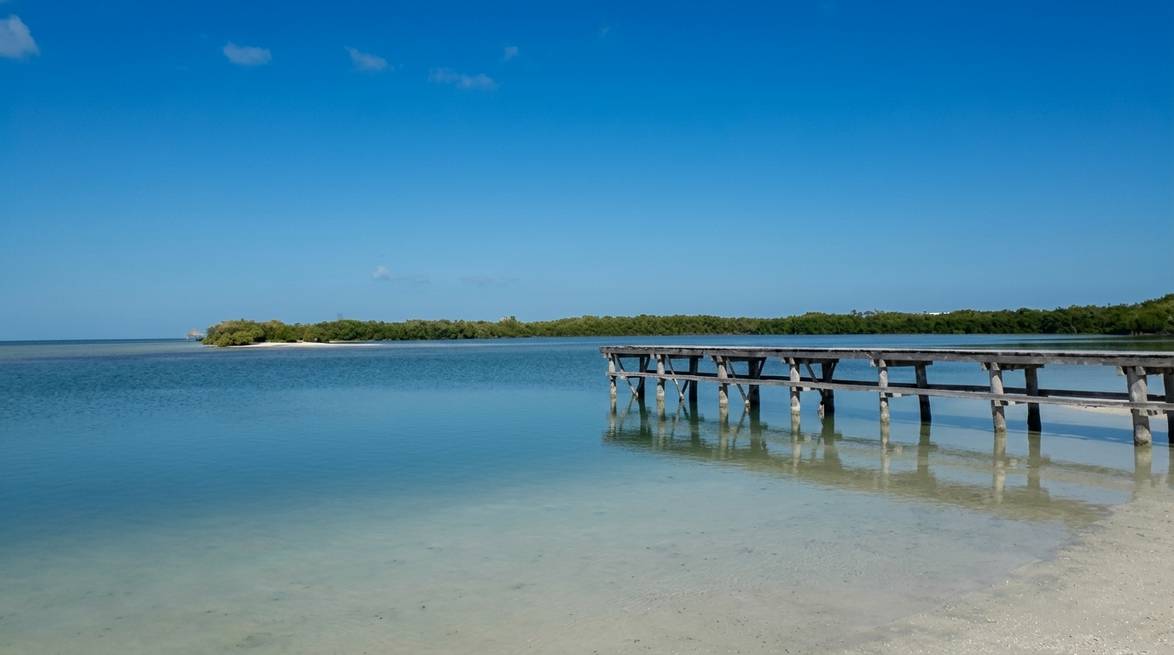
Playa Holbox is the main public beach on the island. Wide, soft, and shallow enough that you can wade out a hundred meters and still touch the bottom.
There is no beach club scene here in the Tulum sense. Instead you get sand chairs, thatched umbrellas at simple bars, and pelicans cruising just offshore. It is calm, warm, and almost always uncrowded outside of holiday weeks.
- Rating: 4.6 stars from over 1,000 reviews
- Location: North side of Isla Holbox
- Best for: Long walks, easy swims, sunset with your feet in the sand
Punta Cocos
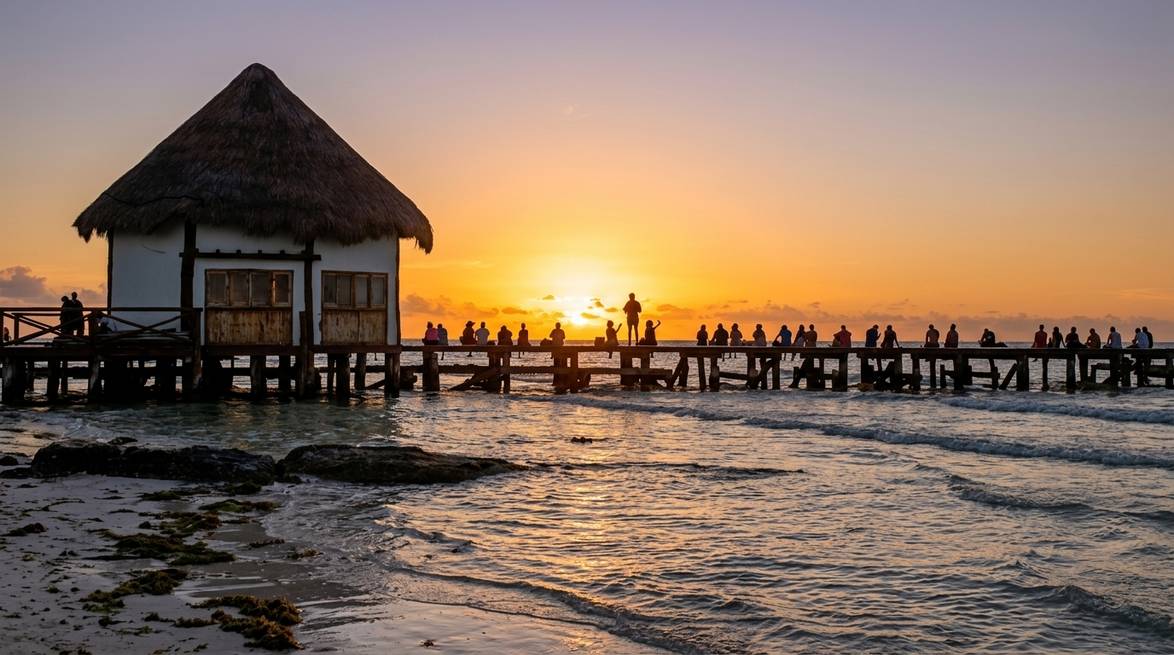
Punta Cocos sits on the far south western tip of Holbox. It is quieter than the main beach and the sunsets there are the reason a lot of people come back to the island.
Rent a bike or golf cart, ride the sandy road along the mangroves, and time your arrival for an hour before sunset. On clear nights, you can sometimes see bioluminescence in the water at Punta Cocos, a soft blue glow when you move your hand through the surf.
- Rating: 4.6 stars from over 3,800 reviews
- Location: Southwestern tip of Isla Holbox
- Best for: Sunset, bioluminescence, escaping the small crowds of the village
Learn more about Playa Punta Cocos
Punta Mosquito
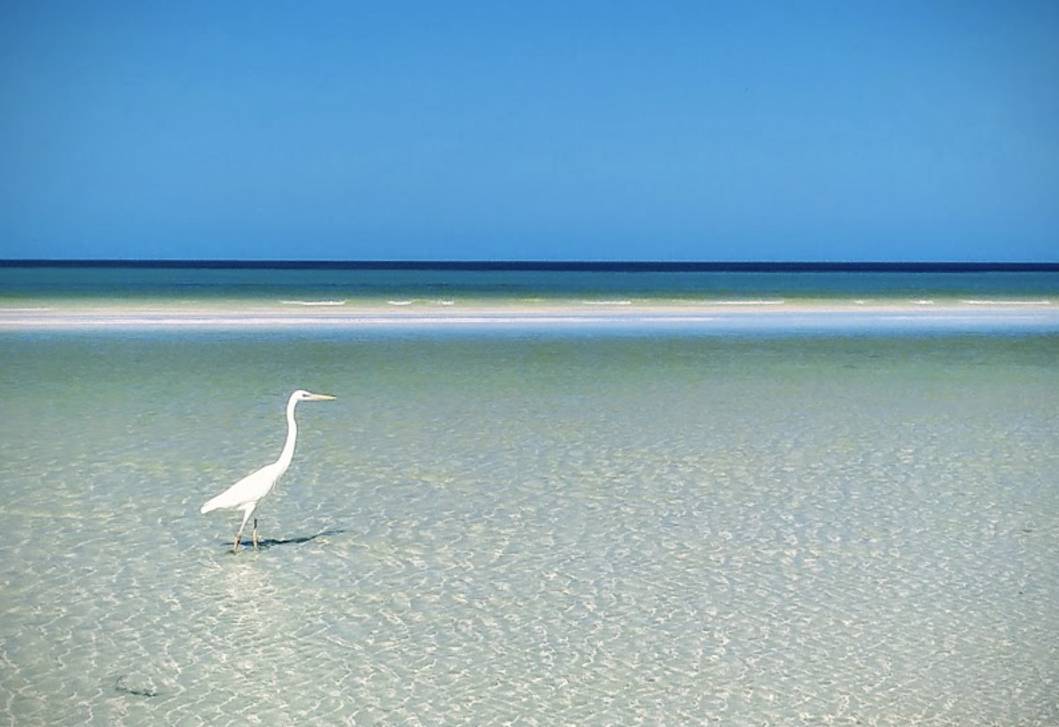
Punta Mosquito is the long, curling sandbar on the north east side of Holbox. At low tide it looks like a beach that stretches into the horizon, with warm, ankle-deep water on both sides.
Access is a walk along the beach from the village, and part of the area is a protected nesting zone, so check current access rules before you go. Bring water and a hat, there is no shade once you are out on the sandbar.
- Rating: 4.7 stars from over 1,000 reviews
- Location: North east side of Isla Holbox
- Best for: Photos, wildlife spotting, walking a sandbar into the sea
Learn more about Punta Mosquito
Cenotes, Ruins, and Big Nature Experiences
This is where Tulum and Holbox split the most. Tulum is a base camp for cenotes and Mayan ruins. Holbox is a base camp for wildlife, boat tours, and mangrove exploration. Neither replaces the other, and both can shape your whole trip.
Tulum Archaeological Zone
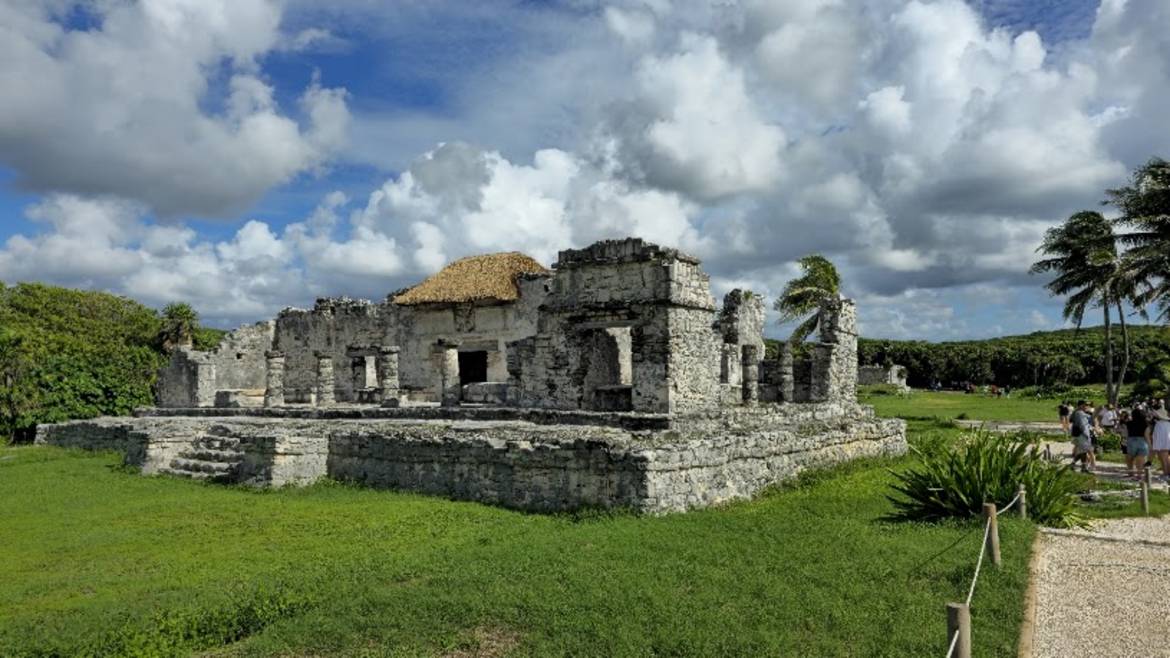
The Tulum Ruins are the postcard image of the region. A walled Mayan city on a limestone cliff above the Caribbean, occupied roughly from 1200 to 1500. You walk from temple to temple with iguanas sunning on the stones and the sea crashing below.
We recommend arriving right at opening, around 8 a.m., before the tour buses roll in. Combine it with a swim at the small beach cove below the site.
- Rating: 4.7 stars from over 71,000 reviews
- Location: Zona Hotelera Tulum
- Best for: History, unbeatable ocean views, easy half-day trip
Learn more about Tulum Archaeological Zone
Gran Cenote
Gran Cenote is one of the most beloved cenotes in the area for a reason. Clear, cool freshwater, a network of small caverns you can snorkel through, and freshwater turtles gliding past your legs.
Go early to skip the crowds. You must shower off any sunscreen before entering, and snorkel gear is usually included with entry.
- Rating: 4.3 stars from over 8,200 reviews
- Location: About 10 minutes from Tulum Pueblo on the road to Cobá
- Best for: First cenote experience, snorkeling with turtles
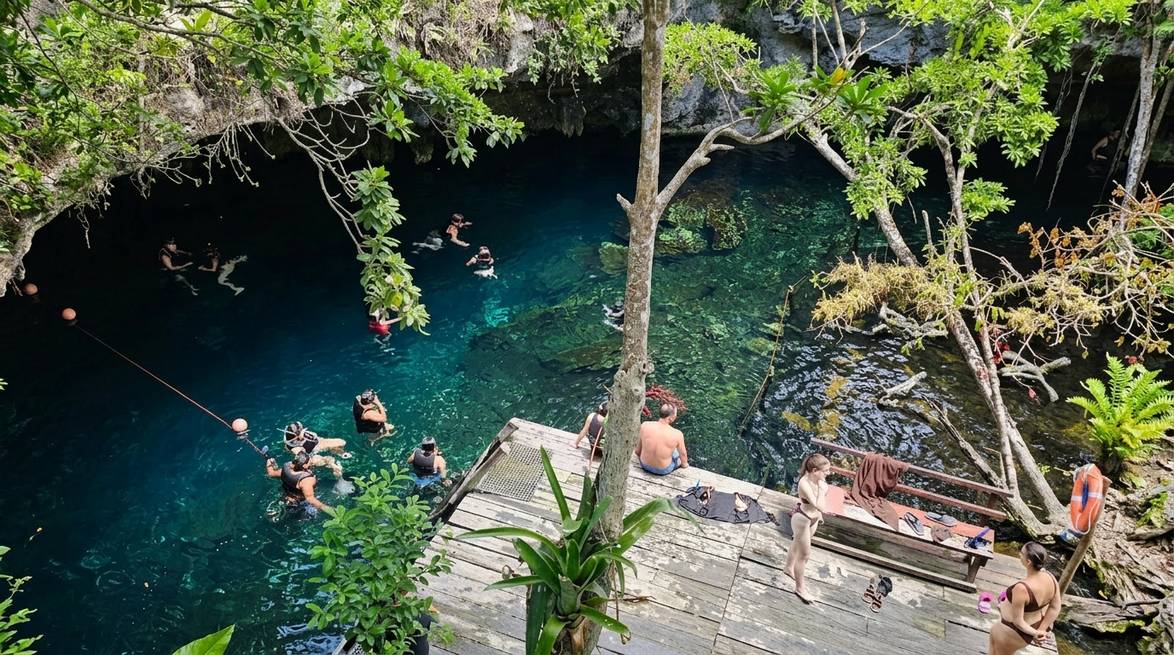
Cenote Dos Ojos
Cenote Dos Ojos, or Two Eyes, is part of one of the largest underwater cave systems on the planet. Two round, connected pools sit inside a jungle clearing, with dramatic light rays cutting through the water.
It is the best cenote in the Tulum area for cavern diving, and it works beautifully for snorkeling too. Rental gear and guides are available on site.
- Rating: 4.7 stars from over 7,800 reviews
- Location: About 20 minutes north of Tulum
- Best for: Snorkeling, cavern diving, dramatic photos
Learn more about Cenote Dos Ojos
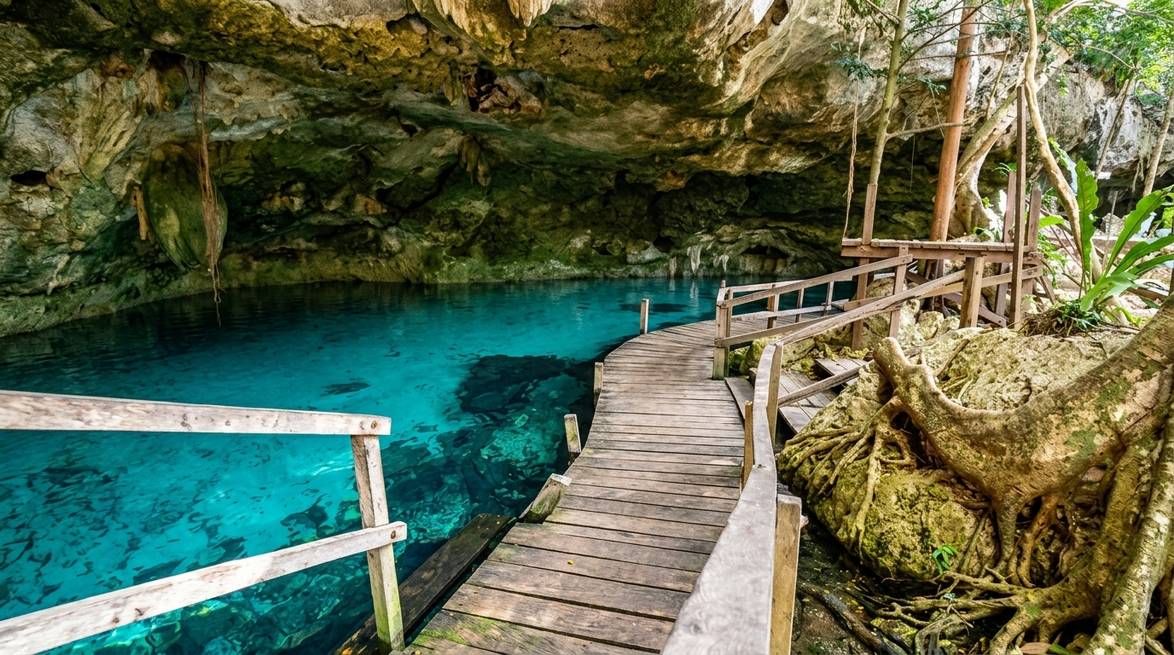
Cenote Calavera
Locals call this one Temple of Doom. Three small holes open into a big underground pool, and there is a rope swing and a jumping platform if you want to add a little adrenaline to your morning.
It is smaller and more atmospheric than Gran Cenote. Skip it if you are traveling with young kids who cannot swim well.
- Rating: 4.1 stars from over 2,500 reviews
- Location: Av. Cobá Km 1.7, Tulum
- Best for: Cliff jumping, moody photos, a shorter cenote stop
Learn more about Cenote Calavera
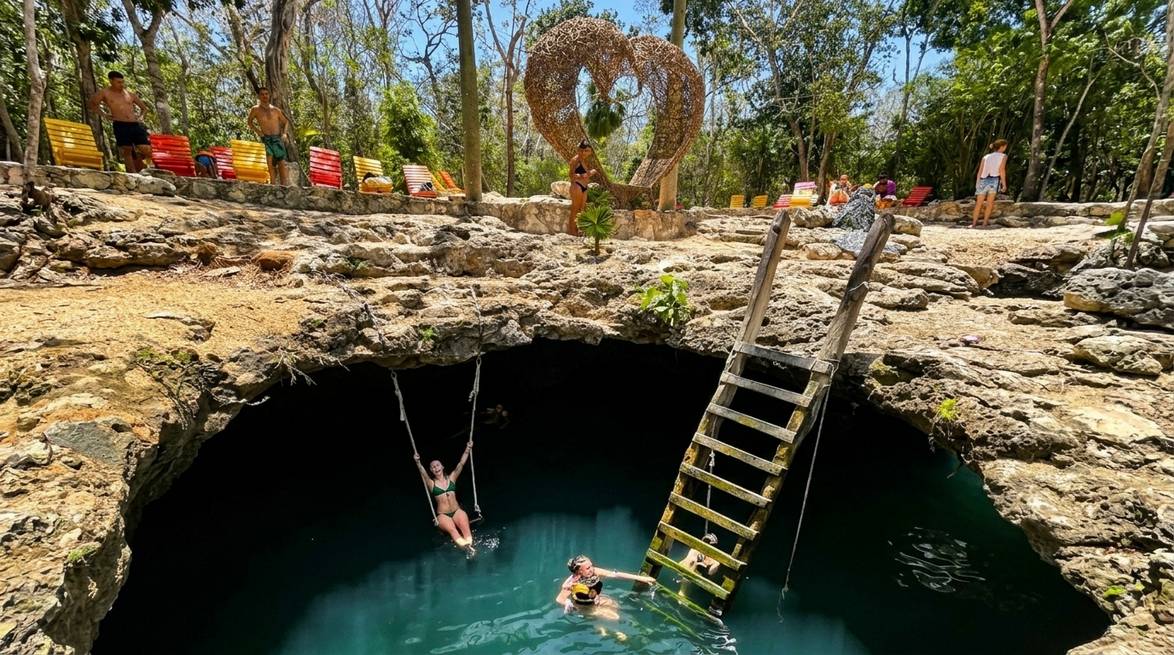
Laguna Kaan Luum
Laguna Kaan Luum is a shallow turquoise lagoon with a deep cenote hole in the middle. From above it looks like a giant pool with a dark blue circle in it. From inside, it feels like a natural spa.
Guests love the mineral mud at the edges, which locals use as a natural mask. Bring water shoes and a towel.
- Rating: 4.6 stars
- Location: About 15 minutes south of Tulum Pueblo
- Best for: A slower half-day, natural mud baths, families
Learn more about Laguna Kaan Luum
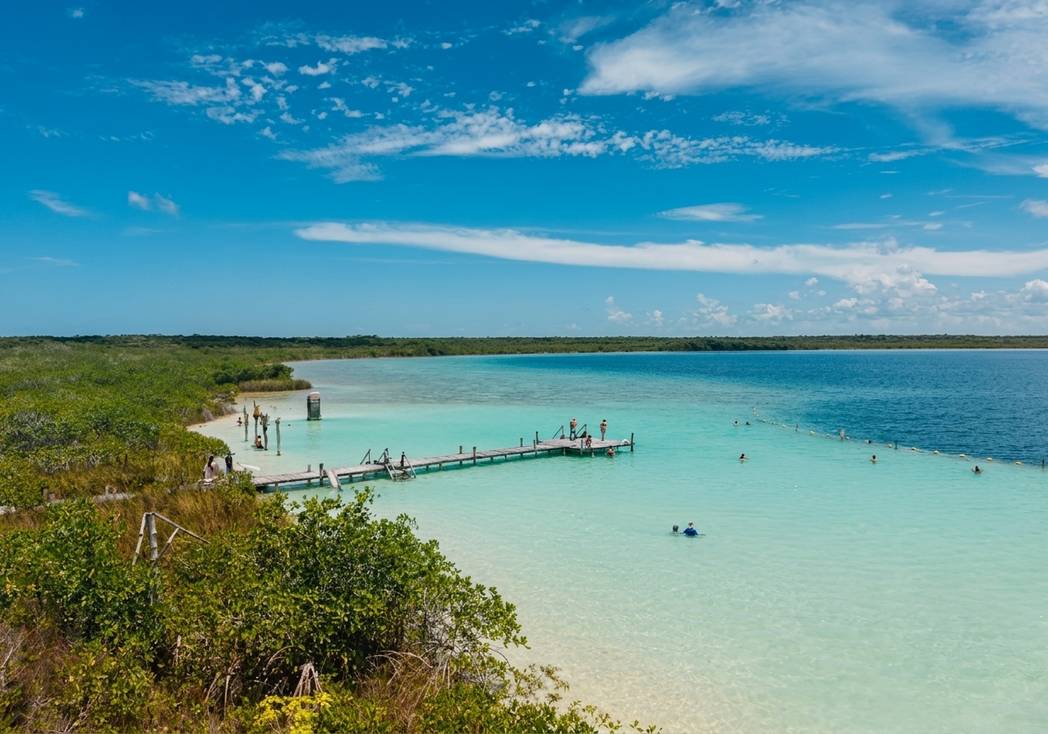
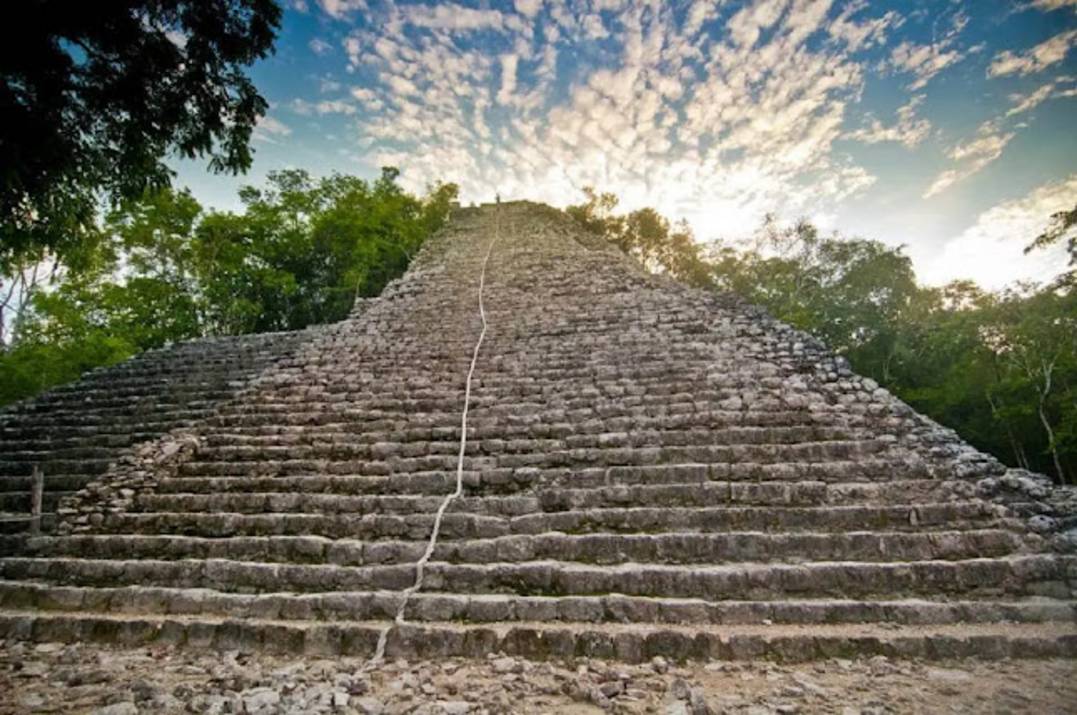
Coba Ruins
Cobá is Tulum’s inland day trip. A deep jungle city about 45 minutes northwest, with pyramids, stone causeways, and jungle trails that connect them. Rent a bike or a bici-taxi inside the site to cover more ground.
The atmosphere is very different from Tulum’s coastal ruins. Fewer crowds, tall trees, and howler monkeys in the canopy. Pair it with a nearby cenote for a full day.
- Location: Cobá, Quintana Roo
- Best for: History lovers, jungle atmosphere, cooler morning trip
Sian Ka’an Biosphere Reserve
Sian Ka’an is our backyard, and it is one of the reasons we built Casa Nalum here. A UNESCO protected reserve of mangroves, lagoons, jungle, and reef, stretching from just south of Tulum down the coast for over 100 kilometers.
Take a boat tour into the lagoons and you will drift through mangrove channels, spot spoonbills and herons, and finish by floating with the natural current in a Mayan canal. This is the wild Yucatán, right on Tulum’s doorstep. If you want the full breakdown, our guide to Sian Ka’an walks through what to expect.
- Rating: 4.6 stars from over 4,000 reviews
- Location: South of Tulum
- Best for: Nature lovers, birdwatching, wild snorkeling, floating in Mayan canals
Learn more about Sian Ka’an Biosphere Reserve
Isla de la Pasión (near Holbox)
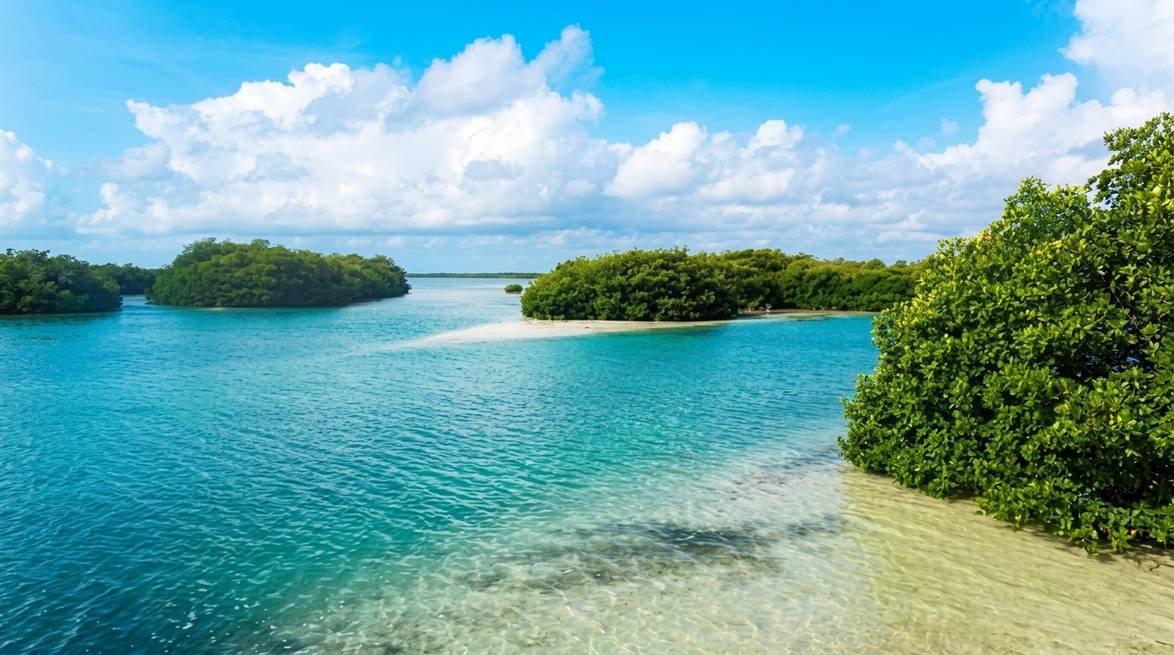
If you are on Holbox, the classic boat tour is the “Three Islands” trip. It stops at Isla Pájaros to spot flamingos and pelicans, at a natural spring called Yalahau, and at Isla de la Pasión, a strip of sand where the boat anchors and you jump into shallow, warm water for a swim and a beer.
The tour usually runs about 4 to 5 hours, includes a boxed lunch, and is easy to book from the main pier the day before.
- Rating: 4.7 stars from over 2,100 reviews
- Location: Boat tour from Isla Holbox
- Best for: Wildlife spotting, flamingos, a lazy afternoon on a sandbar
Learn more about Isla de la Pasión
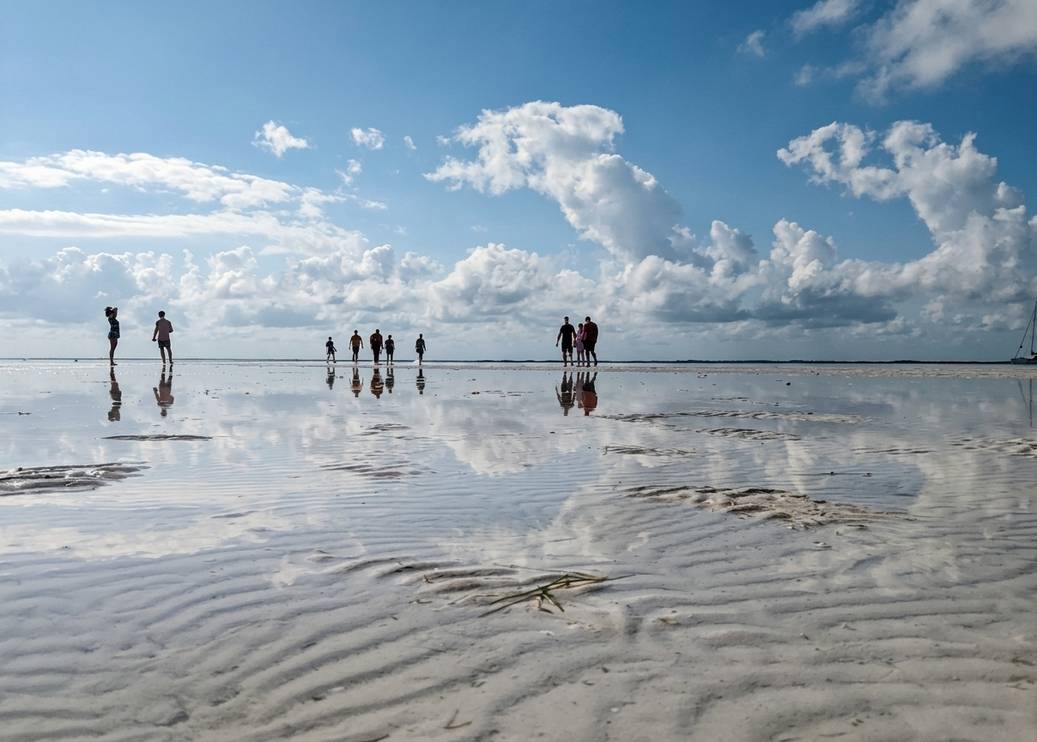
💡 Did you know? Holbox sits at the meeting point of the Gulf of Mexico and the Caribbean. That mix of currents and warm water is exactly why whale sharks arrive here in summer. The world’s biggest fish comes to feed just off your beach.
Food, Drinks, and Nightlife
Both destinations feed you well, but the food scenes have very different personalities.
In Tulum, you can eat wood-fired Mediterranean food in a candlelit jungle, sushi on a beach lounger, and modern Mexican tasting menus that cost as much as a nice dinner in New York. There is also great cheap food. Tulum Pueblo is full of taquerías, taco carts, and torterías that serve some of the best food in the region for under 200 pesos.
On Holbox, food is more casual and more local. Fresh fish, ceviches, lobster pizza (a Holbox classic), tropical fruit smoothies, wood-fired pizzas, and simple beachfront palapas with hammocks. There are excellent restaurants, but the vibe is barefoot, not black-tie.
Nightlife side by side:
- Tulum: Beach clubs with DJs, moody jungle bars, mezcal tastings, and late night parties on the beach road. Nights start late and end later. If you want to dance, Tulum wins by a wide margin.
- Holbox: Chill bars along Calle Igualdad and the main square, live acoustic music, sand under your feet, and a few small clubs. Most nights end by midnight or one in the morning.
Getting There: Flights, Ferries, and Drive Times
Both destinations sit in Quintana Roo, but the travel logistics are very different.
Getting to Tulum in 2026
- From Cancún International Airport (CUN): About 2 hours by car south on Highway 307. Rental car, private transfer, or an ADO first-class bus (roughly 2.5 to 3.5 hours with intermediate stops) all work well.
- From Tulum Airport (Felipe Carrillo Puerto, TQO): About 30 to 40 minutes to the beach zone. Taxis, private transfers, and rental cars are the norm here.
- Bottom line: Direct road access, plenty of options, no ferries to worry about.
Getting to Holbox in 2026
- Step 1: Get to the port of Chiquilá on the north coast. From Cancún airport, that is about 2.5 to 3 hours by road. From Tulum, about 3.5 to 4 hours.
- Step 2: Park your car at a private lot in Chiquilá. Cars are not allowed on the island.
- Step 3: Take the ferry to Holbox. Two operators run boats about every 30 minutes during the day, and the crossing takes around 25 to 30 minutes.
- Bottom line: Holbox is more of a mission, which is part of the reason it stays so quiet.
💡 Quick insight: If you are landing at Cancún, you can absolutely do Tulum and Holbox in the same trip. Just do not try to squeeze both into fewer than 6 or 7 nights, or you will spend most of your holiday in a car.
Best Time to Visit: Weather, Sargassum, and Whale Sharks
Timing is where a lot of trips get made or broken. Here is what you actually need to know for 2026.
Weather in the Mexican Caribbean
- December to April: Peak dry season. Hot days, cooler nights, low humidity, and the smallest chance of rain. This is the best window for both destinations, and also the busiest and most expensive.
- May to October: Hot and humid, with afternoon showers. Prices dip in September and October, which are the rainiest months.
- June to November: Official hurricane season. Direct hits are rare, but afternoon storms are common. Our hurricane season guide breaks down the risk in plain language.
Sargassum (seaweed)
- Tulum: Can experience heavy sargassum from roughly May through October, with the worst weeks usually in June, July, and August. Some days are perfect, some days are messy. If clear water is the whole point of your trip, aim for December through April. Our Tulum seaweed guide explains what to expect and how we protect the beach at Casa Nalum.
- Holbox: Because of the island’s position and shallow northern currents, Holbox is much less affected by sargassum. That is a big reason many summer travelers pick Holbox over the mainland Caribbean coast.
Whale sharks around Holbox
- Season: Roughly mid-May through mid-September, with peak in July and August.
- Where: Boats leave from Holbox and Chiquilá and head into the deeper water where whale sharks feed.
- Rules: Only small groups swim with each shark. Wear a life jacket, no sunscreen in the water, no touching.
Bioluminescence on Holbox
- When: Usually strongest around new moon nights from around June to January, though it varies year to year.
- Where: Punta Cocos and northern beaches. Book a guided night tour for the best chance.
How to Choose Between Tulum and Holbox
Here is our honest, guest-tested guide to picking the right one.
Choose Tulum if you want:
- Cenotes and Mayan ruins on the same trip
- A big food and cocktail scene
- Yoga, wellness studios, and spa culture
- Beach clubs, music, and a lively nightlife
- Easy day trips (Cobá, Sian Ka’an, Muyil, Bacalar)
- A romantic getaway with plenty of dinner options (see our romantic getaway in Tulum guide)
Choose Holbox if you want:
- Barefoot, low-key island life
- Clean, shallow, calm water
- Whale sharks in summer or bioluminescence at night
- Long walks on sandbars, flamingo sightings, and boat tours
- Simple food, early nights, and fewer decisions
- A slower pace with a lower daily budget
Do both if you have 7+ nights. A common trip we see: fly into CUN, drive up to Chiquilá the same day, ferry to Holbox for 3 nights, then head south to Tulum and the Sian Ka’an area for 4 nights. Fly out of Cancún or Tulum airport at the end.
Where to Stay: Our Take on Tulum
Since you are reading this on Casa Nalum, we will be quick and honest. If you love the Tulum region but want to be away from the crowds and inside real nature, staying inside Sian Ka’an changes the trip.
Casa Nalum is a private, eco-friendly beachfront villa on a quiet stretch of sand between the Caribbean Sea and the Campechen lagoon. Solar power, private chef, guided Tulum excursions, yoga on the deck, and jungle all around you. It is the kind of place where you decompress on day one and wonder why you booked such a short stay.
If Casa Nalum sounds like your speed, we are happy to help you plan the details. You can book your stay here.
Plan Your 2026 Escape With Us
Tulum vs Holbox is really a question about the kind of trip you want. Tulum gives you a rich mix of culture, food, cenotes, and beach clubs. Holbox gives you a car-free island, shallow water, and rare wildlife. Neither is better. They are just different, and both are worth your time.
At Casa Nalum, we would love to help you plan yours. Whether you spend your whole trip with us in Sian Ka’an, split your nights between Tulum and Holbox, or use our villa as your quiet base for exploring the wider region, we are here to make your 2026 escape easy and unforgettable.
Ready to start planning? Get in touch with us and we will help you build the trip that fits you.

Frequently Asked Questions
Is Tulum or Holbox better for a first trip to Mexico?
Tulum is often the easier first trip because of the direct road access, wider range of restaurants, cenotes, and ruins. Holbox is a wonderful add-on or a second trip once you already know the region.
Is Holbox worth the extra travel time?
For most travelers, yes. The ferry adds a few hours, but the reward is a car-free island with clean, shallow water, unique wildlife, and a slower pace that is hard to find elsewhere in the Riviera Maya.
How do you get from Tulum to Holbox?
Drive or take a private transfer from Tulum to the port of Chiquilá (about 3.5 to 4 hours), then take the ferry across (about 30 minutes). ADO buses also run between the two areas with a connection.
Is there sargassum in Holbox?
Holbox is much less affected by sargassum than the mainland Caribbean coast, thanks to its position on the north side of the Yucatán Peninsula. Some algae can wash up, but nothing like the heavy seasons on the Tulum coast.
When can you see whale sharks near Holbox?
Whale shark season near Holbox runs from about mid-May to mid-September, with peak sightings in July and August. Tours book up fast in peak season, so reserve a few weeks ahead.
Which is cheaper, Tulum or Holbox?
Overall, Holbox tends to be more affordable on food and accommodation, especially compared to Tulum’s beach zone. Tulum Pueblo is competitive with Holbox on prices, but the famous Tulum beach road is the priciest strip in either destination.